SpaceX IPO Hype Is Building, But Facebook’s ‘Epic Bust’ Offers Warning
Before you chase the SpaceX IPO, remember what happened in 2012.
You've reached your free article limit
You've read 0 of 1 free Pro articles.
There is nothing like the hype of the biggest IPO in history of one of the hottest private companies to get Wall Street and Main Street abuzz.
The upcoming SpaceX IPO euphoria could even exceed the hype surrounding Facebook’s 2012 IPO. That $16 billion deal was the largest tech IPO ever at the time, but turned into an epic IPO bust. Facebook’s deal taught many lessons about over-hyped IPOs, which bear revisiting 14 years later since Wall Street has a notoriously short memory.
In the months leading up to Facebook’s IPO, a frenzy erupted for IPO shares, as investors figured bankers were handing out a big payday to their chosen recipients. People who had never bought stock in their lives wanted in.
By the week of the deal, Facebook’s IPO was purportedly 15-20x oversubscribed. To satiate demand, Morgan Stanley (MS), which was Facebook’s bookrunner, upped the deal size and priced the offering at $38, above the initial $28-$35 range. With more shares offered, deal allocations ended up higher than many bidders expected.
A note of caution should be established when hearing word that SpaceX’s IPO is epically oversubscribed, which is often more hype than substance. These pre-IPO bids are outsized only because bidders expect to get cut back significantly.
Retail Allocation
Many institutional investors took out a sharp pencil and decided to back away from Facebook’s IPO, due to a valuation approaching a P/E of 80, along with growth concerns, which led to a larger allocation of shares to retail investors. A similar sharp pencil would not serve demand for SpaceX well among institutional investors, with its market cap around 100x revenues — entirely disconnected from fundamentals.
Historically, allocating a high percentage to retail is a significant negative. So, rumors that SpaceX may allocate up to 30% of the IPO deal to retail investors is not a sign of benevolence, but a red flag.
Before Facebook’s IPO, a large cohort of sympathy stocks rallied. Any company associated with Facebook — such as Zenga, which sold its games through Facebook, and GSV Capital (currently SuRo Capital (SSSS), which owned a tiny piece of Facebook in its portfolio — was bid up.
Although the sympathy trades for Facebook’s IPO worked nicely for longs into the deal, they were even better for shorts starting on deal day. I would not be surprised to see a repeat of that price action —stairs up, elevator down — for the SpaceX IPO.
To emphasize, shorting sympathy stocks bid up into an IPO of this nature has an impeccable track record of working post-open. Generally, the theory is that once investors can get direct exposure to the stock they covet, there is no need to own sympathy names with peripheral exposure.
As poorly as Facebook traded post IPO, there was still a small window to exit. The $38 deal opened at $42 before touching back to $38 within the first hour of trading. A technical glitch certainly added to the poorly received debut. However, I would surmise that Facebook shares could easily have opened 25-50% higher if shares had been placed in stronger hands or the share offering size had not been significantly increased.
Who’s the Greater Fool?
Usually, IPOs involve some momentum and greater fool investing. The familiar trading dynamic involves media and Wall Street hype, where fundamentals take a back seat.
Many IPOs fizzle after a couple of days of trading in the spotlight, due to a lack of fundamental support after passing around the hot potato. Innumerable stocks have made durable highs in the days after an IPO, never to see those lofty levels touched again.
For Facebook, the poor trading action accentuated fundamental concerns, such as their inability to monetize mobile ads as users were bouncing off desktops to cellphones. For a while, these concerns seemed more important than Facebook’s one billion users and one billion in profits, both growing at a tidy clip. Certainly, many concerning narratives can take hold for SpaceX as well, especially with its sky-high valuation, scant profits, and far-off ambitions.
Since Facebook was solidly profitable, the company did minimal fundraising in the 18 months leading up to its IPO. On the other hand, SpaceX has had several sizable fundraising rounds recently. This year, xAI raised $20 billion at a $230 billion valuation before it merged with SpaceX. Plus, SpaceX has raised over $10 billion in recent years, allowing for widespread institutional ownership that may blunt open-market demand.
Bankers Pressured for Deal Success
On the plus side, Wall Street bankers need the SpaceX IPO to work with so many high-profile IPOs in the pipeline.
The reality is that IPOs are inherently manipulated by limited floats, strong hands, and long lockups. The fewer than 5% of shares outstanding that SpaceX looks to sell is well below most deal floats. Some hot IPOs are so well-managed that gravity only takes hold after the lockup expires. These aspects give SpaceX’s IPO a reasonable chance of success, especially if institutional buyers know they cannot flip the shares on deal day if they want to take part in future allocations for deals in the pipeline.
Ultimately, patience prevailed in taking a position in Facebook. The lock-up occurred six months after the IPO, following a 50% haircut in the share price, and there was no shortage of sellers. Infamously, Peter Thiel sold 20 million shares, about 80% of his holdings, immediately upon the lockup expiration — still booking extraordinary gains.
Caveat Emptor
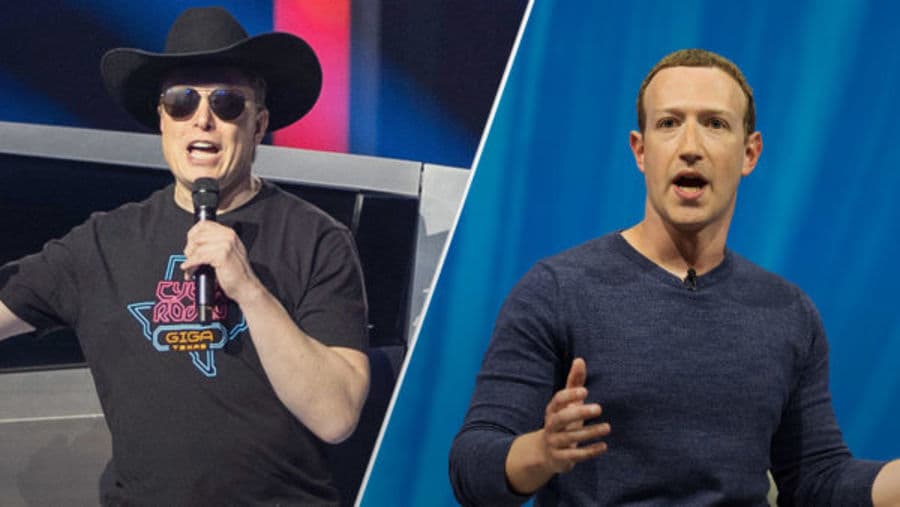
Early investors in Facebook relied on the belief that Mark Zuckerberg would figure out how to monetize and grow the enormous user base. Similarly, SpaceX buyers must rely on Elon Musk’s ingenuity.
With so much success already baked into SpaceX shares, the dreams must be vast. While investors’ heads are in the clouds, some grounding related to key-man risk, competition, valuation, and Musk’s notoriously delayed timelines ought to be considered. Notably, Jeff Bezos believes data centers in space will take far longer than Musk’s timeline.
Wall Street bankers will pull out all the stops to help the SpaceX IPO succeed. However, the problem with all the IPO manipulation is that it will only serve to overvalue the shares even more.
An ongoing effort to have SpaceX included in well-known indexes can help the shares. Reportedly, Dow Jones is considering a way to include mega-cap companies in the S&P 500 sooner after an IPO than current rules would dictate.
Perhaps all these overvalued shares can be dumped onto index investors earlier down the road than expected, so there may be a greater fool to mop up after all. Still, Wall Street players ought not forget that even the hottest IPOs can fizzle quickly.
At the time of publication, Ginesin had no positions in any securities mentioned.