Saving Souls From Buy and Hold
Getting to know TheStreet Pro’s James “Rev Shark” DePorre.
You've reached your free article limit
You've read 0 of 1 free Pro articles.
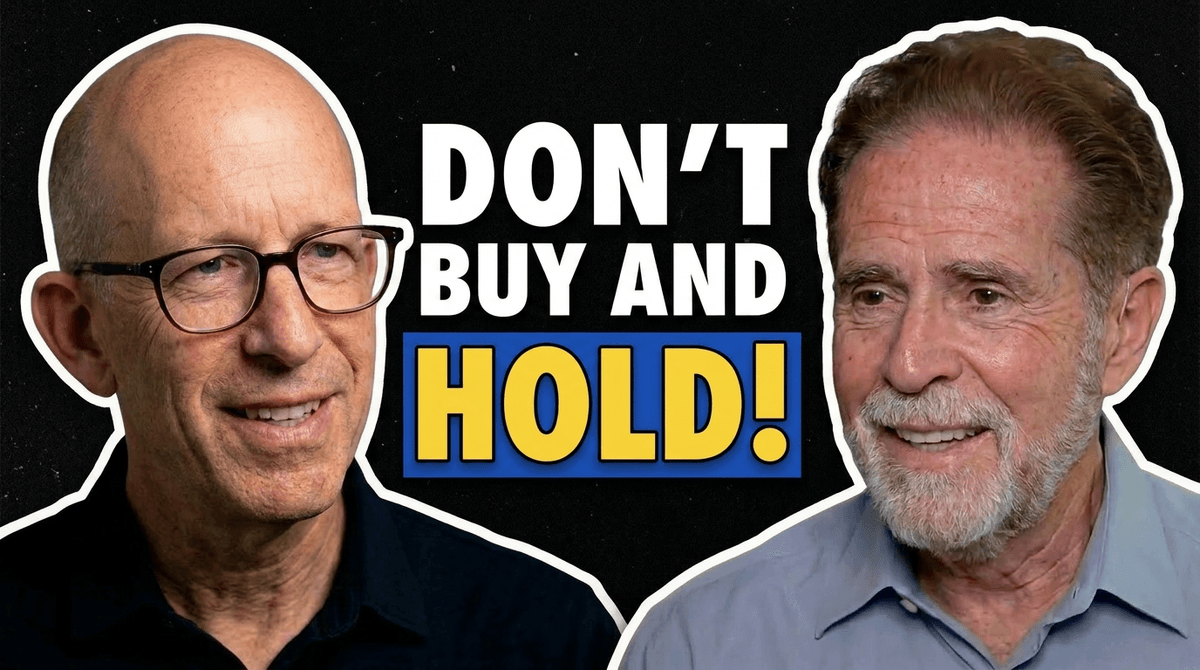
Next up in our series of getting to know The Street Pro’s contributors is our interview with James “Rev Shark” DePorre. It’s a fun conversation that includes the background behind his famous nickname, and his philosophy on investing.
Hope you enjoy.
Video
Transcript
Jason Meshnick (00:01.762)
Alright. Hello and welcome to another segment in our series introducing you to the Street Pros contributors. Today we’re going to get to know James DePorre, better known as Rev Shark. And one thing I want to say before we start, I’ve known Rev Shark for a number of years and I’ve been reading obviously lots of your work and and spoken to you on many videos that we’ve done as well. And one of the things that always has impressed me about your work is that you never fail to come up with interesting
off the beaten path names that also make money. So so let’s dig in and and get right into it. We’ll learn a little bit more about you and I think people are really going to enjoy this conversation. So Rev, thank you and welcome to our little series here.
James DePorre (00:48.785)
Thank you very much. I’m glad to be here.
Jason Meshnick (00:51.79)
Good. Great to great to have you. okay, so as we’ve done in the past with our other contributors, we’re gonna go through seven questions and just have a fun conversation. So let’s start with question number one. this is my favorite one. Let’s get to know you by starting with a fun fact about you.
James DePorre (01:13.159)
Well, I don’t know if it’s a fun fact or not, but I’m totally deaf. Most people don’t recognize that fact. But I was practicing law and back in Ann Arbor, Michigan, and I totally went deaf. I could no longer practice and had to give up my law practice. Luckily I had a bit of a disability policy, and then I
accidentally fell into trading by on the old prodigy system from many, many years ago and I got involved in the stock picking boards that existed there.
And since I couldn’t hear, the computer was just a lifeline for me. It allowed me to interact with people. And that’s what really i the stock picking was probably the most developed area of conversation back then on prodigy and so on. So it was a natural fit for me. I went to business school at Michigan and I’m also a CPA. So I had that business background and so on, and fell into that. And
Found out I had a bit of a knack for picking stocks and trading them and so on. And it was the best. So I often say going deaf was the best thing that ever happened to me because it allowed me to come into this trading environment and it’s been fantastic for me. I love trading. I just absolutely love it. I always say I’ll never retire. I’ll do this for as long as I live. And it’s just a fun game. It’s got the it’s got everything to it, the intellectual aspect to it.
You can make great money doing it and it’s entertaining, you know. So I don’t know if that’s a fun fact or not, but that’s a little bit about my my background.
Jason Meshnick (02:54.606)
Well, I I think I think the thing that is fun about it is that you ended up with your life passion, right? You you found something that and it comes through in all of your writing, how how passionate you are about investing and trading and and and also teaching people, right? You’re you write a Saturday column every week that is educational in nature. And so I I think that really is a fun fact and it comes out. But you
You should touch on too very briefly about what you were telling me before we started, about the about how you can hear a little bit now.
James DePorre (03:29.094)
Yeah, I I had a surgery done called a colloquial implant, which basically imp puts an electroid into your brain and allows me to hear, you know, mechanical sounds or whatever. It’s not perfect, but it allows me now to at least function. I mean, I’ve been deaf for so long that I’ve got designed my life so it it doesn’t matter that much to me anymore. I kind of take it as a second nature and I don’t even think about it. But
I can hear when I need to to some degree and also can take my hearing off and and drive my wife crazy when she’s trying to tell me to do something. So
Jason Meshnick (04:10.484)
Exactly. I think my wife frequently cannot hear. I think it’s selective hearing that she has when I’m in the room. well that’s great. Yeah, I think we all have s selective hearing. so tell us about your tenure with Pro. This is our second question. How did you get started at the Street Pro?
James DePorre (04:16.956)
Yes. I’ve been accused.
James DePorre (04:31.89)
Well I originally
started in back in like two thousand and one writing. And w how that came about was I w was a a very active poster on American online and on a bunch of other sites and so on. And I just got into lots of debates with people and I really enjoyed doing it. One of the people that I first associated with online was Herb Greenberg. I don’t know if you know him or not. He was a writer at the time for
Jason Meshnick (05:02.412)
I know the name. Mm-hmm.
James DePorre (05:04.084)
the San Francisco Chronicle and we had a joint venture on American Online and we had one of the very first online chat rooms for the stock market. They had a limited capacity and so on. People would line up hours in advance before the market opened to get a spot in those chat rooms on AOL. And then eventually I moved that to the internet
And I found out a little bit later that Jim Kramer had been following me on American Online on some of my stock picks and so on. And he invited me to write for the street back then and I kinda eased into that.
after a while Todd Harrison who was one of the early writers there he left and I t ended up taking his place there and been there ever since. So it’s been a been a long period of time and I’ve enjoyed it the whole time. I mean I’ve been writing three or four columns a day for I mean twenty years and
One thing I love about the writing is that I always look for the non-traditional spin on things. I try to avoid the conventional wisdom or or to look at things in a way that isn’t what you’d expect from routine Wall Street. And that’s how you get an edge. And that’s what that’s how I found. And writing
For the street is is not only hopefully helpful for the subscribers, but it helps me tremendously to formulate my thinking and what I’m doing and so on. It’s really a very valuable thing to do. Even if you aren’t don’t have an audience, just writing about the stock market is a is a way to prepare yourself mentally for being good at it.
Jason Meshnick (06:56.43)
I I agree, I think that’s that’s amazing advice. One of my friends who has also written for The Street back in the day, he’s a money manager here in Denver, and he once told me that he writes so that he knows what he thinks.
James DePorre (07:13.862)
Right. That’s r that’s right. It’s and so I mean it really clarifies your thinking when you have to put it down in words and you know, and and you have to think through the logic of what you’re doing and not allow your emotions to come into play to the that degree. One one thing I that people have told me over the years is they appreciate my kind of even temperament.
Jason Meshnick (07:14.904)
Yeah. Yeah.
Jason Meshnick (07:33.579)
Exactly.
James DePorre (07:39.461)
I try not to get emotional about the market, you know, get in either direction, you know, greedy or fearful. And I I try to convey that in what I’m writing is that our job here is to take advantage of opportunities as they arise. It isn’t to have a viewpoint about what the market’s going to do or not do or what we want to do. I mean we have to adapt to the market rather than the other way around.
Jason Meshnick (08:07.564)
Yeah, that that’s great. I think that gets into our third question. if we could talk about your investment philosophy and style, as well as you know, which of our members, right? So if we think about our members, some are more active traders, some are more investors, and and then all everything in between. which of our members do you think we get the most out of your commentary?
James DePorre (08:32.178)
Well
One thing that I often write is that I don’t believe there is any one style of investing or trading that is inherently superior. There’s a lot of different ways to attack the market. What’s best will depend upon you and you know what your approach is, the amount of time you want to put in it, what your risk tolerance is, and all of that. So you have to find a style that works for you. Now for
me in particular I’m an extremely aggressive investor. I I
focus on and I think my forte is stock picking. I love finding those small stocks that no one knows, things that have a catalyst that’s coming up and finding ways to play them. You know and a lot a lot of that, a lot of the trading is almost it’s like game theory. You know, using using the volatility to take advantage of stuff and to
You know, I tr I try to avoid the whole
James DePorre (09:39.685)
issue of one single buy and one single sell. I think that’s a suboptimal way to approach the stock market. You have to trade stocks or you have to treat stocks like they’re living, breathing creatures that are going to move around and you gotta try to figure out what they’re gonna do next and try to be in the most advantageous position when you can when they’re ready to move. So I think
I try to in my writing I try to offer a variety of of approaches. I I mean I do some long-term buy and hold investing. I mean I have stocks I’ve held for twenty-five to thirty years. And I also do day trading and meme trading and position trading and so on. I mean I’m I’m ready to take on wherever I think is going to be the best opportunity at any one time.
So I know it doesn’t all I know it doesn’t always fit in the approach that some people are using, but it gives them something to think about regardless.
Jason Meshnick (10:47.544)
Yeah, that’s that’s great. I I I love what you said about not not making single buys and single sells. I think that that really gets to the heart of what you’re doing. And that really is a professional trading strategy, right? Is is thinking about getting into a position and how you leg into the position and then leg out of it. so you’re managing your risk and you’re you’re making sure to find the best opportunities for when to buy.
James DePorre (11:12.85)
That’s right. Yeah, I a a lot of it i’m always trying to position myself so that I can change my risk level as conditions change. And ideally I want to be in the position to be extremely aggressive at the exact right time and go big and when when the after the trade is over, you know, then ease out and reduce my risk level. So that risk level is always going up and down.
down and by virtue of my position size. When I see something that I think is ready and ripe, I really push to be aggressive. I mean that’s one thing over the years that I’ve really tried to develop is a higher levels of aggressiveness when I feel that all the stars are aligned for a particular trade. And I think that is how you produce the bigger returns. So often you have a good stock, a good trade, and you don’t have enough size. It’s too small.
And you don’t take advantage. And that is one of the things I think most traders, you know, d have to deal with quite often is that they aren’t taking advantage of their best ideas to the extent that they should. So I I really try to push that whole that whole feeling. So and it’s a never ending process.
Jason Meshnick (12:31.842)
Great.
Absolutely. Never ending process. So so with that, let’s get into you know, a lot of people will talk about what is your best trade, but I really think a better question than just talking about a single best trade is what does a good trade look like, right? What’s what’s your definition for a trade that that you could be proud of?
James DePorre (12:55.602)
Well, you’re right. I I I don’t even know what my best trade is in in time. I have no idea. I have no idea. I tell you the best long term investment I ever made was
MO, you know, with all trio, the tobacco company. I bought that in a drip account back in the the nineteen nineties, and I’ve held it ever since. And if you compare it, it’s actually the best performing stock in the market during that time period. It has beat Apple, it’s beat everything you can think of. And that’s because there was a number of spin-offs, there was di you know, it’s paid a big dividend forever, they spun off crack.
Jason Meshnick (13:09.611)
Altria.
James DePorre (13:37.357)
Food, they spun off Philip Morris and stuff like that. And if you take all that stuff and compound it, the return there was substantial. But that’s a good example of a buy and hold investment. I had a drip account, never looked at. Now as far as my what’s a best trade look like? The best trades for me are stocks that I follow for a while.
And then I r learn their personalities, I learn the fundamentals. I wrote an article the other day about a good time. The best time to do your research on a stock is after you buy it.
You know, you take that initial position and that comes from a drunken miller. So that was his that’s his idea. You get that position in place and then you do the research. That’s what a that’s how I start off with a good trade. I get the stock on the on the board, then I start looking into it, I watch the price action, I learn more about it, I see how it reacts to various news and to market conditions and so on. And then when I see a
catalyst coming up, then I ramp up, I get in that big size there, I put it on a bigger position. And if I get positioned right and that catalyst hits, you know, I’ll take some profits as fast as I can. I’ll I’ll cut back on that position and lock in those gains. And to me that’s the ideal way to, you know, to produce a big return.
Jason Meshnick (15:11.244)
That’s that’s great. let’s talk so I think that unlike best trades, worst trades can be learning experiences. What’s what’s been your worst trade and and what did you learn from it?
James DePorre (15:24.422)
My worst trades have been in biotechnology stocks where there’s a a a binary event, you know, where I’m betting on the outcome of a FDA or something like that. I probably have some where I’ve had, you know, 90% losses overnight. I mean I’ve had any number of those. And it’s just that’s just the nature of the game. You the the key to that is that you have to go into those knowing what the risk is.
years, you know. And it’s just it’s just the cost of the business at times that you’re gonna have some some of those blow-ups like that, especially if you’re taking really high risk trades. So I mean but the the key thing to learn from that or that I need to know is be aware of the risk that you’re taking. I mean you’ll sometimes you get surprised coming out of out of nowhere.
But a lot of times you’re going into an event and you know that there’s a possibility it isn’t going to work. So you always have to be adjusting that risk level. You can’t let anyone trade hurt you so bad that you’re going to jeopardize your capital. That’s the key. As long as you got capital, there’s another opportunity out there, and that’s the greatest thing above the world about the stock market.
Jason Meshnick (16:45.73)
So you’re you’re position sizing. You’re making sure that knowing that there could be this event, you’re you’re limiting your exposure, making it no more than a certain percentage of your entire portfolio. and and kind of kind of like being like a like a venture capitalist, right? Knowing that of your ten positions, five may go to zero and you hope to make break even on a few and then actually make big money on on a couple of others.
James DePorre (17:12.358)
R right, that’s right. I mean, you can have a very poor batting average. It you can strike out a lot, you can you whatever, but if you hit a few home runs, you know, big home runs, it doesn’t much matter. You know, you put those points on the board. And I mean, I think some of the best traders have, you know, really
really poor batting percentages. I mean sixty, seventy, eighty percent of their trades, you know, are for nothing or little or losses or whatever. But that twenty percent when they when they
push those and they go in aggressively they make up all those losses very fast. So you have to you have to just see it as part of the process. You know, you can’t take if you if you aren’t taking losses on a regular basis, you are not trading hard enough. You are not working hard enough. You gotta have a lot of losses or you you’re you’re not gonna make the big money.
Jason Meshnick (17:54.424)
Right.
Jason Meshnick (18:13.814)
E exactly. Yeah. The best traders have no more than a fifty, sixty percent win win rate.
James DePorre (18:22.138)
Right, yes. I mean when I when I look at you know, back it’s it’s interesting I sometimes I’ll look back at stocks that I traded y years ago. Every one of is the piece of garbage now. You know, they’re it’s just all it’s always amazing to me how those old stocks, some that were really great trades, and then they end up down the road, no, they don’t yeah, they don’t even exist anymore.
Jason Meshnick (18:47.823)
Right. Exactly. well wonderful. Let’s let’s move on to question number six, which is what investment wisdom do you have for our viewers?
James DePorre (19:00.198)
Well, that that’s a that’s a a a difficult question. I think
I think the best th advice that I can give to someone is to find an approach to the market that works for your personality, with your time frames, with your s with your temperament and so on. And I mean if you want to be a really aggressive trader, then you have to cultivate a certain certain mindset to do that properly.
And I think what happens to most people is they get the style drift that they end up being kind of halfway a buy and hold investor, halfway trader, and they don’t have clarity as to exactly what they’re trying to do. And so the trades turn into investments and the and the investments turn into trades, and that is where they that that costs them over time. So I guess the be be really clear about what you
approach is to the market. If you’re gonna trade, then trade. And don’t let a bad trade turn into a long term investment and so on. That means the the easiest way to lose money is to hold on to a bad trade and let it turn into investment. So have clarity about what you’re doing and that will help a lot.
Jason Meshnick (20:29.038)
Yeah, sounds good. the final question is anything else? do you do you have anything else you’d like to share?
James DePorre (20:40.338)
Well, I I just say, I hope you I hope everyone continues to read us on the street, because I I think we provide some really valuable insight to investors. You know, you have to. I’m working on a new book that I’m trying to get out, and the whole premise of it is that.
If investing was easy, you couldn’t get rich doing it. The fact that it’s difficult and requires real effort and you know, it’s time and effort and and real focus on, that is why you can make so much money doing it. There is no simple secret to making money in the market. You know, you there’s all these services out there, all they’re gonna sell you that that easy way to make money. We’re gonna give you this easy stock pick, we’re gonna give you this easy way approach.
It’s never easy. If it was if it was easy the computers would run the world and they w they’d all be trillionaires. It just does not exist. You have to work hard and
I think we can provide insight on the street to people that will help them, you know, do that hard work so they can make some real money. And like I said, it’s not har it’s not easy, but if you put some time and effort into it, read some good educational material, then you can learn to be have
A paycheck for the rest of your life from the stock market. I mean, I like to think of the stock market. It’s like a side job, you know. It’s going to provide you a steady amount of income if you put a little bit of effort into it. And that’s a nice thing to have there. The greatest thing in the world about the stock market is that there’s always another opportunity. Always. No other business has opportunities that come at flow in the same manner that the stock market does. And that’s really a fantastic thing.
James DePorre (22:32.304)
I think too many people have gotten caught up in a lot of the betting culture lately. They they don’t understand that
trading and investing has much better odds than the betting culture, sports betting, or any of that. You c you can you’re basically gambling to some degree in trading and the investing, but the odds are so much better because you can switch them by doing some of that hard work. The hard work allows you to change the odds of success and that’s the important thing.
Jason Meshnick (23:06.222)
That’s that’s great. I think that’s great advice. I think that’s that’s really true. yeah, investing is hard and and that’s one of the things that we do here at the Street Pros. We try to make it a little bit easier. We try to hold people’s hands. Right? We have we have a collection of pros. We have a collection of some of the best as as
Sarge Stephen Gilfoy mentioned in our pr prior video, he said that the team here is all star, right? That if you put together a Wall Street trading desk, this would be one of the best trading desks out there. And so I I think you’re exactly right. I think that’s I think we’re, you know, I’m I’m lucky to work with all of you. And I think that the ideas and the dedication that you all have is just so helpful to our subscribers.
James DePorre (23:49.735)
I think one of the best things at the street is that we often disagree with each other and that’s a very valuable thing. You need to have, you know, a real debate sometimes about things before you really can understand and make the right decision. And so it’s very valuable to have some smart people to throw, you know, to debate with and to question their ideas and so on, and we have a lot of smart people at the street that we can argue with if we want to.
Jason Meshnick (24:18.25)
Exactly. I agree a hundred percent. So before we wrap up, there is one thing that we didn’t touch on that I feel like we should have. so your your nickname Rev Shark, can you tell us how that came to be?
James DePorre (24:33.234)
Well, it actually started way back in the in the early days. I used to I used to be a very aggressive person on on the social media and so on. And that kind of gave me because I’m also an attorney, the the nickname Shark was was thrown around quite a bit.
And I used to get into some debates with the Motley Fool group back when they first showed up on AOL. I mean, before they were known, I mean they introduced themselves on AOL. And they came in with a very
traditional view of investing long-term buy and hold, the Buffett like and so on. And I would argue with them all the time about them. They they’ve had a great dislike for me because I was I was constantly questioning their their wisdom. And the Rev came about because I felt I was saving souls from buy and hold. So I was Reverend Shark who saved souls from buy and hold. And that so that kind
Jason Meshnick (25:27.742)
Yeah.
Jason Meshnick (25:41.314)
Ha ha ha.
James DePorre (25:45.092)
stuck on me there and I’ve been preaching that ever since. So I like to think I’m preaching the the benefits of the stock market to the the people out there and and being a shark is a good way to approach the market.
Jason Meshnick (26:00.268)
I love it. Sharks never stop. They’re they’re always in motion. And I think that’s that’s apt. Yep. Alright. Well with that, I just wanna wrap it up and say thank you so much, Jim, Rev Shark for for your time today.
James DePorre (26:03.024)
That’s right, they never stop moving. That’s right.
James DePorre (26:15.462)
Well thank you very much.