New Chair Kevin Warsh Wants to Bring Fed into the AI and Data Age
The new Federal Reserve chair outlined his vision for the future.
You've reached your free article limit
You've read 0 of 1 free Pro articles.
The Iran memorandum of understanding (MOU) has been released.
If you missed Tuesday’s “Spider Web Podcast,” where General (ret.) Spider Marks, Brett Lowry and I discussed the peace deal, it is worth listening to. Although we didn’t have the details, I don’t think our conclusion would have changed much (maybe we would be a touch more dubious about the deal than we already were?).
There is a lot left to be negotiated and there remains a degree of fragility, so let’s see how it plays out.
The Warsh Fed
Price Stability
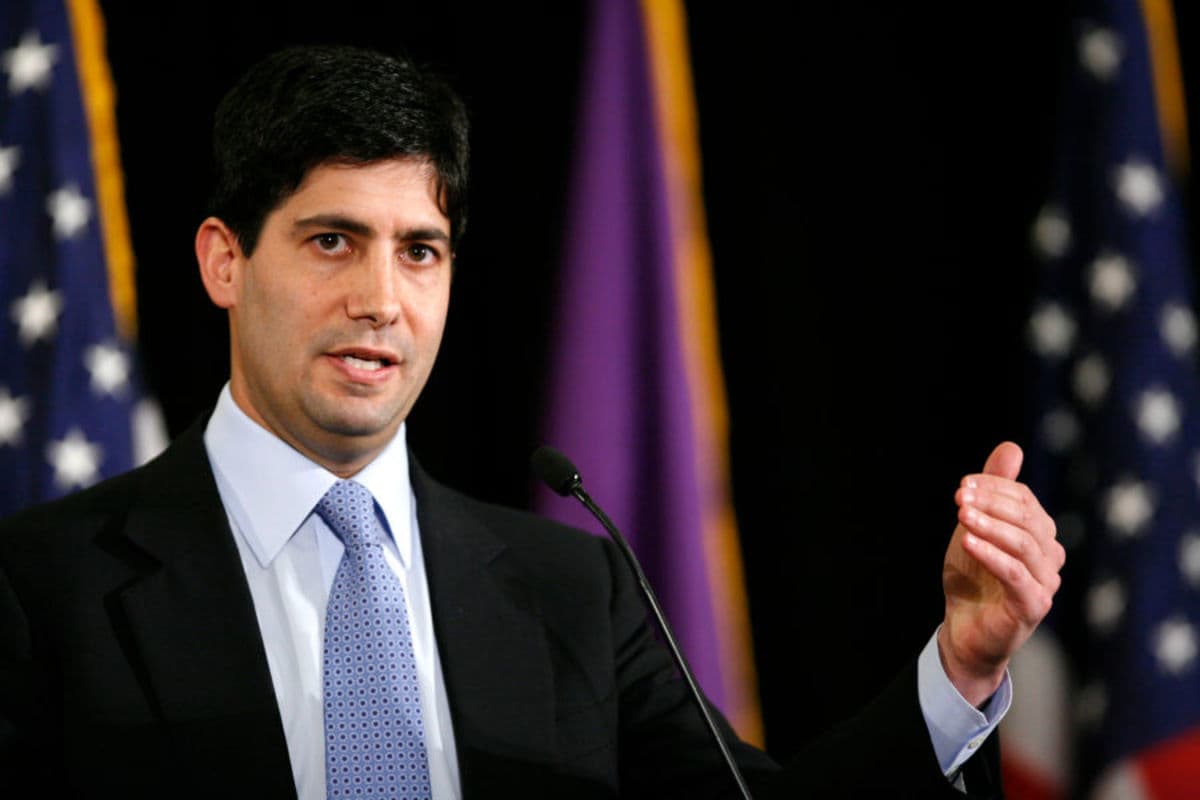
Federal Reserve Chair Kevin Warsh is taking advantage of the recent strength in jobs and increases in inflation pressures to come out strongly as being “far from a puppet of the president.” That is very good!
He announced five task forces:
- Communications. Goodbye forward guidance? I like this. The forward guidance becomes less helpful as the only market signals are the market guessing the forward guidance or future forward guidance. The less certainty from the Fed, the better. The dot plots are embarrassing to the Fed. They are so bad at predicting the future path of rates that, if they were a baseball player, they would not break the Mendoza line (for those not familiar with that, it isn’t good).
- Balance Sheet. I applaud that they are examining how the Fed trades the balance sheet. Personally, I would argue that both QE and QT should not be conducted for prescribed amounts every month, that are incredibly well telegraphed. We buy too much for too long, which seems to be one noticeable outcome of that behavior. Add an element of market needs. Does that take us a step close to yield curve control? Maybe, but why not? It is all heading in that direction and I’d rather the Fed treat its purchases (and sales) more fluidly.
- Data Sources. I’m jumping up and down for joy on this one! In an era where so much data is available in real time, it is nonsensical how we collect some of the data and then process it. OER may have made sense at one time, but I’d go with Zillow rent (or other-real time metrics). Truflation isn’t perfect, but it’s a useful tool! We should be revamping data collection! I wrote about this a few years ago and will dig out the article when I’m not typing on a flight to JFK airport.
- Productivity Trends in AI Boom. This needs to be addressed. Are we getting efficient and having massive productivity gains? Are new jobs being created? Are we outsourcing intelligence for the first time, and maybe should expect different results from that? Outsourcing labor worked wonders for prices and stock prices until we find ourselves in dire need of production for security (ProSec). I’d add robotics to the AI analysis as well. We discuss our concerns in “Space: The NOW Frontier & the AI Revolution.”
- The Fed’s Inflation Framework. This is probably important, but I think data sources will cover a lot of this.
Bottom Line
Bringing the Fed into the data and AI age, while retaining independence (though I suspect more cooperation with the Treasury Department), is positive.
This should help control the long end of the yield curve.
I’ve been bearish on 10s in particular, but need to rethink that, given Wednesday’s messaging.
It’s not great for stocks, but not very problematic either.
A Fed working with better, more timely data, is good for everyone.
I was hoping that Spider, Brett and I would be pleasantly surprised by the MOU, but if anything, it leaves more to be desired than I anticipated or hoped (can Iran charge a toll starting in 60 days? What about missile development?).
Expect stocks to continue to slide, but more as a function of too much good being priced in and the combination of the MOU and the Fed taking some of that optimism out.