If ‘Inflation Is a Choice,’ Consumers Should Rejoice
Kevin Warsh kicks off his term as Fed Chair by declaring war on inflation.
You've reached your free article limit
You've read 0 of 1 free Pro articles.
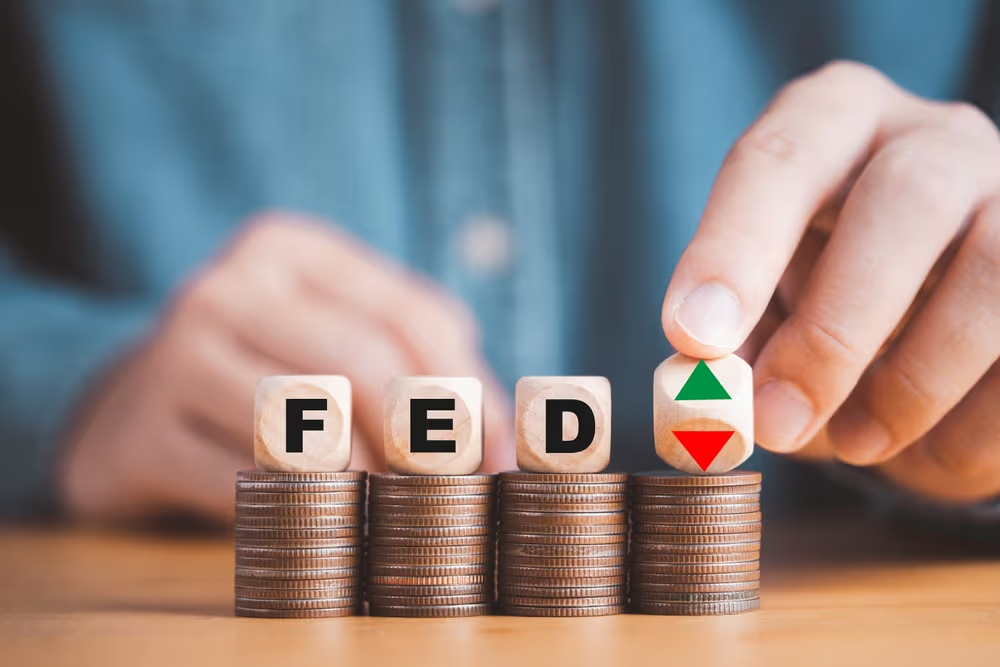
“Inflation is a choice.”
That was the recurring theme of Fed Chair Kevin Warsh’s first press conference since assuming his new role.
Inflation wasn’t a popular choice under Warsh’s predecessor, Jerome Powell. Powell presided over disastrous inflation, which peaked with a year-over-year 9.1% CPI reading in 2022. That surge in prices was in part due to the Powell-led FOMC’s decision to keep interest rates too low for too long.
At Wednesday’s meeting, the FOMC decided unanimously to keep rates unchanged. However, the messaging from the decision-making body rattled the markets, as the major indexes declined by about 1%.
The Rear View Mirror
Consumers should be glad that they finally have a champion leading the Federal Reserve.
“The American people will feel as though the hardships they’ve been living through in part because of inflation are in the rear view mirror,” said Warsh.
Nine of the 18 FOMC participants expect a rate hike this year, with six anticipating multiple rate hikes. Only one participant sees a rate cut in 2026.
Short and Sweet
Warsh’s FOMC released the shortest Fed statement in recent memory. The statement got right to the point, as did Warsh’s comments, which included this gem:
“We recognize that inflation has been running well ahead of the Fed’s long-term goal of 2%. That’s been going on for over five years. This committee will deliver price stability.”
This was music to the ears of consumers, who are still struggling after the worst bout of inflation in over 40 years. However, stocks responded with a sharp decline. Tighter monetary policy tends to make bonds more attractive, causing investors to move capital away from equities, in favor of fixed-income investments.
Europe and Japan
A reporter from the Financial Times asked Warsh a great question. Based on all the information presented at the meeting, why didn’t the FOMC just raise rates today?
That’s a good point. Inflation is a global phenomenon, and other central banks are reacting to it.
Earlier this week, the Bank of Japan raised the policy rate, that country’s version of the Fed funds rate, to its highest level in 30 years.
“After twenty years of deflation, Japan is now in an inflationary upcycle,” said Jesper Koll of Wisdom Tree Investments. Japan’s central bank indicated that further rate hikes may be coming.
Earlier this month, the European Central Bank raised its key interest rate for the first time since September of 2023. The move was taken as a precaution against elevated inflation due to rising energy costs.
Bottom Line
Inflation makes the rich richer, by inflating the value of assets like businesses and real estate. It makes the poor poorer, as those inflated assets move further out of their reach.
Warsh’s comments make it clear that inflation is his top priority. In the near-term, that could make gains harder to come by in the stock market. In the long-term, it protects the buying power of the U.S. dollar.