Fishing for Less Crowded Technology Stocks
A suggestion to help reduce risk and diversify your portfolio.
You've reached your free article limit
You've read 0 of 1 free Pro articles.
Crowded Waters in Colorado
I live in the beautiful state of Colorado, which offers excellent fly fishing for trout. When I first moved here, I learned to fish on the Blue River in Silverthorne. The river was full of trout, but it was located behind a popular outlet mall, drawing many tourists. Men would often leave their wives to shop and head to the river, making it crowded. You could see the trout, present your fly perfectly, and even nudge their noses, but they still wouldn’t bite.
The Tech Sector Feels Similar
Today’s tech sector feels a lot like those crowded waters. In a market where large-cap tech stocks dominate and the IPO market has dried up, it makes more sense to seek opportunities in less obvious places, like select smaller tech companies and early-stage private equity. Instead of putting all your money into well-known names that now dominate a large portion of the S&P 500, it's more logical to look for less crowded areas. In my opinion, there is too much money chasing the same indexed investments.
Here's the Valuation Picture Today...
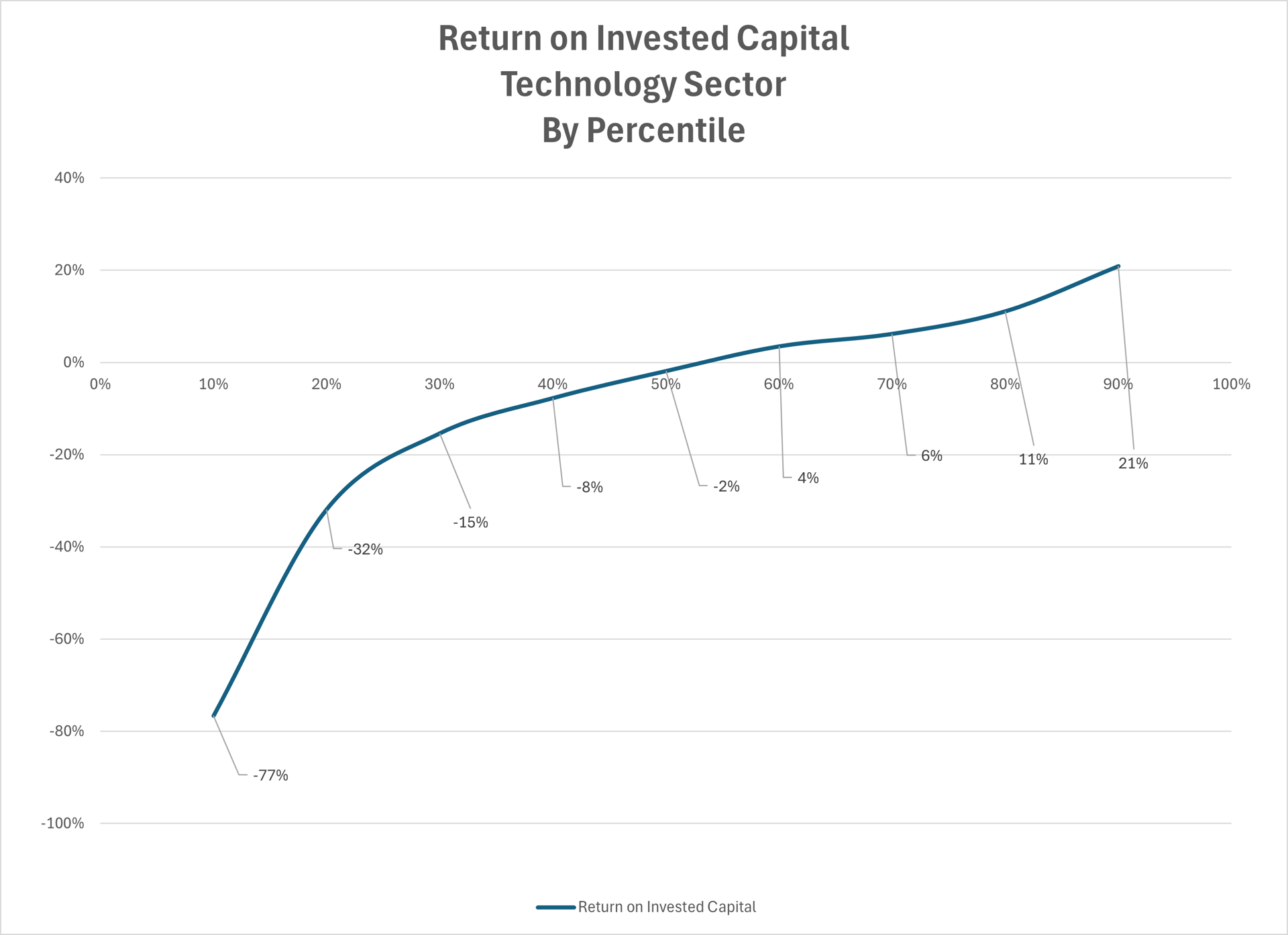
To put things in perspective, I ran some numbers on the U.S. technology sector using GICS standards across all major exchanges. This includes 638 companies, but only 21.2% have a return on invested capital (ROIC) above 10%. Most companies have negative ROIC. For those with a reasonably good ROIC, the median price-to-cash flow ratio is 25.26, and the median ROIC is 19%. These companies trade at a median price-to-book ratio of 5.11. Based on a multi-stage fair value calculation, most companies shouldn’t have a price-to-cash flow ratio above 20, yet the median is at 25 for even the most profitable tech companies.
Finding Opportunity in Better Rivers
The areas I am fishing for bigger return potential are smaller companies with high returns on capital and strong business models, along with a smaller allocation to early-stage private equity. The indexing world is getting overcrowded. Large discount brokerages now offer direct indexing, and many RIAs are adopting it. I see a lot of advisors who are inexperienced, looking at recent indexing success and assuming it’s always the best choice. After indexes are hard to beat for a long time, it can seem like a “no-brainer.”
Be Prepared for a "Melt-Up or a "Melt-Down"
But this is when volatility spikes catch investors off guard. In my view, it's prudent to incorporate active equity management with indexes. A core-plus strategy that invests in both index funds and active stock strategies with concentrated holdings keeps investors in the game if the market heats up while still following a sensible, fundamental approach. This blend is more likely to produce better returns over time.
This is the approach I often take with high net worth clients. In the active equity portion of the portfolio, I target companies with strong fundamentals and a real chance to outperform the index. It’s a great example of diversification. You could go all-in on one strategy, but why limit yourself?
Artificial Intelligence Echoes the Dotcom Bubble
Artificial intelligence is clearly changing the world—that's the easy conclusion. But what’s harder is knowing which companies will thrive and which will disappear. We have to make educated guesses and apply risk management.
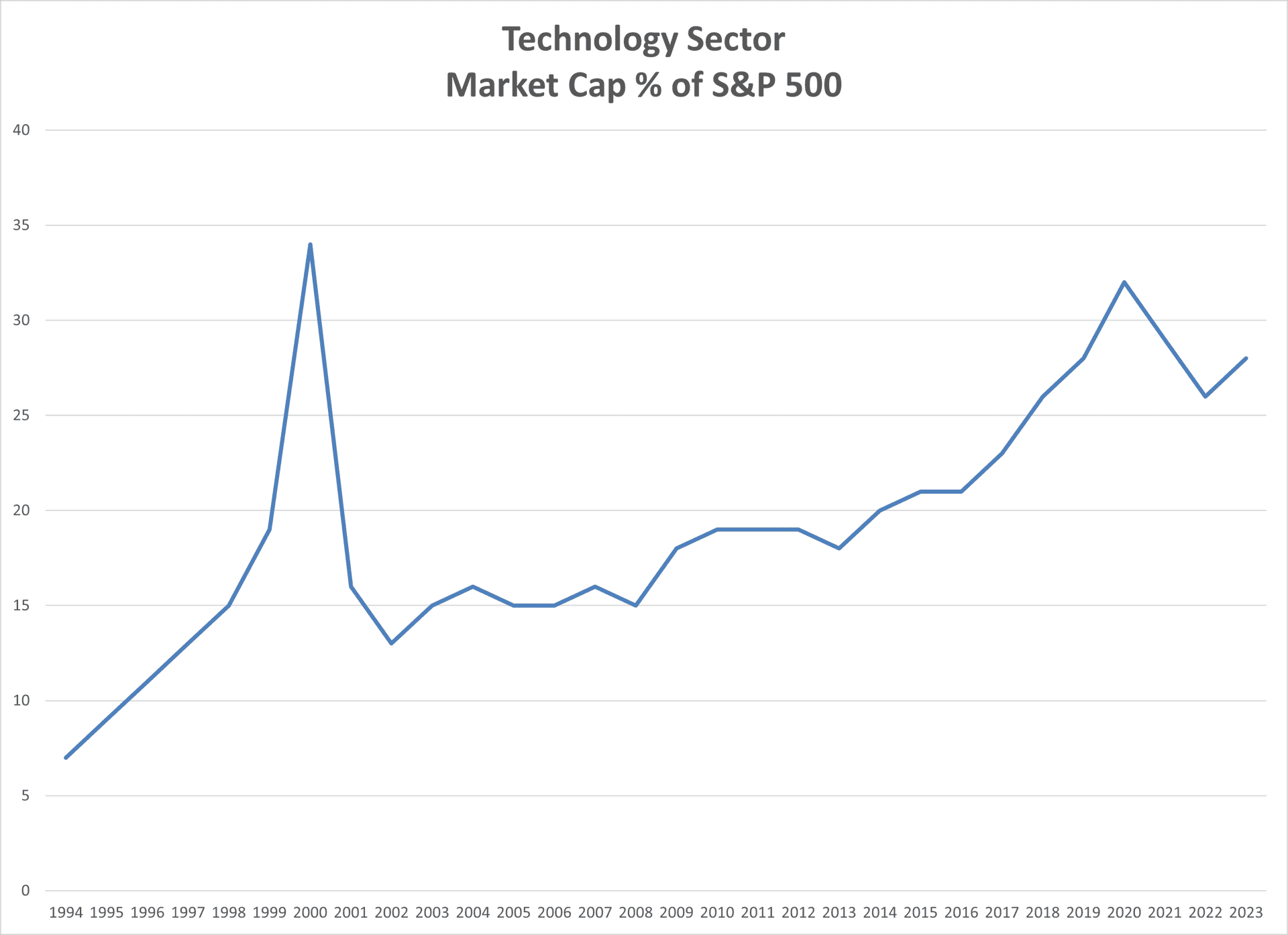
During the dotcom bubble, we knew the internet was transforming everything, yet most companies with huge valuations ended up collapsing. A few did well, but overall, businesses became more efficient, boosting the economy and leading to new industries. I think AI will follow a similar path. The chart below shows the tech sector market cap as a percent of the S&P 500. We are near the peaks we saw at the Dotcom peak.
Small Tech Companies that Meet My Criteria Today
I like to invest in smaller companies that exhibit certain characteristics across three categories. The first category is sentiment, which involves analyzing earnings estimates and revisions, surprise changes in short interest, and shifts in brokerage firm recommendations. The second category focuses on quality, including margins, return on invested capital, and the strength of the balance sheet. The third category is valuation, assessed by comparing metrics such as free cash flow, assets, sales, and earnings per share.
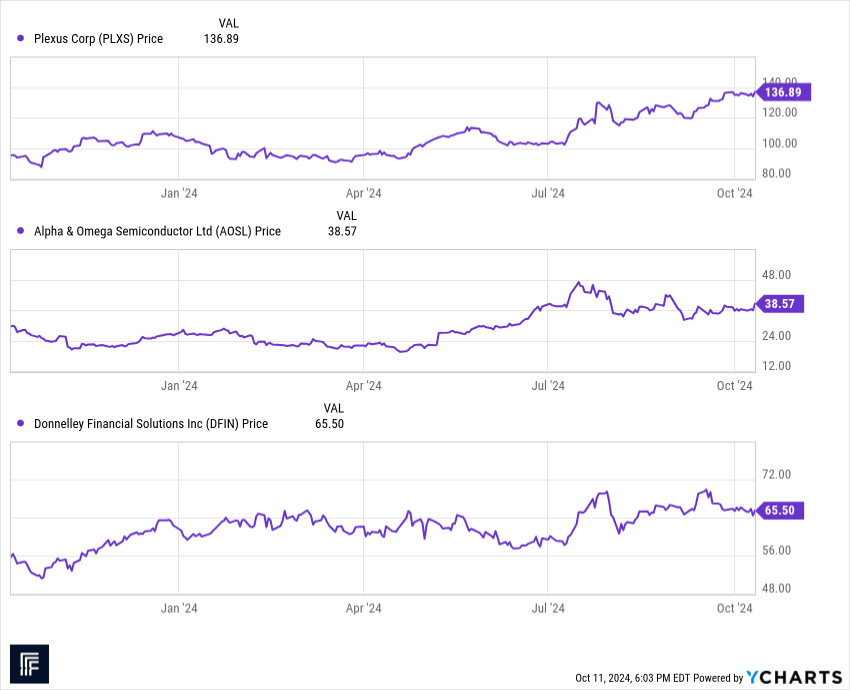
A few companies I currently own that fit these criteria are Alpha & Omega Semiconductor Ltd AOSL, Plexus Corp PLXS, and Donnelley Financial Solutions Inc DFIN. I employ a disciplined strategy for investing in these smaller firms and may sell them at any time based on changes in their rankings within these key criteria.
Fishing in Less Crowded Streams
Instead of focusing on what everyone knows, I’m looking for underappreciated, great businesses in less crowded rivers, like mid- and small-cap companies and private equity. I’m underweighting large-cap tech names that are well-known and mostly priced to perfection, and I’m fishing in rivers that are less crowded.
What are your thoughts about investing in technology today? What do you like or dislike? Thanks for reading, and follow for more.