Equities See Muted Start After Labor Day Weekend
U.S. equities appear to be little changed by crude prices hitting a new high.
You've reached your free article limit
You've read 0 of 1 free Pro articles.

A look across global markets and financial news.
US equities look to start the week little changed pressured by crude prices hitting three-month highs.
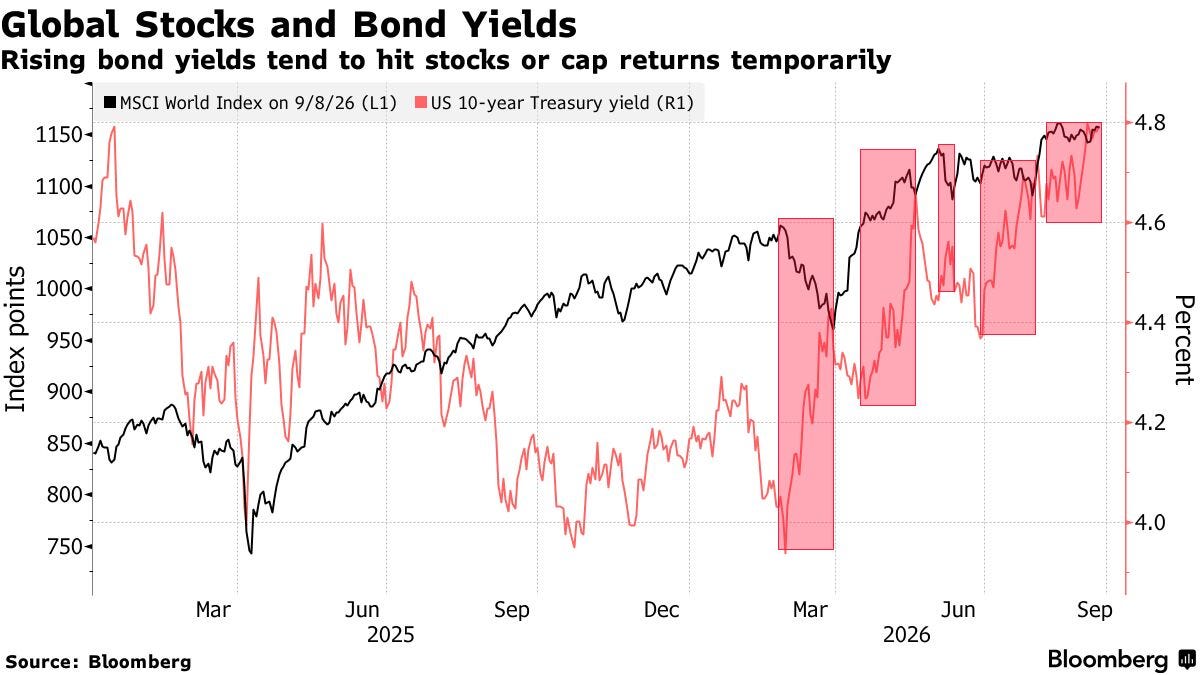
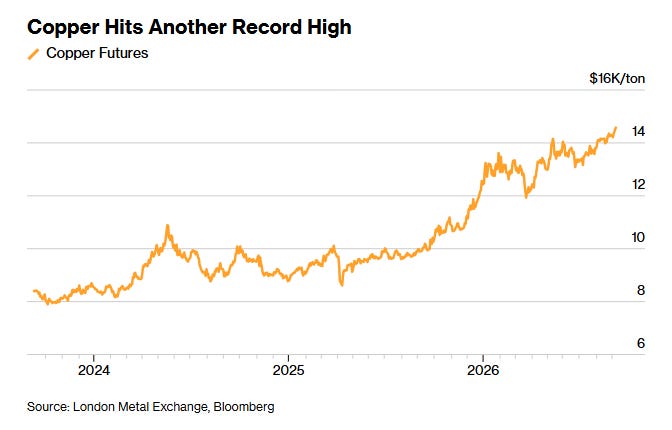
Crude’s Brent benchmark topped $100 before falling back, the highest since May 22nd, after Saudi Arabia said operations at facilities in the kingdom’s south were halted by attacks. Reports of strong Chinese purchases added to tightness in oil markets. US copper prices also approached all-time highs and London prices hit them for a second session. Despite the higher commodity prices, bond yields were little changed giving up early gains.
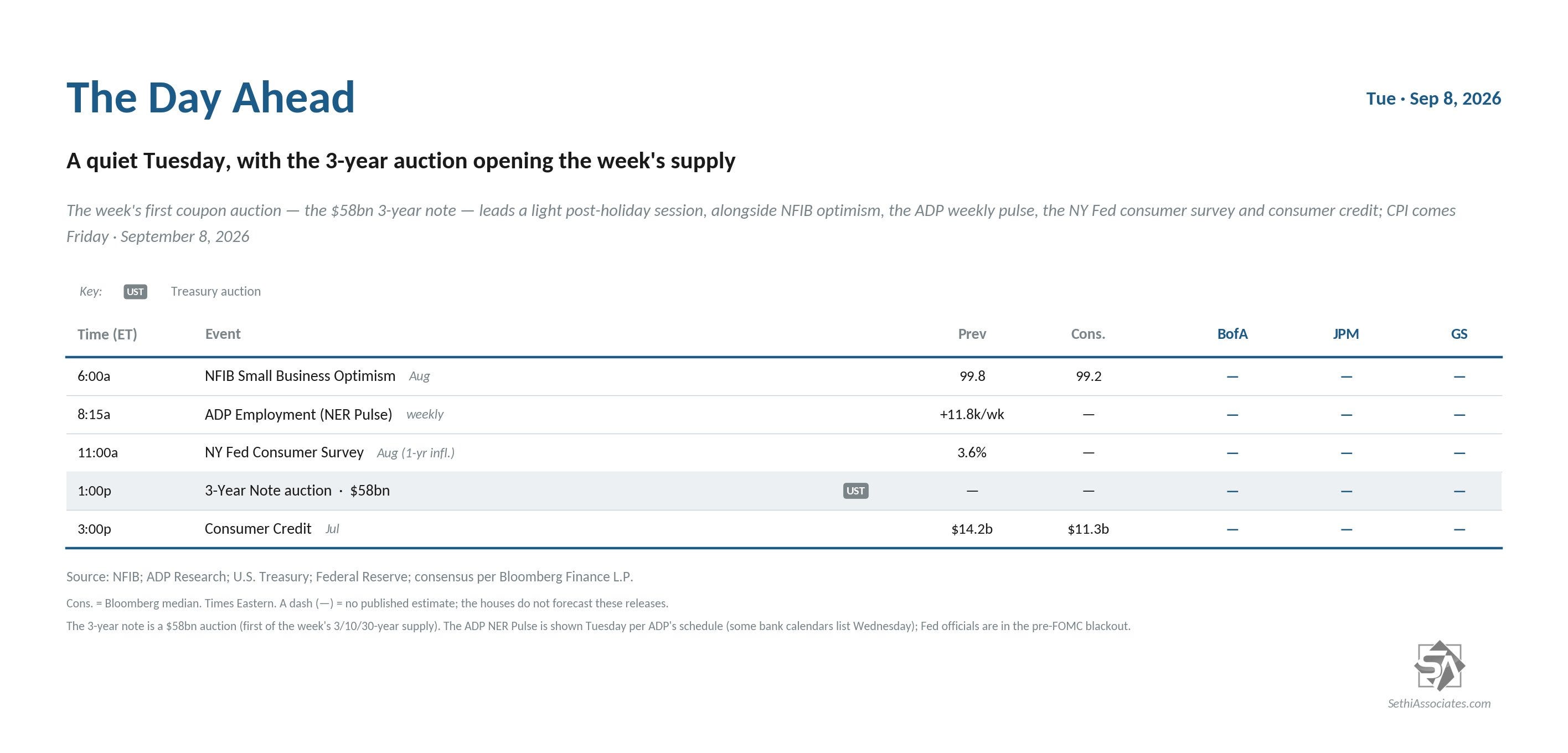
In terms of US economic data, as mentioned in the Week Ahead it’s an overall light week. Earlier this morning, we got the August NFIB small business sentiment which fell back 1.1 points to 98.7 (from the highest since August 2025 in July) driven by softer sales expectations, reduced hiring plans, and higher uncertainty.
Later this morning we’ll get the NY Fed’s consumer survey, and this afternoon we’ll also get a 3-year Treasury auction and the July consumer credit report. (Note: ADP did not indicate that the weekly job growth report would be moved, but it hasn’t come up, so it looks like that will be tomorrow (so ignore on the table below)).
The S&P 500 is down by 0.2% while the tech-heavy Nasdaq-100 index is +0.2%, and the small-cap Russell 2000 is -0.2%.
[Note the International Update is below the US update]
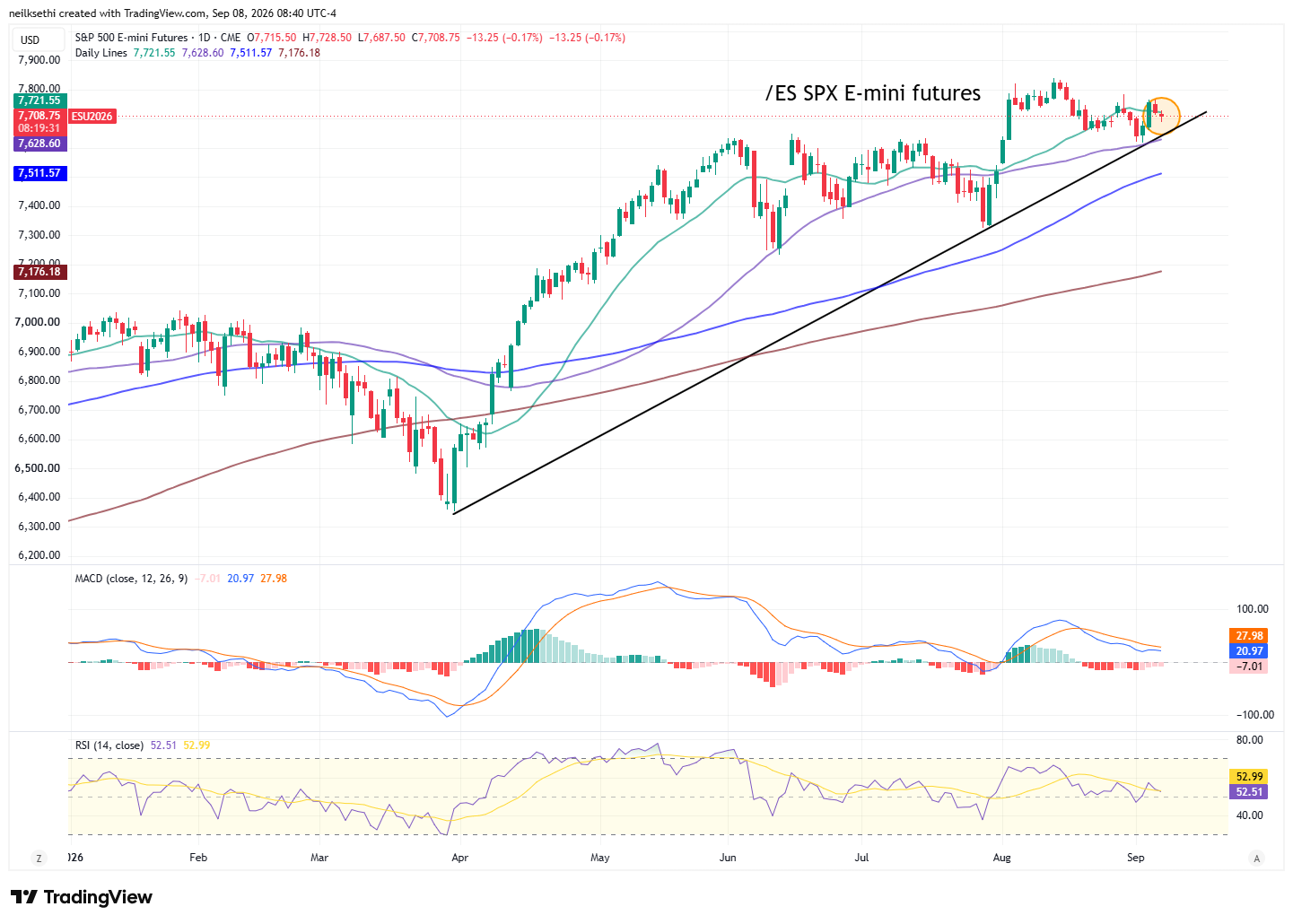
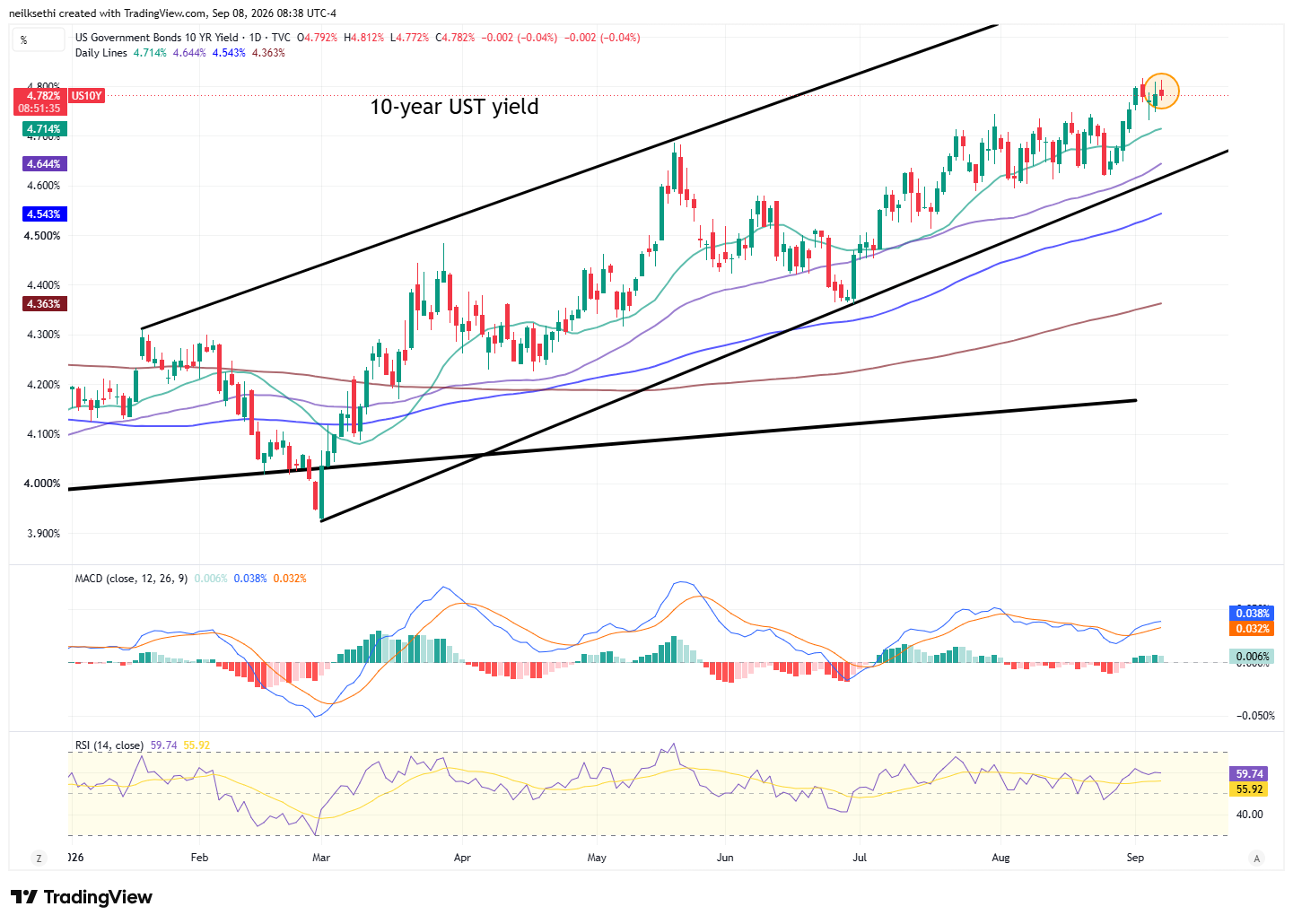
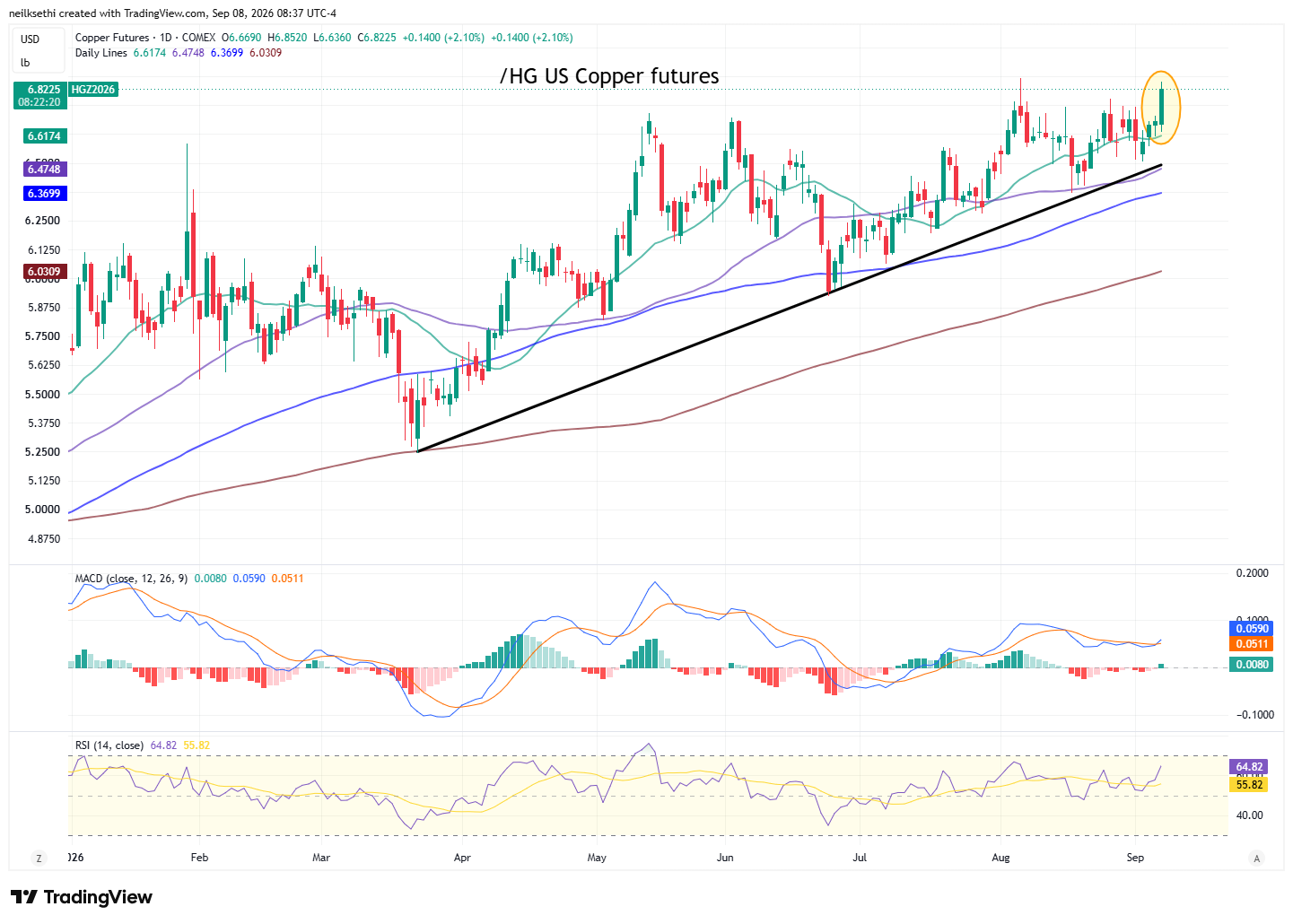
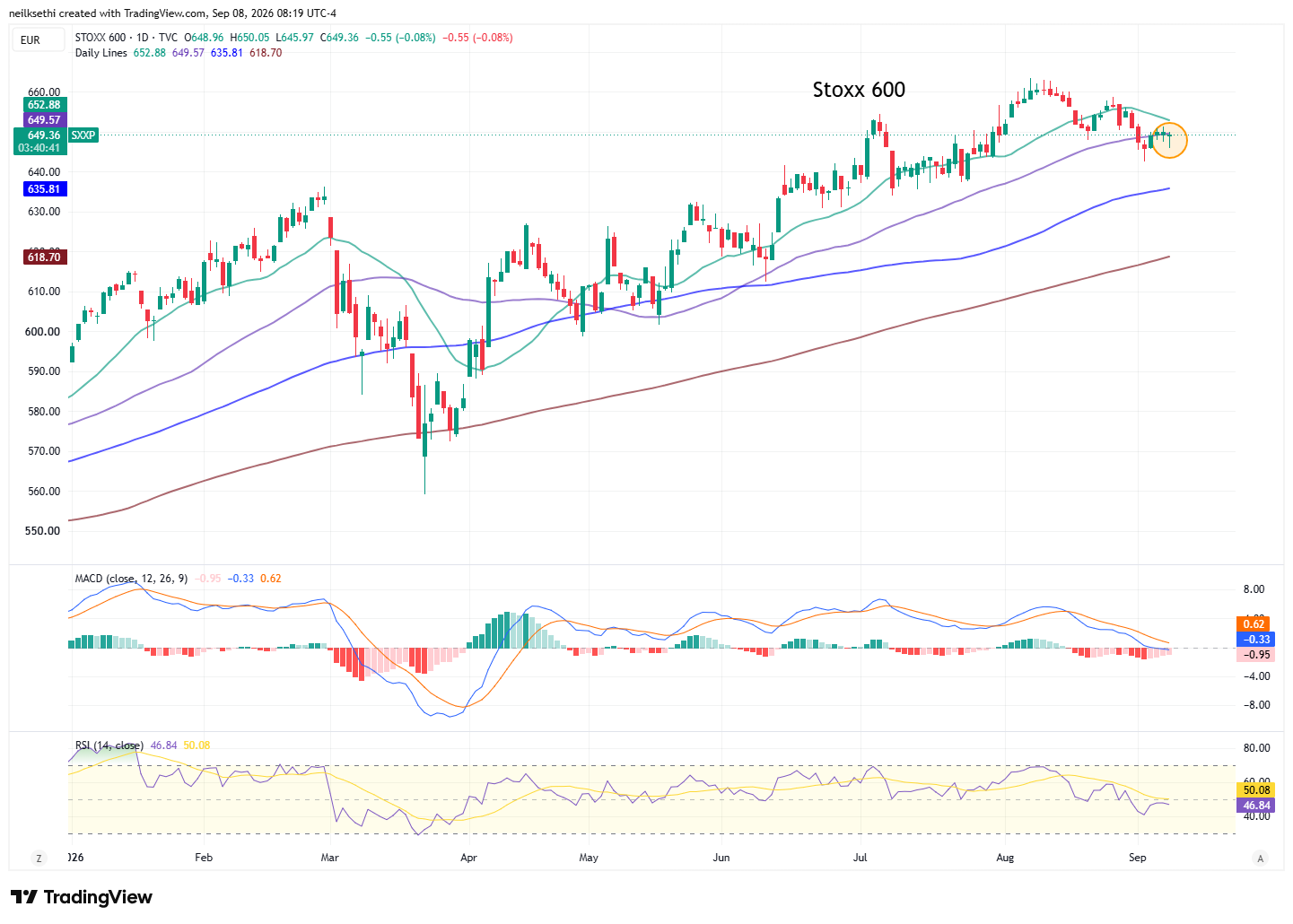
Note on all charts the colored lines are daily moving averages (the average price over the given number of days):
20 = green
50 = purple
100 = blue
200 = brownThe middle panel is MACD = Moving average convergence/divergence line, a measure of momentum that compares longer term and shorter term momentum to gauge if a move is strengthening or weakening. This is probably my favorite individual indicator (it’s also the favorite of Katie Stockton, a very fine technician).
The bottom panel is RSI = Relative Strength Index (basically what it sounds like) = measures the strength of the move comparing gains to losses over the given lookback window (I use the standard 14 periods).
SPX futures (/ES): mildly lower.
10-year Yield – eased back from earlier gains remaining near the 2026 highs (highest since January 2025).
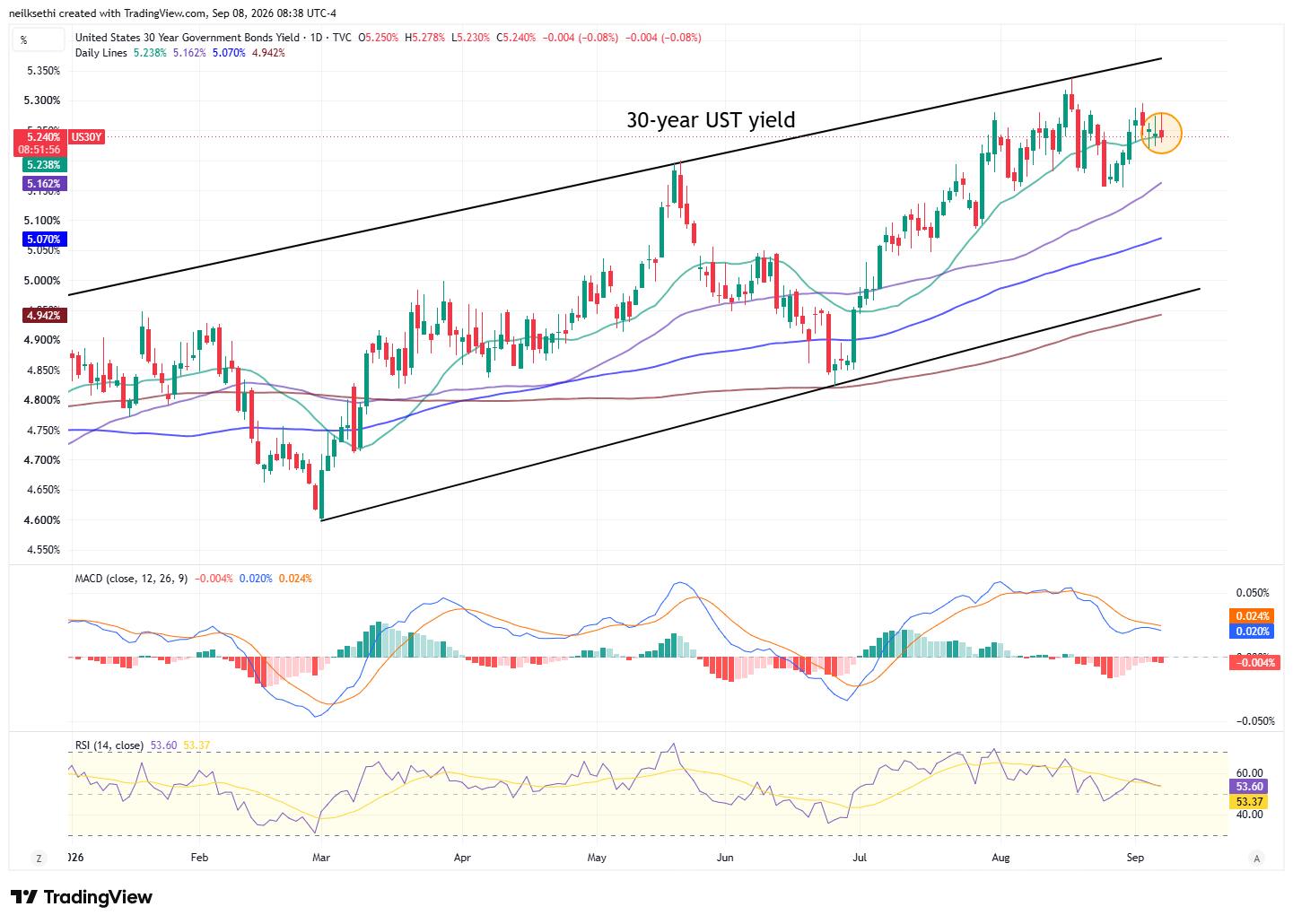
30-year Yield – also little changed.
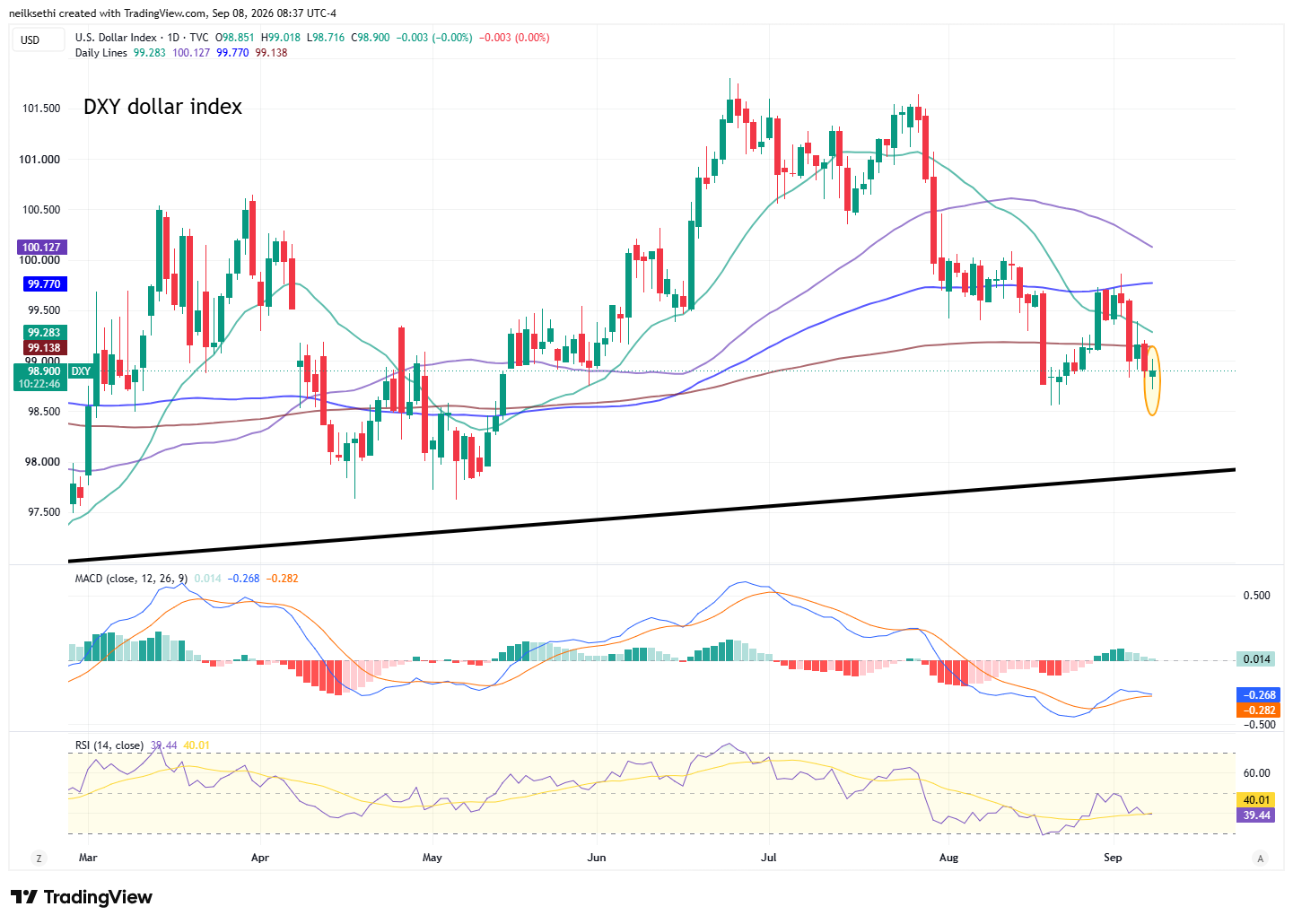
DXY US dollar index – little changed.
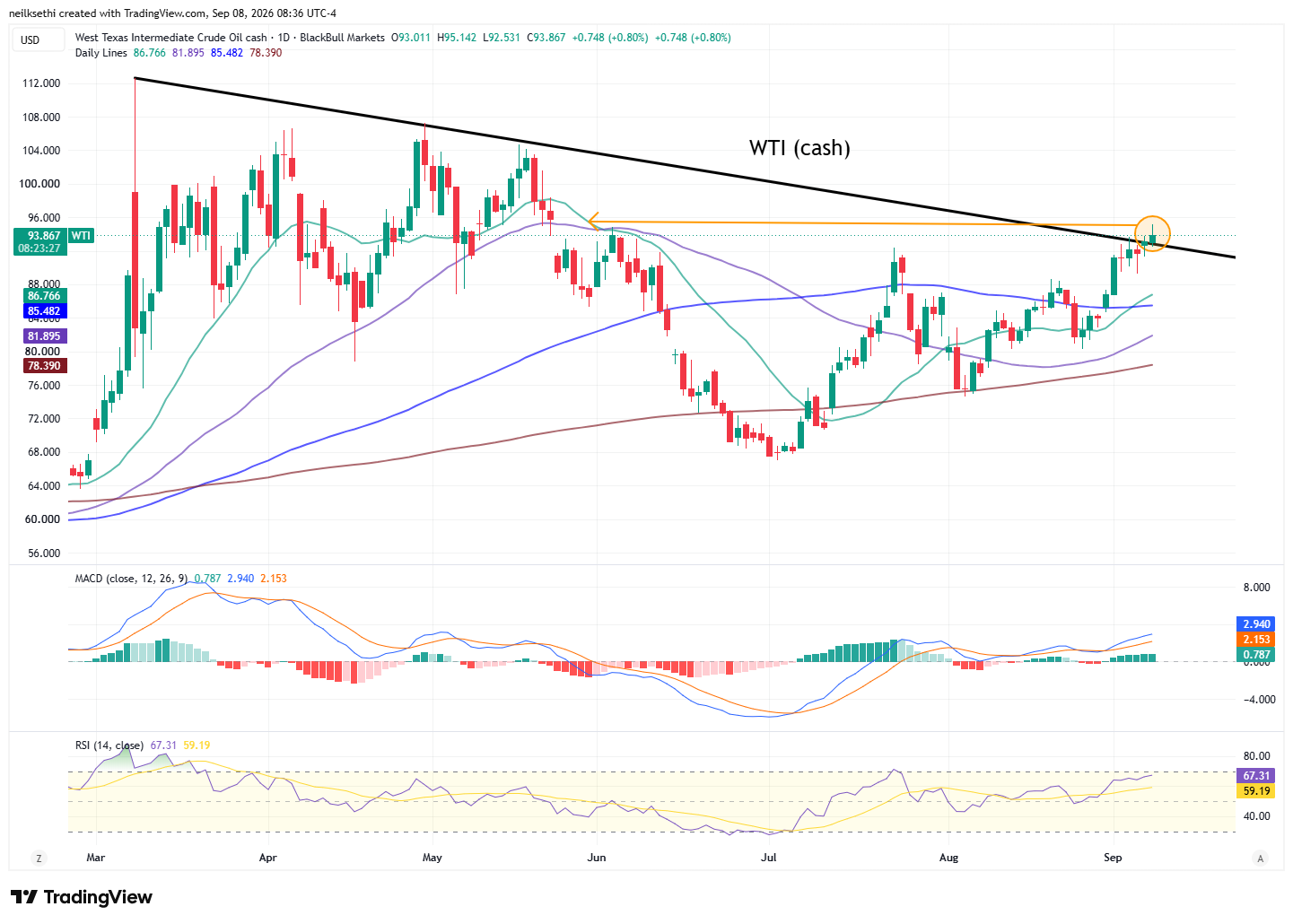
US WTI crude – earlier hit the highest level since May 22nd; also breaking over the downtrend line from the March high.
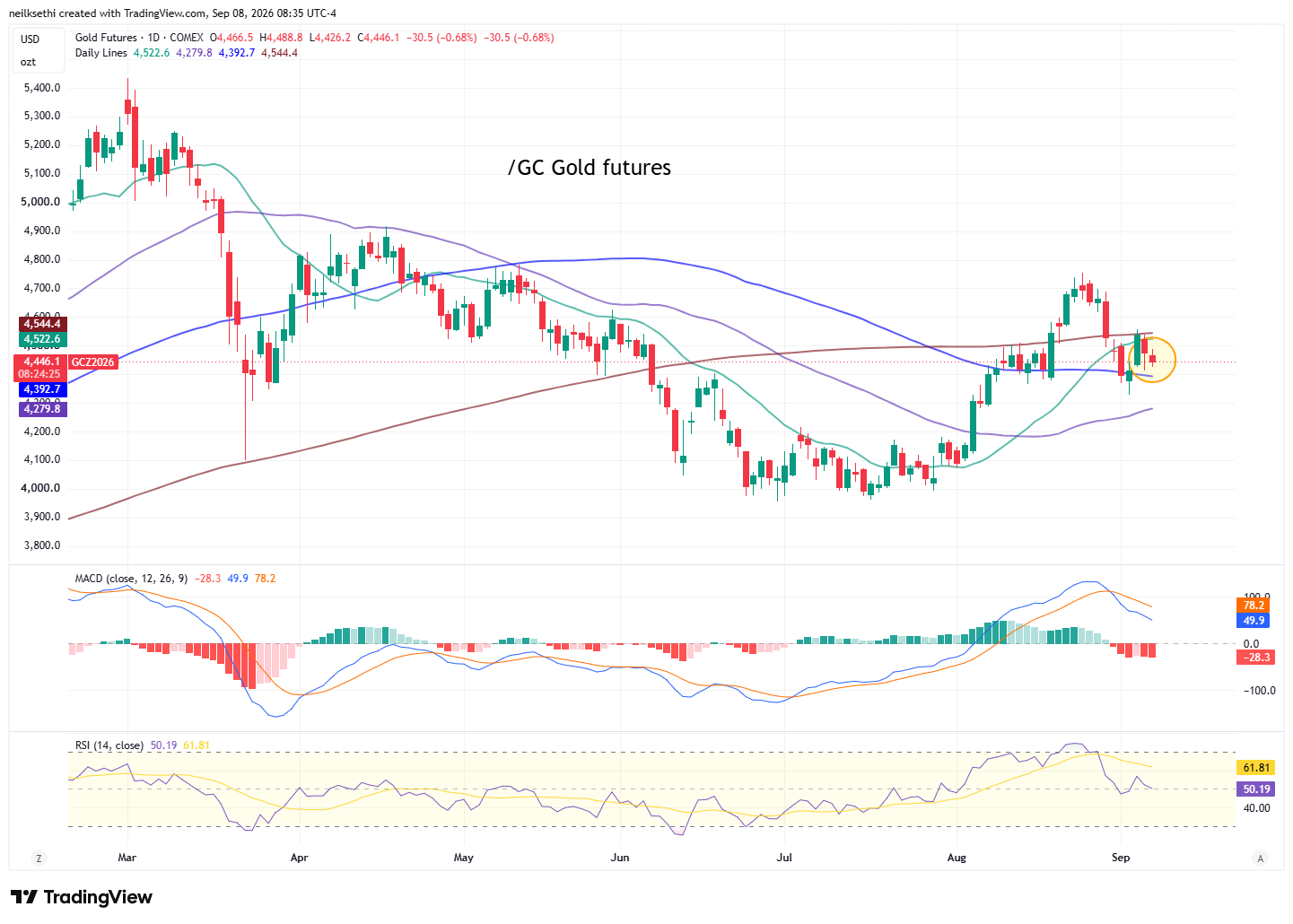
Gold futures (/GC) – easing back for second session after failing to get back over the 200-DMA last week.
US copper futures (/HG) – up 2%; at current levels it would be an all-time closing high.
While London copper hits an all-time high.
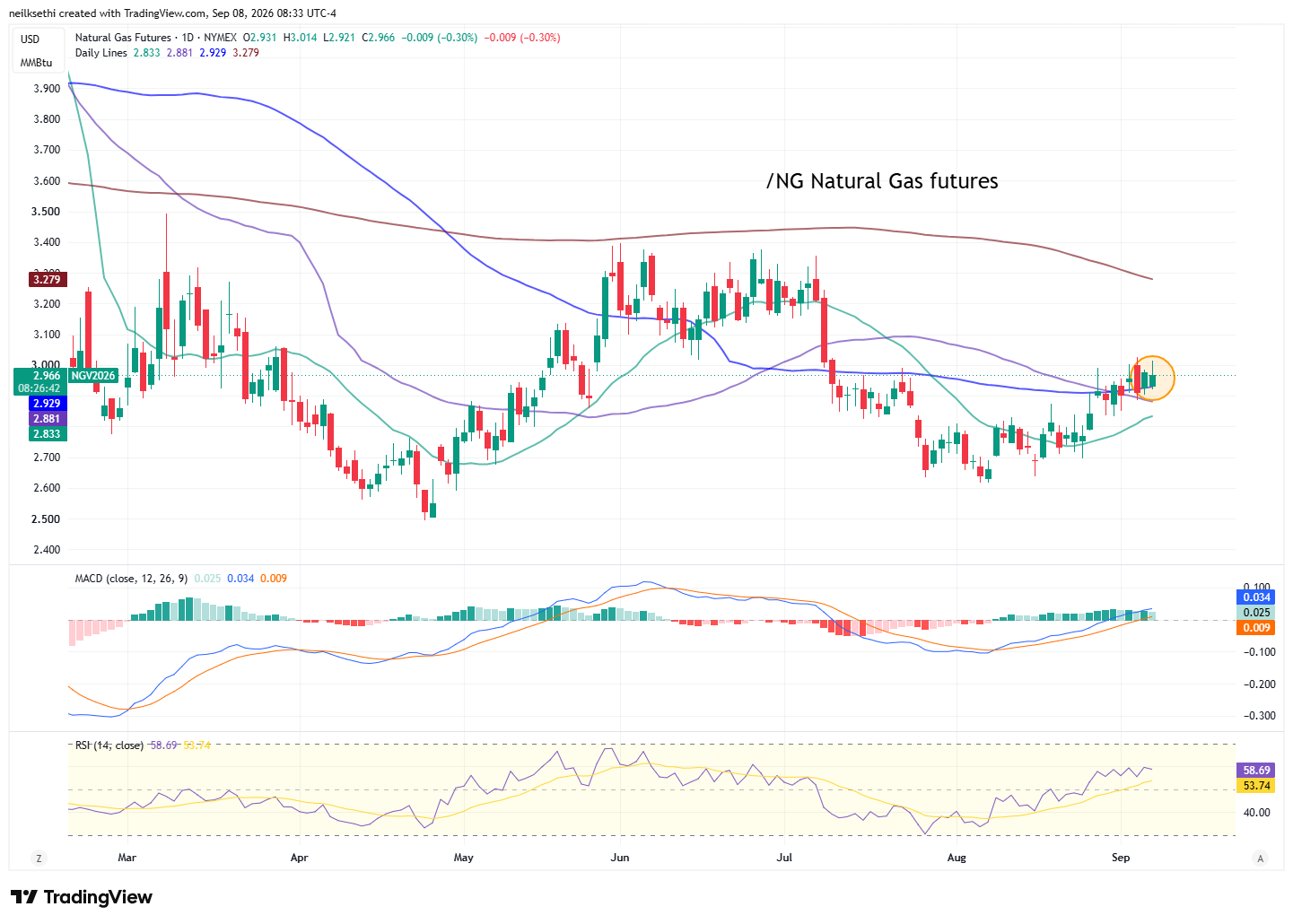
US natural gas futures (/NG) – remain trapped just under $3; technicals continue to suggest it gets over.
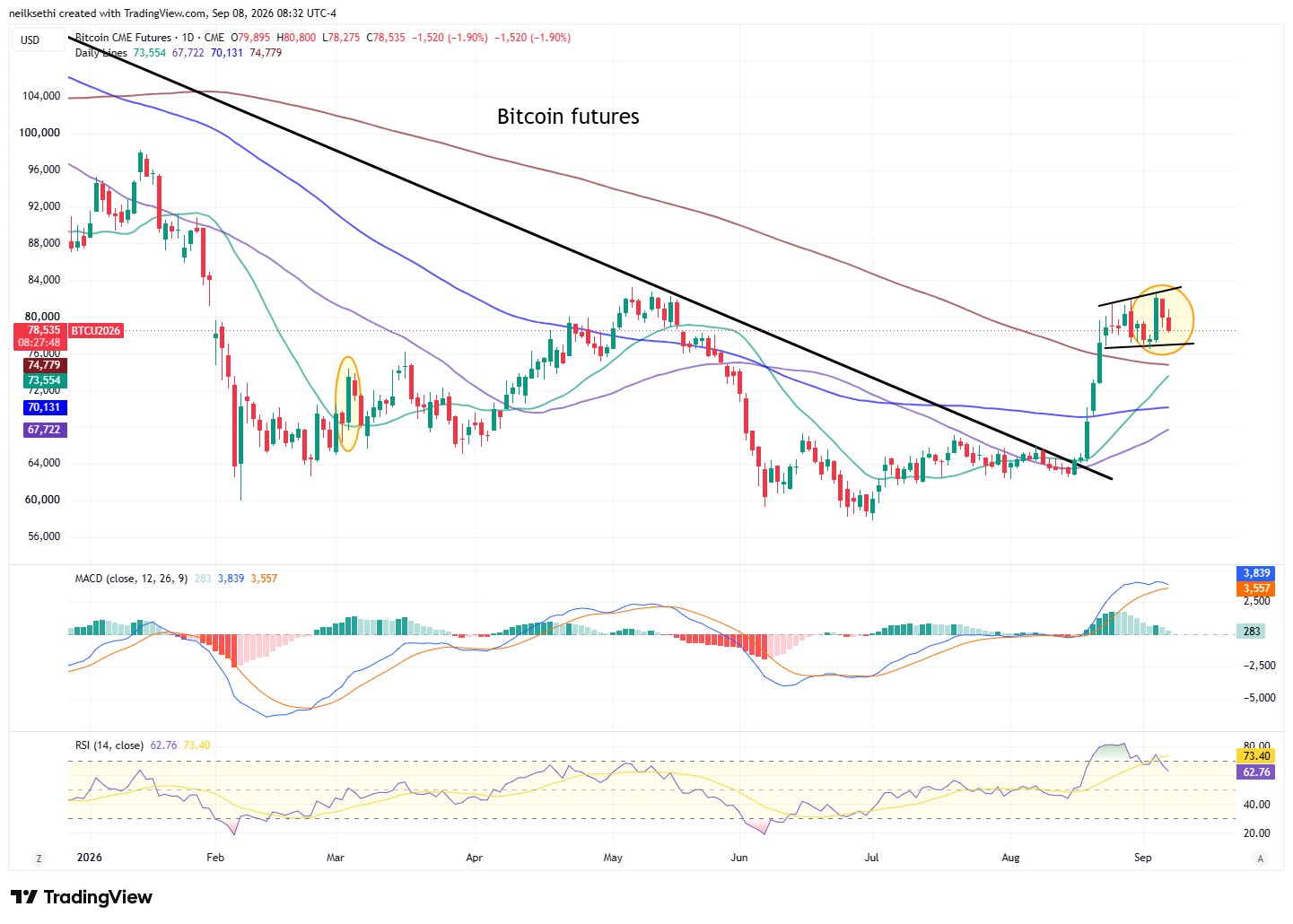
Bitcoin futures – easing back; perhaps tracing out a “bull flag” pattern (which would suggest continuation on a break above the top line)?
Some pre-market company news from CNBC/MarketWatch/BBG (links to CNBC pages or BBG).
- Roivant Sciences — Shares rallied 24% after the pharma company said Phase 2 trial results for subsidiary Pulmovant’s mosliciguat demonstrated “a clinically meaningful and statistically significant placebo-adjusted reduction in pulmonary vascular resistance” in patients with pulmonary hypertension with interstitial lung disease.
- Lockheed Martin — The defense contractor ticked 0.7% higher after UBS upgraded the stock to buy from neutral, citing underappreciated earnings growth potential.
- Peloton Interactive — Shares slid more than 4% after a Morgan Stanley downgrade to underweight from equal weight. “PTON is facing structural headwinds in fitness,” Morgan Stanley said.
- Boston Scientific — The medical device maker slipped more than 2% after the company said a recent cyberattack likely impacted sales and profit targets for 2026.
- Bloom Energy – The fuel-cell manufacturer is up more than 6% as it prepares to join the S&P 500 on Sept. 21. Bloom has been a major beneficiary of the AI data center buildout. Its shares are up about 190% this year.
- Amazon.com Inc. has mandated banks for a debut sterling bond sale with the deal expected to launch as soon as Wednesday.
- GE Aerospace agreed to buy castings manufacturer Consolidated Precision Products from Warburg Pincus and Berkshire Partners for $11.75 billion.
- Anthropic PBC has decided against acquiring artificial intelligence startup Decart AI, people familiar with the matter said.
Some other stories:
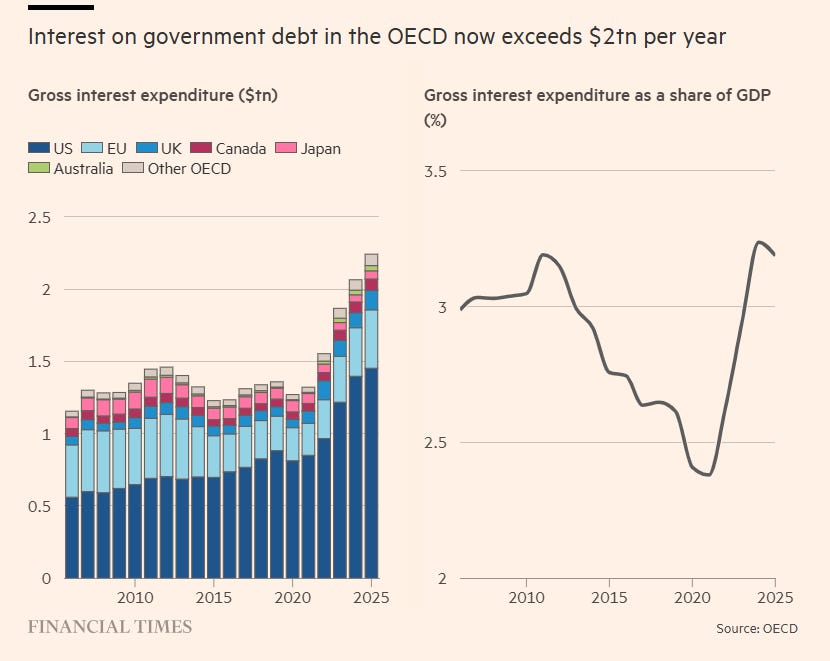
- FT – The world’s governments have created a $2tn monster — a debt-servicing burden that gobbles up tax revenues and has the power to overwhelm elected leaders.
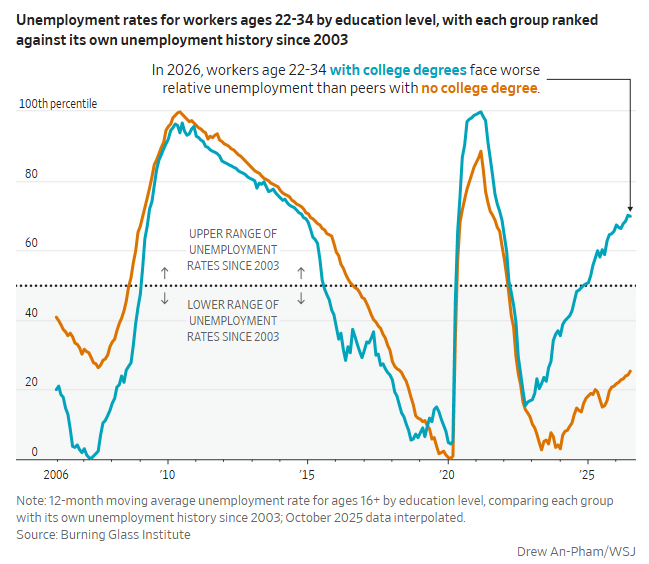
- WSJ – For most U.S. workers—those without college degrees, that is—it is one of the best job markets in decades.
- FT – A number of big US university endowments are on track to match or outpace the broad stock market, as large weightings in tech groups such as SpaceX and OpenAI help them snap several years of underperformance.
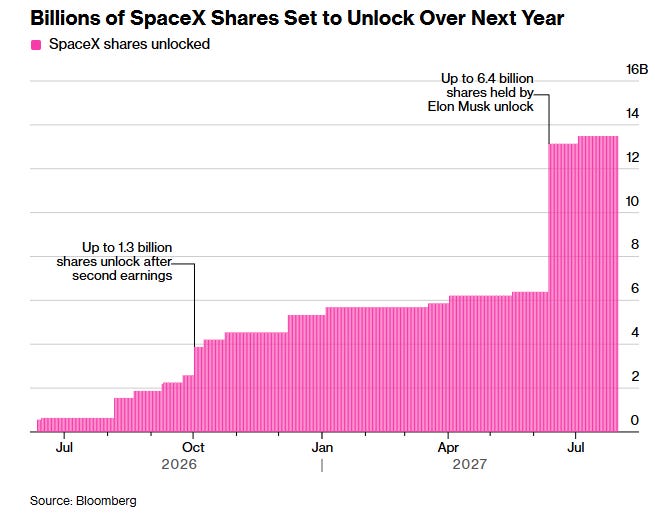
- BBG – SpaceX’s stock has been stuck in a tight trading range recently, but a wave of new buying may soon arrive when the Nasdaq 100 Index goes through its quarterly rebalancing later this month.
- BBG – America’s shrinking water storage threatens to clog billions of dollars in economic activity from hydroelectric power and agriculture.
International Highlights:
Europe’s benchmark STOXX 600 as of 8:20 am ET was -0.1% after last week closing out its third down week in the last four.
Germany’s DAX: -0.1%, U.K.’s FTSE 100: -0.1%, France’s CAC 40: UNCH, Italy’s FTSE MIB: -0.4%, Spain’s IBEX 35: -0.3%.
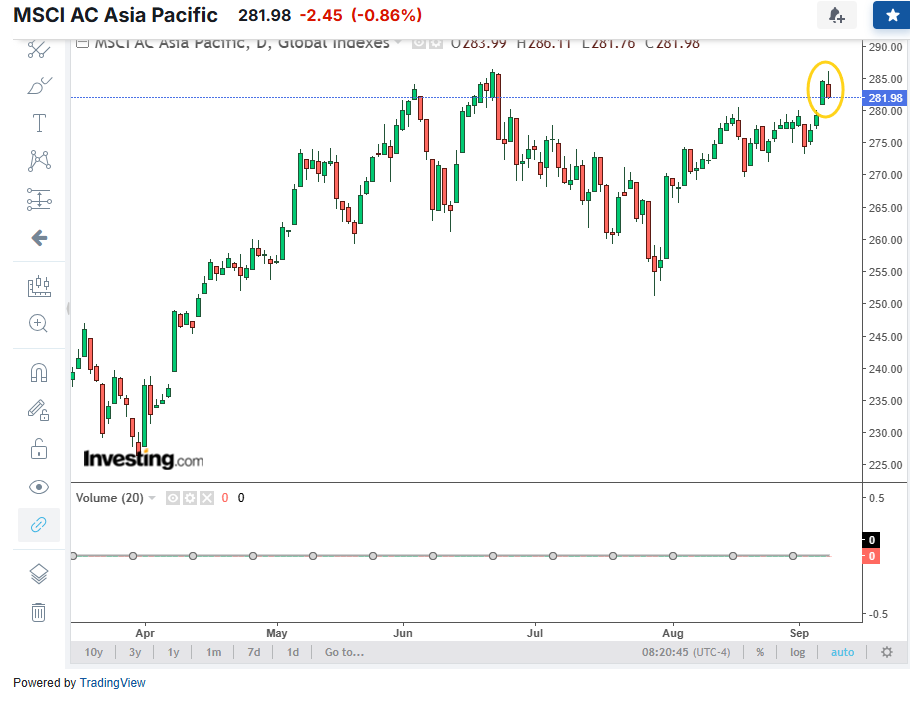
The broad MSCI AC Asia Pacific Index finished -0.9% after earlier in the session testing its all-time high.
Japan’s Nikkei: -1.7%, Hong Kong’s Hang Seng: -0.4%, China’s Shanghai Composite: +0.2%, India’s Sensex: -0.7%, South Korea’s Kospi: -0.6%, Australia’s ASX All Ordinaries: -0.9%.
Some ex-US highlights:
- BBG – German Chancellor Friedrich Merz said his government will have to learn the lessons from an overwhelming victory by the far right in a state election that he said will alter the country’s politics.
- BBG – Canada imposed tariffs of 15% to 50% on hundreds of products from the US on Tuesday, as Prime Minister Mark Carney bets that standing up to President Donald Trump will eventually help Ottawa’s negotiating position with its biggest trading partner. Carney’s government increased the import tax on many US steel items to 50% from 25%, and applied tariffs to a range of consumer goods — motorcycles, cosmetics, cheese and more — at 12:01 a.m. New York time.
- BBG – Iran said a deal with Oman to manage shipping through the Strait of Hormuz is imminent, a move that could tighten Tehran’s control over the waterway and raise questions over how the US would respond.
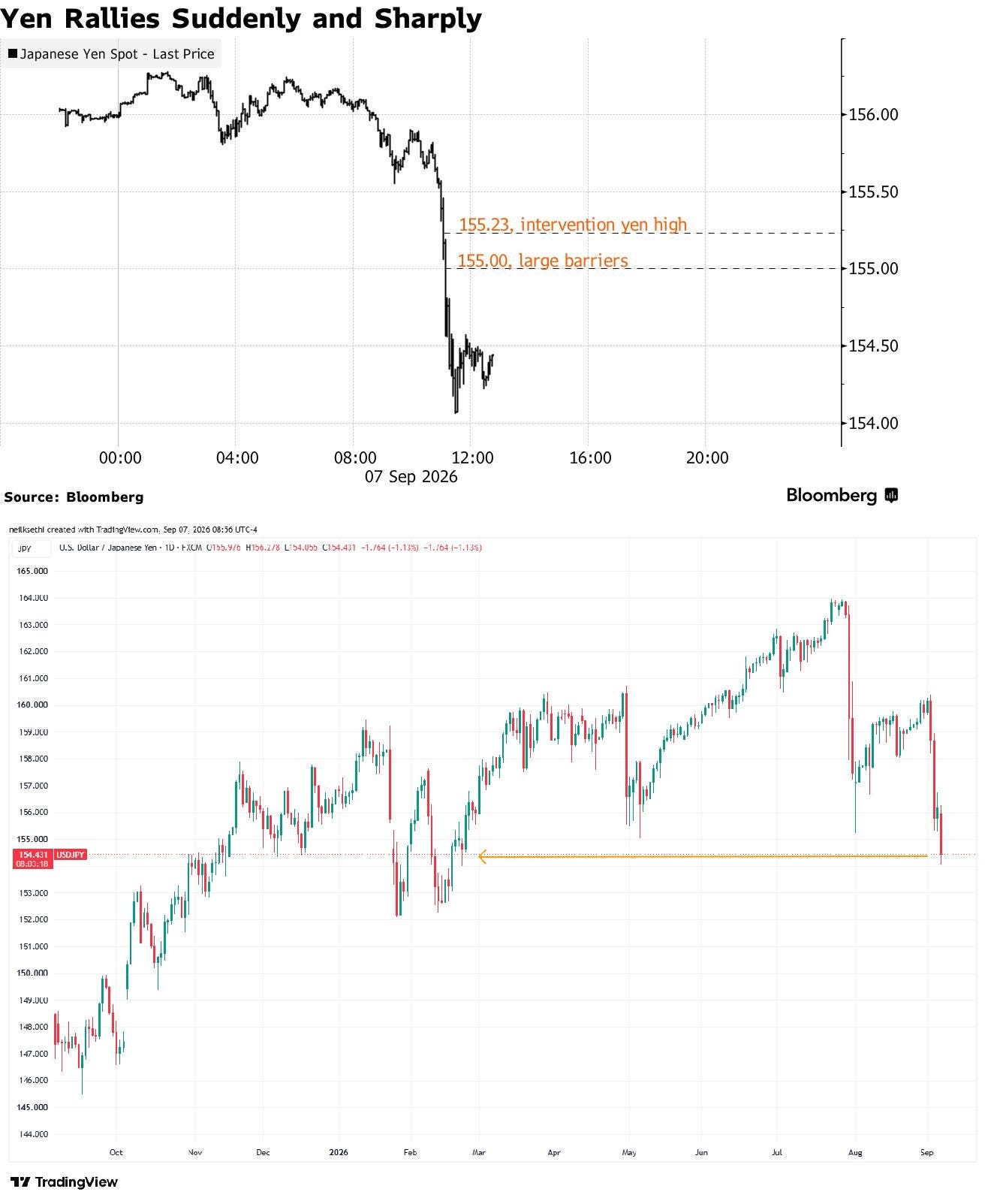
- BBG – The yen strengthened to its highest level since February on Monday, surpassing the peak reached after coordinated intervention by Japan and the US. The gains continued into Tuesday putting the 2026 high (152) within reach.
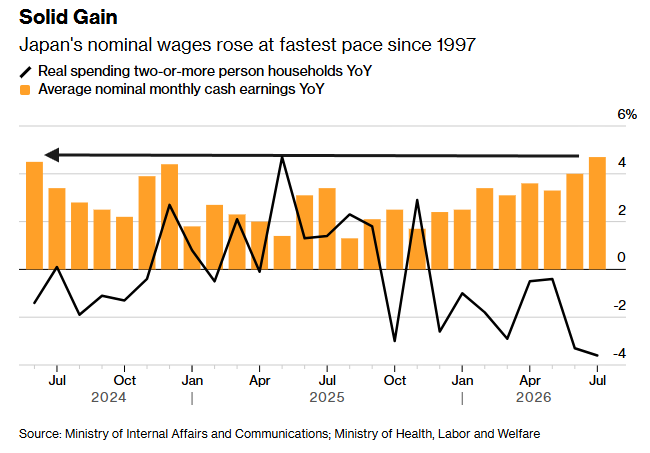
- Japanese workers’ nominal wages rose at the fastest pace in nearly three decades on the back of strong corporate earnings and a tight labor market, in data likely to keep the Bank of Japan on course for further monetary tightening. Nominal pay climbed 4.7% in July from a year earlier, the most since 1997, far exceeding economists’ forecast of 3.8% and marking a sixth straight month in which the advance exceeded 3%, the longest such streak in 34 years.
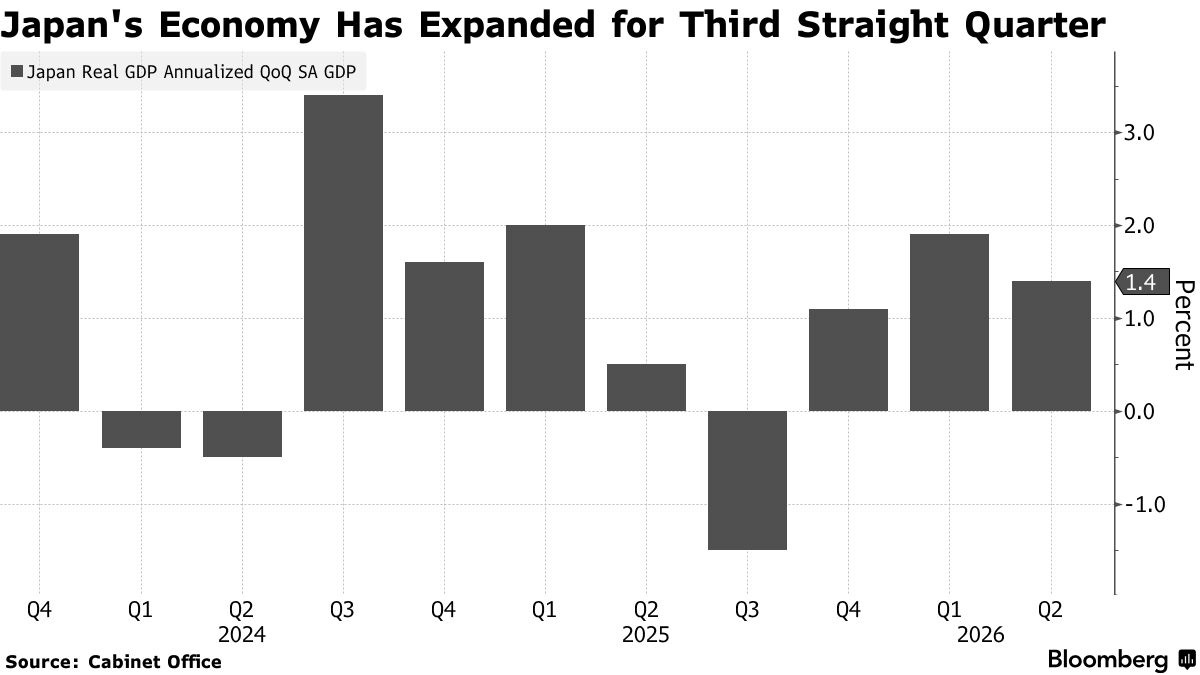
- Japan’s economy grew at a faster clip in the second quarter than initially estimated, strengthening the case for a widely expected Bank of Japan interest-rate hike next week. Gross domestic product expanded 1.4% from the previous quarter on an annualized basis, up from an earlier estimate of 1.1%, although weaker than the median economist estimate of 1.8%.
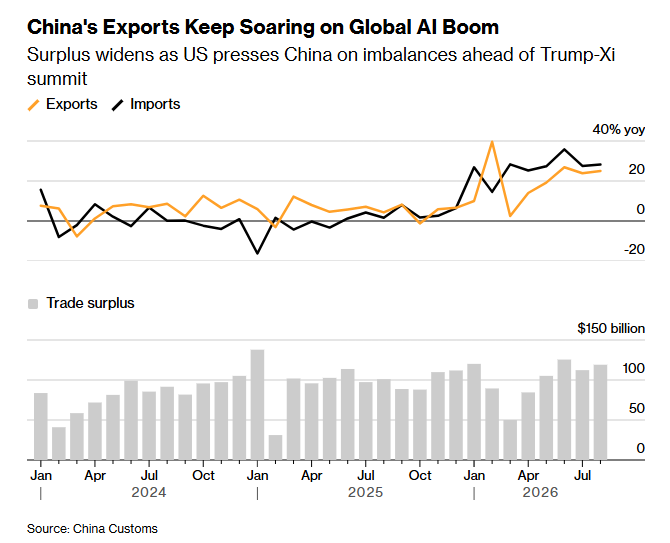
- BBG – China’s export growth accelerated in August, swelling its trade surplus near $806 billion for the year just as the US ramps up pressure on Beijing to address imbalances before the leaders of the world’s biggest economies meet in Washington. Exports jumped 25% in August from a year earlier, slightly undershooting forecasts after an increase of nearly 24% in the previous month. Imports rose 28.2%, data released by China’s General Administration of Customs showed on Tuesday.
- China slapped anti-dumping measures on Japanese shipments of a chemical used in the production of semiconductors, a fairly targeted move that nonetheless escalates a diplomatic dispute with Tokyo over Taiwan.
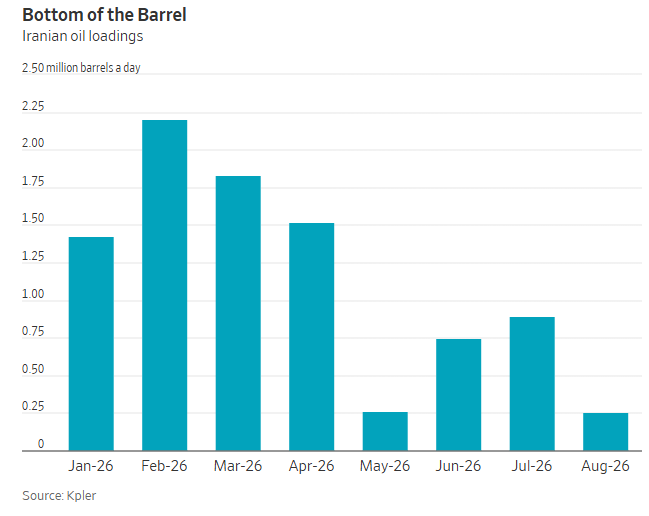
- WSJ – Iran’s oil export revenue is drying up as a U.S. naval blockade strangles shipments from the Persian Gulf and offshore stockpiles feeding China dwindle, putting more pressure on Tehran’s battered economy. Meanwhile, the volume of Iranian crude already on vessels outside the blockade—a trove that is still generating revenue for Tehran—has fallen to around 29 million barrels from around 90 million barrels in mid-July and could run out next month, according to Kpler.
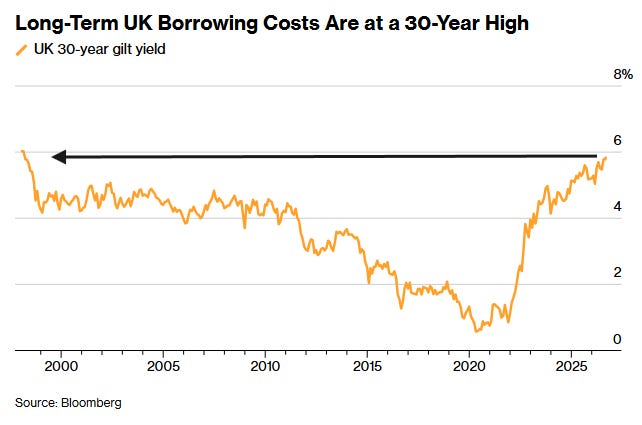
- BBG – The UK paid its highest borrowing costs on a debt sale since at least 1998 after a global bond retreat sent yields surging and squeezed the government’s finances ahead of next month’s budget.
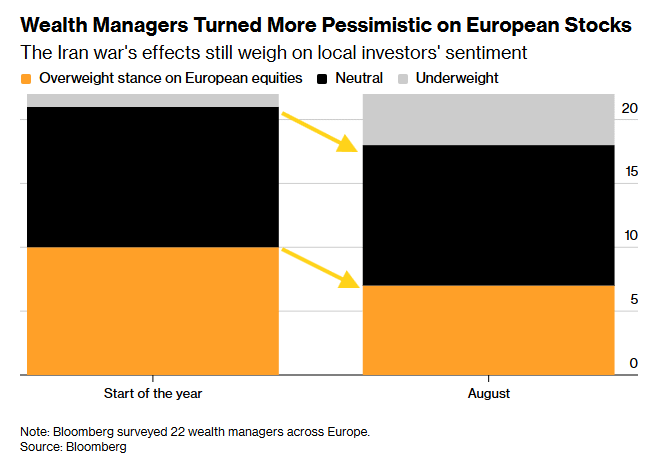
- BBG – “More European wealth managers have turned pessimistic on the region’s stocks, taking the view that this year’s rally is likely to falter while markets in the US and developing countries power ahead. Just seven out of 22 European private banks and wealth managers surveyed by Bloomberg are overweight the region’s stocks, with 11 neutral and four underweight. This marks a dip in sentiment from the start of the year, when 10 respondents were positive on the region and only one negative.”
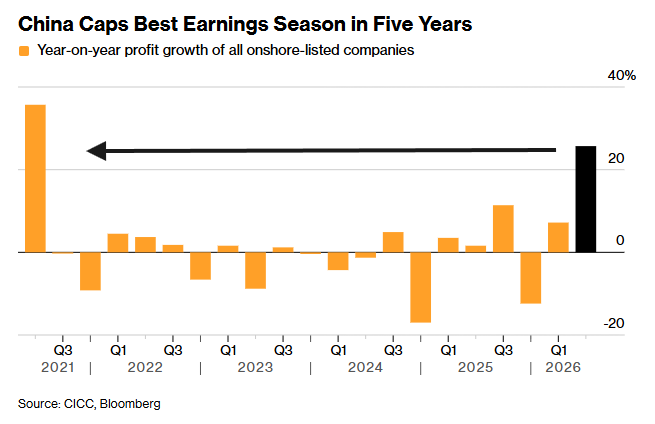
- BBG – “China’s best profit growth in five years hasn’t been enough to reignite a stock rally, with a weak economy and doubts over AI returns sapping investor enthusiasm. Profits at onshore-listed Chinese companies climbed 25.7% in the three months to June from a year earlier, the fastest pace in nearly half a decade, according to China International Capital Corp. But the CSI 300 Index has slipped about 9% this quarter, and the tech-heavy Star 50 Index has tumbled 29%.”
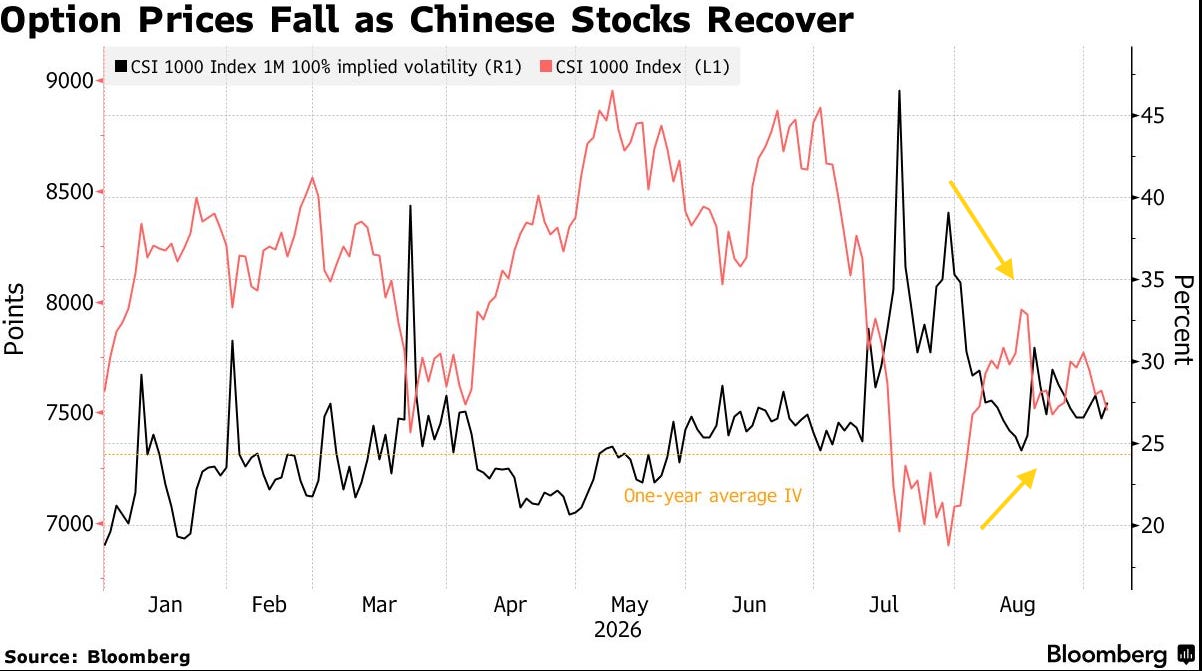
- BBG – “Investors seeking to diversify beyond crowded AI trades in Korea and Japan are increasingly seizing on Chinese equity derivatives…. Yet even as optimism creeps back in, traders remain cautious about the nation’s economic outlook and government support.”
Some ex-US corporate highlights:
- FT – The boss of EssilorLuxottica has overhauled the eyewear group’s senior management after a bitter public clash with its founder’s son and as the company steps up its push into North America.
- RTRS – President Donald Trump said on Monday that Canadian private jet maker Bombardier would no longer be allowed to sell its planes in the United States unless it started manufacturing in the country. “NO MORE SELLING BOMBARDIER IN THE UNITED STATES! Their products aren’t good enough!” Trump said in a post on Truth Social.
- BBG – Two leading commodity trading houses have seen their profits soar, according to company financials seen by Bloomberg News, highlighting how the war in Iran has created a bonanza for the traders and their top executives.Mercuria Energy Group’s profits in the nine months to June jumped 122% from a year earlier, while Gunvor Group’s profits in the six months to June were up 644% year-on-year.
- Novartis AG shares tumbled after suffering its third clinical-trial setback in a week.
As a reminder, as I mentioned in the Week Ahead: “I want this piece, and to a larger extent the intra-week pieces (morning, evening, and economic updates), to evolve in whatever way is most meaningful for readers here. In that regard, I highly encourage an open and robust dialogue. Please post or email comments, questions, pushback, or suggestions on what I write, and especially what you would like to see more or less of. I read all the feedback, and I promise to be responsive as the newsletter settles into its new home.”