AI Hype Is Obscuring Some Pretty Dire Warning Signs
Small business bankruptcy filings are spiking, more cracks are forming in the housing market … and eventually something’s gotta give.
You've reached your free article limit
You've read 0 of 1 free Pro articles.

It seems the latest U.S. misadventure in the Middle East is not quite as settled as investors and the administration were hoping. Clear escalation by both parties of the recently signed memorandum of understanding puts that agreement in doubt at this point. Traffic that was just starting to regain some normalcy transiting the Strait of Hormuz is being bottle-necked again. This will push volatility around a variety of energy and commodity products higher.
It is clear to me that the “AI revolution” and its associated surge in tech spending and associated products needed to construct massive AI data centers, as well as all the components and power grid capacity needed to bring these facilities online, is covering up a lot of ills throughout the rest of the economy. The latest Atlanta Fed GDPNow’s Q2 GDP growth projection sees the U.S. economy growing at 1.3% at an annual rate in the second quarter. Right at the average of the past two quarters. Far below the roughly 4% average gross domestic product growth of Q2 and Q3 of 2025.
And that is with the combined capital expenditure budgets of the five major hyperscalers hovering right around the $700 billion mark in 2026. Most of this will be spent in the U.S. That in itself should push GDP growth to 2% for this year. This spending did account for approximately 70% of Q1’s GDP growth.
Outside these AI infrastructure efforts, however, there is little to be excited about concerning the U.S. economy. Even less so with Europe’s anemic growth. The International Monetary Fund just revised down its global growth forecast for the second time this year, to a relatively paltry 3%. Here at home, the housing market remains moribund for the fourth straight year. Despite frequent talk of the “housing shortage” on CNBC and by various pols heading into the mid-terms, condo inventories are at 14-year highs now. Single-family home inventory is also at the highest level in a decade as well.
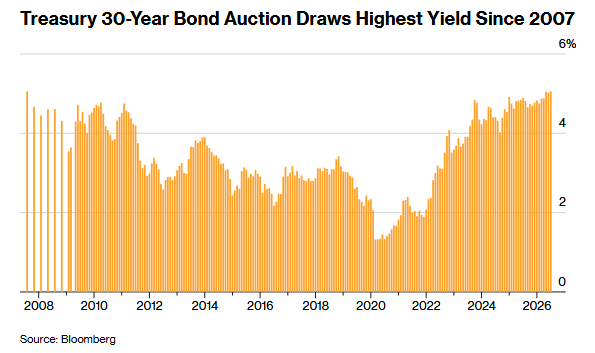
Housing affordability is near all-time lows. And with the 30-Year Treasury auction last week pricing the highest yield since 2007, there is little relief coming on the mortgage-rate front. Rising property taxes and electricity costs are not helping existing or prospective homeowners. Neither is property insurance that has surged in many regions of the country.
It is little wonder that the home foreclosure rate just hit a seven-year high. They will go significantly higher in the quarters ahead. Largely as a result of four years of extraordinary Federal Housing Administration mortgage mitigation efforts that all but ended at the start of the federal government’s fiscal year on Oct. 1. Homeowners tapped home equity lines for $47 billion in Q1, the highest volume for the quarter since 2021 during the peak of the Covid pandemic
The average new car payment in the country is now $770 a month. That is significantly more than I paid monthly for a nice two-bedroom, two-bathroom apartment in a decent area of Phoenix coming out of college. Not meaning to date myself.
The high inflation of the past five years, new tariff costs and a struggling consumer have become significant headwinds for small businesses. Chapt. 11 small business bankruptcy filings spiked 50% in the first half of this year from the same period a year ago — a story that is getting little airtime. The private credit market continues to deteriorate as well.
The unemployment rate is holding up in the “no fire, no hire” labor market. However, it should be noted that the labor participation rate is at a half-century lows outside of the Covid era. In summary, investors should hope the AI Narrative continues to hold as the tech spending boom is covering up a lot of ills across the broader U.S. economy.
At the time of publication, Jensen had no position in any security mentioned.