A Winning Strategy for Retirees Who Want Rising Income
One of the most common challenge investors who are nearing retirement face is creating a rising income stream for over a long period.
You've reached your free article limit
You've read 0 of 1 free Pro articles.
One of the most common challenge investors who are nearing retirement face is creating a rising income stream for over a long period, especially for those fighting inflation during retirement. As retirees' expenses typically increase over the years, they need a combination of long-term capital appreciation and a growing income stream.
A dividend growth approach is one of the best strategies to achieve rising income.
I’d like to share methods to accomplish this goal that I have found to be effective and profitable. This method can give you ideas to form a core strategy within a retirement income plan, complemented by other satellite strategies to enhance returns over time.
Chose a Winning Group of Stocks
For a successful dividend strategy, selecting the right universe of stocks is crucial. I start with the S&P 1500, which includes large, mid, and small-cap companies, and filter out those with excessively high, unsustainable yields. I want to ensure dividends are well-supported by earnings and companies demonstrate the potential for a proven competitive advantage.
Additionally, I consider daily dollar volume and eliminate illiquid stocks. I also only want companies with a long-term record so I exclude stocks lacking a 10-year track record. Now for the best part, I only include stock that have had rising dividends each year and have not cut their dividend in recent quarters. This really narrows the universe. As of right now, the universe is 341 companies.
Demand Steady Rising Dividends with Strong Earnings
A critical aspect of this strategy is focusing on stocks with adequate analyst coverage—usually a minimum of five analysts so that analyst data can be analyzed. This criterion helps ensure that smaller companies are not excluded and provides better insights into future growth.
Consistent, rising dividends over the last five years are also essential. This approach further narrows the universe to companies with strong earnings, competitive advantages, and robust fundamentals. This focused list serves as a conservative basket of high-quality stocks for building a reliable income portfolio.
Build a Tasty Recipe for Better Results
Building and managing the portfolio is as important as selecting the stocks. I limit sector and industry weightings, and individual position sizes typically range from 1% to 5% of the initial capital. Allowing a drift of around 30% helps stocks grow without rebalancing too frequently, which minimizes turnover. I place constraints on sectors and industries as well to ensure good diversification.
My approach dynamically adjusts target weights based on fundamental ranking, market cap, and price volatility. This allows for controlled portfolio drift, where only stocks that have deteriorating fundamentals are sold, maintaining the focus on high-quality, income-producing companies.
Recognize When to Cash Out
The sell criteria are straightforward: stocks are removed if they cut dividends or drop in fundamental rankings, typically below the 25th percentile. This approach helps maintain a portfolio of top-performing, liquid stocks with a strong track record of dividend growth. By adhering to these rules, the portfolio remains robust and avoids over concentration in any one sector or industry, providing steady, reliable returns over time.
Have a "Hold and Prosper" Mentality
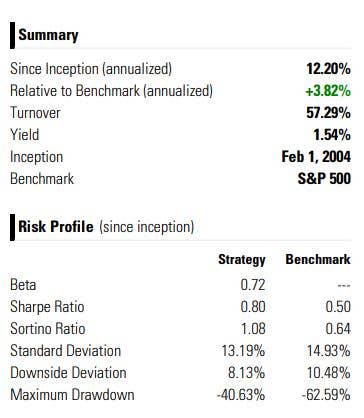
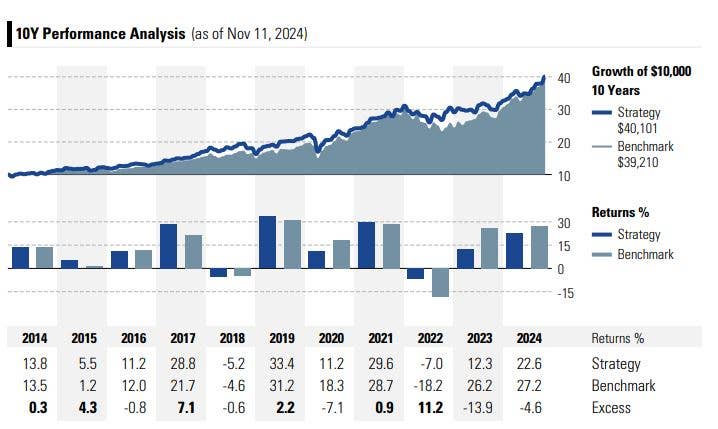
This portfolio is designed for long-term investors seeking steady growth and income. It is not meant for market timing but instead focuses on reliable income and capital appreciation through high-quality, stable companies. The volatility of this strategy has been lower than the overall market, with a standard deviation of 13.19% since February 2004, and a beta of 0.72 compared to the S&P 500, making it suitable for retirement portfolios where stability is paramount. Historically this strategy has performed well annualizing at 12.20%. As with all simulated strategies it is important to understand that past performance may not be indicative of future results. Returns include a provision for transaction costs but do not include advisory fees.
Choose the Best Stocks and Let Go of the Rest
Historically, this portfolio shows moderate turnover, around 57% annually, with average holding periods over a year. Winners are held for an average of 646 days, while losers are held for around 305 days, allowing successful stocks to grow while cutting under-performers. To manage tax impact, I recommend tax-loss harvesting, which helps reduce tax burdens. This disciplined, long-term approach balances risk and return, targeting steady income growth over time.
A Bedrock Strategy for Retirees
For added stability, blending high-quality municipal bonds, corporate bonds, or private real estate with this strategy can enhance income and mitigate risk during market downturns. This portfolio, with around 50 stocks, offers diversification across industries, aiming for consistent, rising income and capital growth to counter inflation and taxes over a retiree’s lifetime.
Thank you for reading, and I welcome any insights you may have on dividend investing strategies. If you found this helpful, please share it with colleagues, friends, and family, and follow for more updates.