Walmart Hits the Wall, and That's Ominous for Retail
Stocks that appear cheap now will be cheaper later.
You've reached your free article limit
You've read 0 of 1 free Pro articles.
Were traders caught off guard by the plunge in shares of Walmart WMT on Thursday?
That would be an understatement.
If investors, retail or institutional, had any inkling that bad news was coming, the stock wouldn't have closed at an all-time high on Wednesday before plunging nearly 8% on Thursday.
Yet that's exactly what happened. Walmart went from hero to zero in a matter of hours as the company sounded the alarm on a pullback in consumer spending.
"We are more cautious on the consumer than we were 90 days ago," said CFO John Rainey during Walmart's post-earnings conference call. "Broadly, there is some stress on the consumer."
I'm long Walmart and have no plans to sell the stock, but this news is negative on multiple levels. If the world's largest retailer sees a slowdown in consumer spending, the impact could be far-reaching.
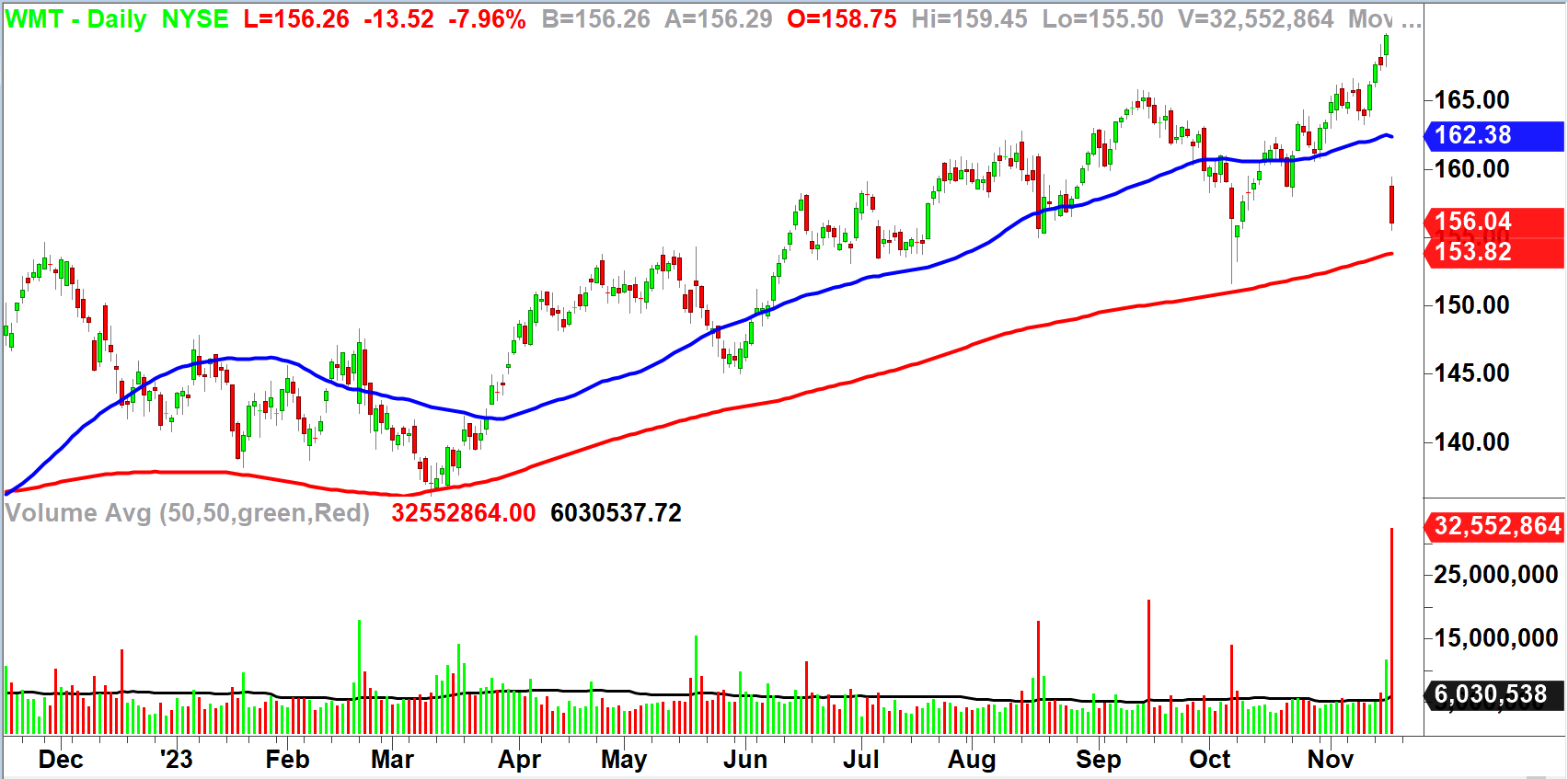
On Thursday, traders sold Walmart with gusto as the stock plunged on five times its normal volume. Walmart fell from its all-time high to well below its 50-day moving average (blue).
Walmart's next key level is $153, the current location of the stock's 200-day moving average (red). Walmart hasn't closed below that key indicator in more than a year.
Source of charts: TradeStation
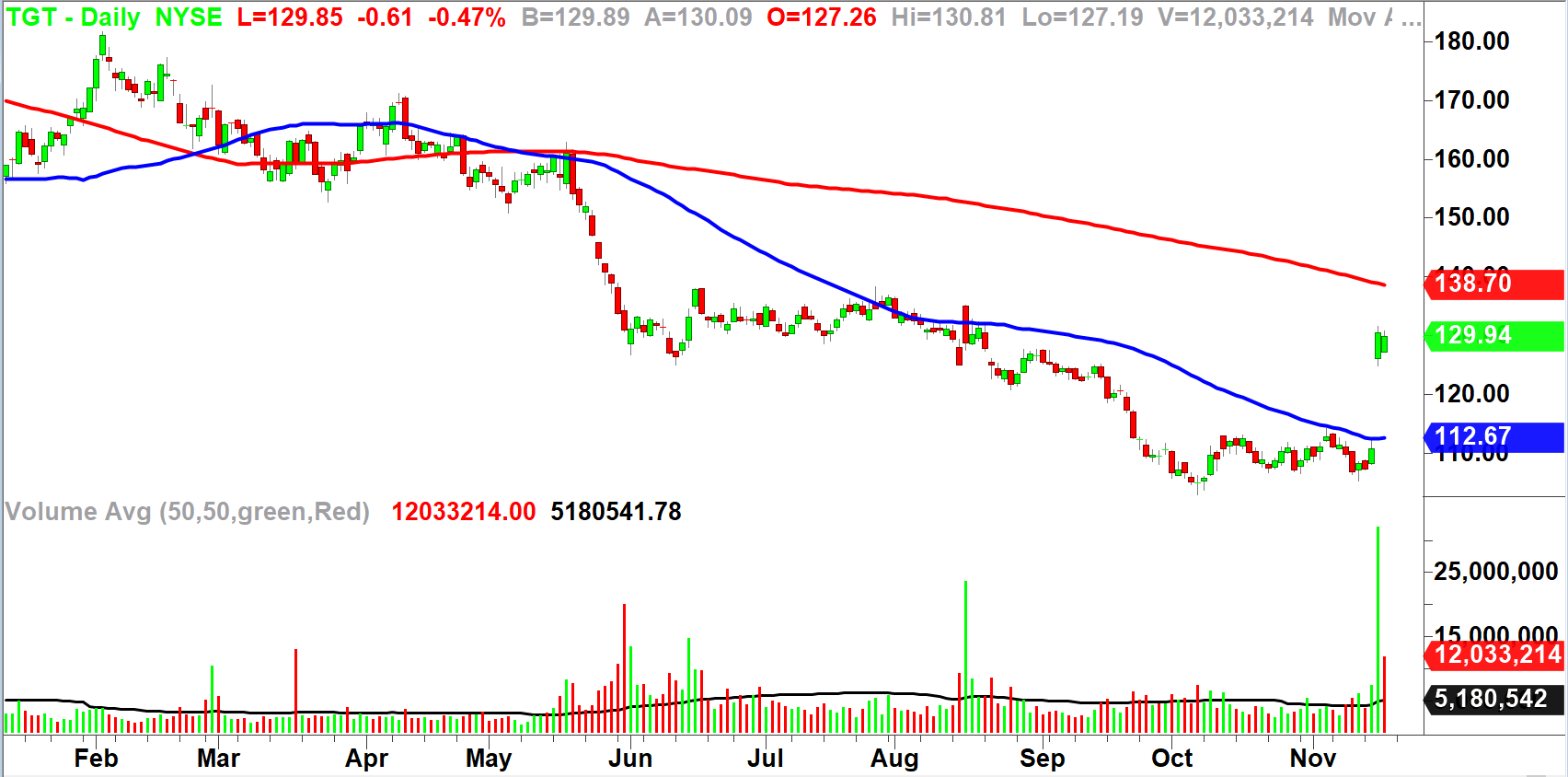
Was decline in Walmart, which also got a close look on Thursday from Real Money Pro's Bruce Kamich, offset by this week's big gain in Target TGT ? Shares of Target jumped 17% earlier this week after beating earnings estimates.
Before you celebrate Target's gains, consider that the stock is still down more than 12% year to date. Target's trend is still bearish and the stock remains below its 200-day moving average (red).
In a post-earnings conference call, Target execs expressed concerns similar to those of Walmart's Rainey.
Meanwhile, high-end retailers are reporting a slowdown in luxury spending. Gucci, Burberry Group BURBY and LVHM Moet Hennessy LVMUY all recently announced slumping sales. Burberry shares fell 10% on Thursday as comparable store sales growth plunged from 18% to just 1%.
Even prior to this onslaught of negativity, the retail sector was struggling. Now that the bad news is out, can the sector begin a path to recovery?
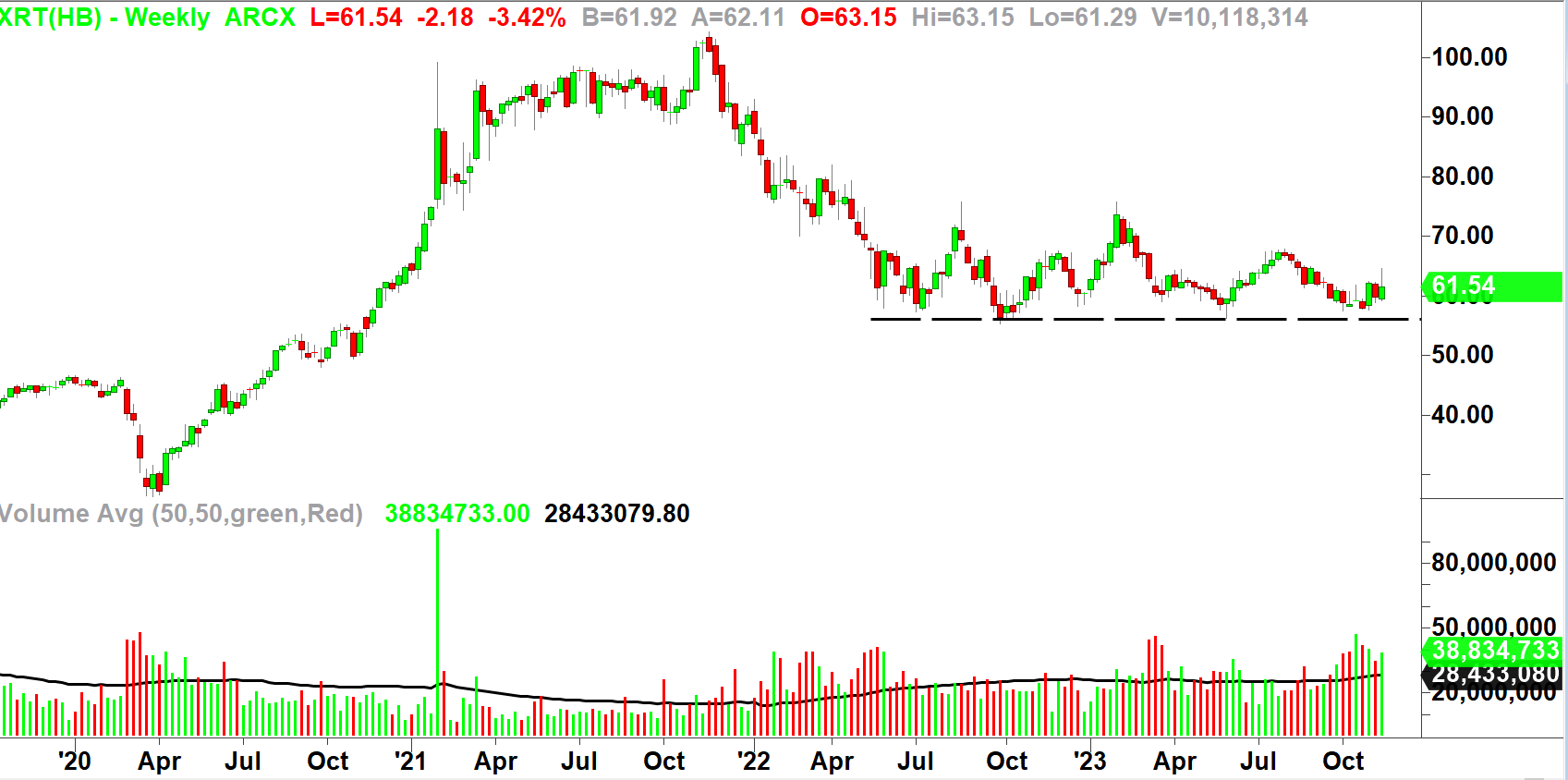
According to the charts, the path of least resistance for retail is lower. The SPDR S&P Retail ETF XRT has failed to participate in the S&P 500's three-week rally. If XRT breaks major support at $56 (black dotted line), the potential downside is considerable as there is no support in the vicinity.
Bottom line: Retail stocks are damaged, but it is way too soon for bargain hunting. What appears to be cheap now will be cheaper later.
At the time of publication, Ponsi was long WMT.