investing
How Low Is Too Low for Treasury Yields?
Here's why I'm getting bearish on rates and bullish on the stock markets laggards.
You've reached your free article limit
You've read 0 of 1 free Pro articles.
The 10-year Treasury yield finished Friday at 4.20%. That is too low. We're now in "bad news is bad" territory for stocks.
So, let me list the reasons I'm now neutral to bearish on rates; mildly bullish credit and municipal bonds; and slightly bullish equities -- and very bullish the laggards.
- Let's look at "munis" first. One of my clients pointed out recently that municipal bonds had one of their best years ever ... in November. December started not too shabby for them, too. Despite some great moves, municipal closed-end funds still look attractive and at large discounts to net asset values, but I have been selling some of my leveraged-loan closed end funds (that still have high dividend yields, but the discount to net asset value has gotten very small in many cases).
- But one of the big stories remains the out-performance of the indexes (and sectors) that were left behind. Look at this chart closely:
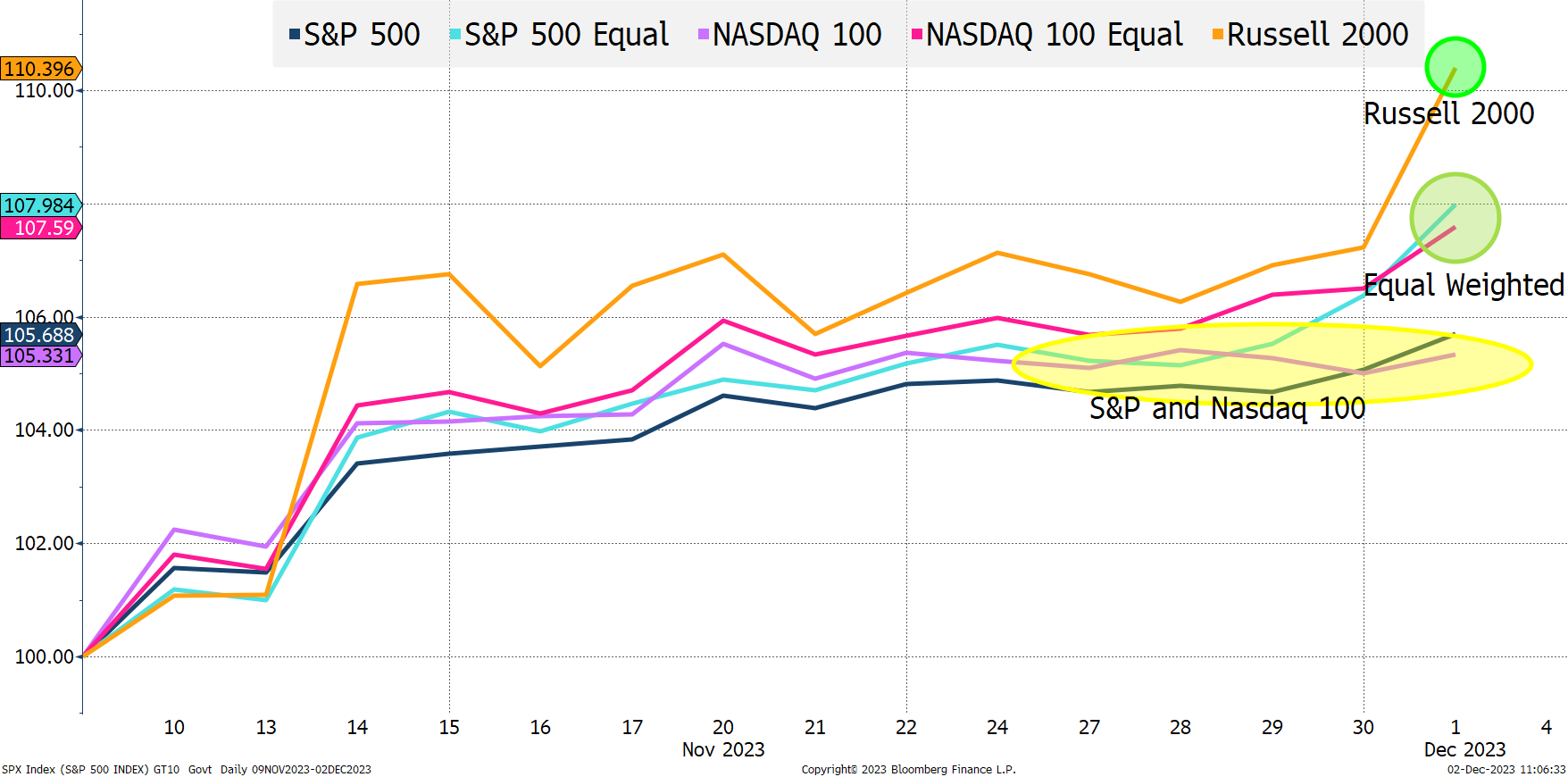
- Notice, the market leadership had already changed. I've been arguing for a few weeks that despite all the "Magnificent 7 " chatter, leadership had already shifted. The market performance since Nvidia NVDAposted its earningsin late November solidified that view. While 4.3% seemed like a bold call at 5%, it was easy to see why equities would do well if that occurred. It is less clear why stocks should continue to do well as Treasuries head lower on fears of an economic slowdown. Having said that, the Nasdaq 100 is actually lower today, than where it closed on Nov. 22. The chart above is really important. In addition, I like "disruptive" stocks and small/regional banks as well in this reversal trade. (Much of this I discussed on Bloomberg TV, on Monday.)
- Treasury yields are lower for many reasons. More specifically, Treasury yields are lower for many of the wrong reasons. One, fast money was too short at higher yields (which is a good reason). Two, people also got too scared about supply too quickly (good reason) but supply and the deficit are not being fixed or addressed (bad reason). Three, we have signs that the economy is weakening and the job market is cooling off (bad reason).
- While some of the reduction in yields are for "good" reasons, I'm getting nervous about the upcoming economic data. We get the job reports this week, which I expect to disappoint vs. already mediocre expectations. Holiday sales (Black Friday, Cyber Monday) started strong, but how much was due to what seemed like aggressive discounting and how much just pulled shopping forward remains to be seen (that is the story I expect).
- Now we must ask: Can risk assets keep rallying on lower treasury yields? Let's not dismiss the possibility that yields could stabilize or even drift higher and stocks continue their pattern of going higher, led by the laggards (that is in the running for my base case). Can risk assets keep rallying if the economy is slowing enough to drive bond yields lower? Normally, I would say no, but here are four reasons we could see that occur for a bit longer.
- No one wants to say the consumer is done consuming. If the consumer is slowing, my base case, the evidence will be fought for longer than normal.
- Few want to say the recession is here or near. Recession fears will be downplayed. Meaning markets can ignore signs more than they would have at this time last year.
- Pain. Pain will always play a role, and it often seems to play an outsized role in December. If this current relative value trade continues, it will continue for a couple of main reasons. First, quantitative and algorithm-driven funds will continue to close out positions as stops are triggered. This will help drive the relative outperformance of the "laggards" vs. the big year to date "winners"). Second, managers who had thoughtfully positioned their portfolios to tell a great year-end story how they were massively long the winners and underweight the losers, start to decide that story doesn't sound as compelling as it did just a month or two ago, and start rebalancing their portfolios, so their year-end statements can capture this narrative that is gaining steam.
- Finally, we have seasonality. This is my least favorite reason to invoke, but it seems to be out there. What does concern me, is that August is "normally trend-following" and this August reversed the trend.
At the time of publication, Tchir had no position in any security mentioned.