Getting to Know Stephen Guilfoyle: An ‘I Quit’ Email Landed Sarge a Job With Jim Cramer
Steven ‘Sarge’ Guilfoyle reveals the wild story behind his career pivot—and the moment that changed everything.
You've reached your free article limit
You've read 0 of 1 free Pro articles.
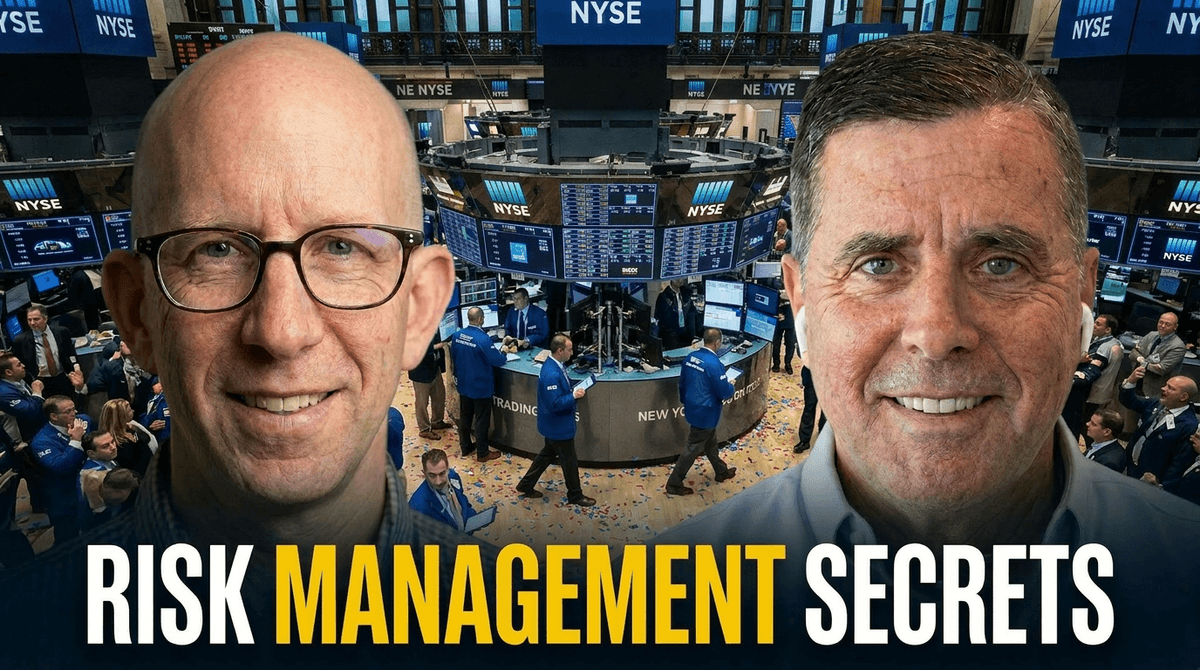
The things you learn when you ask questions. For example, I had no idea that 2026 was Sarge’s 10-year anniversary at TheStreet Pro. Or that he joined us at the request of Jim Cramer after quitting his job on Wall Street.
One thing we didn’t touch on was his new $10K portfolio, and I encourage you to follow him to learn more about what he’s been buying in 2026. The portfolio is doing great since its launch earlier this year.
Click below to learn more about the man who provides our morning Market Recon and keeps us informed.
Video
Transcript
Jason Meshnick (00:01.836)
All right. Welcome to the latest in our series of getting to know TheStreet Pro’s contributors. Today I have with me a very special guest. Many of you know him as Sarge. he is also known as Steven Guilfoyle, but we’re just gonna call him Sarge today. Sarge, I’m so happy to have you here with us and and so tell me where where does this recording find you?
Sarge (00:24.917)
This recording finds me well, hello Jason. this recording finds me in central Florida, Brevard County on the east coast of Florida where is which is where I live and work out of these days.
Jason Meshnick (00:27.725)
Ha ha.
Jason Meshnick (00:35.288)
All right, good to know. So since we know where you live, let’s get into our first question and how this is going to work today is I’m going to ask you a series of questions and really just geared towards getting to know who you are and and and you know which of our con
which of our subscribers, which of our members r can really get the most out of reading your content? So of course I think the answer is everyone can get a lot out of reading your content. But so let’s start off with give us a fun fact about you that is preferably non investment related unless it is a really amazing fun fact that is investment related.
Sarge (01:09.024)
Well, it’s no it’s not investment related. a lot of folks know no, I d served in the military a little bit and they due to my nickname and all that, and they know a lot about my Wall Street history. But very few folks know that know that I was a hockey player. So I I played high school and college hockey and and I played recreationally till I was thirty eight when then when all the dislocated shoulders and broken ribs started piling up. So it’s it was really my one my lifelong passion up to a certain point.
to play both ice and roller hockey and I still wish I could play, but I’m just too darned old.
Jason Meshnick (01:41.986)
Yeah. Well, I’m I’m sure I I don’t know which came first, the ice hockey or the military, but it seems like like pretty good training.
Sarge (01:49.269)
Yeah. I started playing in high school, so the hockey came first.
Jason Meshnick (01:53.592)
Okay. Awesome. what what’s your favorite team?
Sarge (01:58.483)
I grew up a Ranger fan. and and I still root for the Rangers. these days though I also kinda root for Tampa Bay, being I’m down here.
Jason Meshnick (02:06.869)
Exactly. Makes sense. As a former New Yorker, I’m with ya, but now I live in Colorado, so I don’t think I can be a Ranger fan anymore. so all right, so we know Ranger, military, but let’s get into TheStreet Pro. How long have you been with TheStreet Pro? And I don’t want that answer that Versace gave, which is since TheStreet Pro began. let’s go back to real money too.
Sarge (02:30.256)
Okay, well yeah, I’ve been that’s true. I I started with Real Money Pro. in twenty sixteen. I I have left Wall Street a few times so the folks know. Every once in a while throughout my career, I became annoyed and ticked off at Wall Street and said the heck with you guys and I left. Well, twenty sixteen was one of those times when I you know, I I I wrote market recon at that time for it was a free newsletter that I wrote for my firm’s clients.
And for some other people that had weasled their way onto my mailing list. So I I just sent a blast email out to all my subscribers at that point. And I said, you know what? I’m done today. I’m quit. I’m s I’ll see ya. I’ll you know, I’ll be looking for a job tomorrow, but I can’t take this crap anymore. I’m out of here. And I didn’t even know Jim Kramer was on my mailing list. And and he sent back right away, he goes, Well, while you’re looking for a job, you wanna write for me? I’m like, Holy crap, it’s Jim Kramer. Okay, you know what?
Jason Meshnick (03:17.101)
Ha ha.
Sarge (03:25.639)
Being I’m gonna be unemployed tomorrow, I I guess I will write for you. And that’s how it started.
Jason Meshnick (03:26.221)
Perfect.
Jason Meshnick (03:30.145)
Yeah. What a great audience. that’s so good to know. I mean Wa Wall Street can be a really frustrating place to be, right? You got the highs and the lows, and and the lows are probably worse than the highs in many cases.
Sarge (03:34.595)
Yeah.
Sarge (03:44.53)
yeah. I I I left for a whole year one time and worked in lumber. I was just I just I only went back when lumber wasn’t paying enough. I was like, okay, I gotta go I gotta go make some money. But but it was never a c a career I was in love with. It was just something I did because I knew I could make some decent dough doing it.
Jason Meshnick (03:53.996)
Right.
Jason Meshnick (04:02.721)
Right. And and so so okay, so that’s ten years now at TheStreet Pro. What do you remember the exact date? When when did you send out the famous “I quit” Market Recon?
Sarge (04:11.674)
Don’t know. You know what? I’ve probably probably mid year. So probably mid probably about this time of year. Probably around June, July, something like that.
Jason Meshnick (04:21.741)
All right. Well I feel like we should do something to celebrate. We’ll we’ll figure that out. Happy anniversary to Stephen Gilfoyle, Sarge. It’s been an awesome ten years so far and I think the best is yet to come. okay. Let’s move on to question three. so tell us about your investment philosophy.
Sarge (04:24.529)
Yeah.
Sarge (04:40.965)
Well, my p investment philosophy one is to make money. I don’t I I do have a philosophy, but it is it is steeped in discipline. I I basically have on every position, whether I’m day trading, ’cause I’ll do that, whether I’m investing ’cause I’ll do that, whether I’m trading over a time frame because I’ll do that. I always have I always have a target price, I always have a pivot point, I always have ad levels, and I always have panic points. Though I feel that
Add levels are a maybe, but you have to have the other three. You have to have I like to have all four, but you have to have the other three components in order to have a plan that takes the emotion out of trading. If if you leave it up to like, well, I’m gonna see how far this stock goes, well, you’re gonna screw up. All right. But if you say I’m gonna start peeling out of this long position at this level, and when it gets there, I’m gonna have a new target for for the balance of the position.
you will be able to control your emotions, you’ll be able to control the way you react when it when it goes against you in the case of panic points. And you’ll be able to you’ll be able to actually make these decisions ahead of time where it’s just like it’s just like running a machine. It’s it’s it really takes it really reduces, I found, your chances of screwing up.
Jason Meshnick (05:57.122)
Right. And and I think it’s amazing that you say that like when I talk about investment philosophy, you immediately go towards risk management. And I think I think that says so much about who you are because you know, you when you write, you talk about the fundamentals, you talk about, you know, you you say I am an economist, right? and and you talk about fundamentals and technicals. you can really do it all, but when it comes down to it, the number one thing that you are stressing here is is risk management. I think that that says a lot about your style, right?
Sarge (06:26.828)
without a doubt, risk man risk management will make you more money than being right. And and it will also prevent the catastrophes. Everyone knows about my eight percent rule. I think they know about it anyway. And and it is a promise I made to myself many years ago to never lose more than eight percent on a position because I had had a couple of disasters and I had to figure out something that was gonna change that. And and and I decided that unless I’m asleep, because if I’m asleep and something in Europe blows up, okay, I can’t help that. But if I’m awake, if I’m conscious
I I will that panic point will be placed at an eight percent loss and it will trail as we go up. So won’t it may the panic point may actually be higher than my principal where my point of entry at the when we get there, but it will actually be start out probably at an eight percent loss.
Jason Meshnick (07:17.101)
Great. Do you ever use anything like like a chandelier stop or any any quantitative measures that might include volatility, or is it just straight eight percent?
Sarge (07:25.087)
I got well, it starts out as a straight eight percent. unless there’s a technical reason that I see that makes me change that that that level to something less than eight percent. I would never change it to something more than eight percent. But it but eight percent is is a worst case scenario if I’m conscious.
Jason Meshnick (07:40.151)
Okay, if you’re conscious. That is a great disclaimer. I’m going to disclaim that with everything. I I hope to do my best as long as I am conscious. But you’re right, so much happens overnight.
Sarge (07:51.181)
Well, you know, somet something can always happen. Something can always happen when you’re not when you’re right, when you’re catching a few hours of sleep and then you’re looking at a fourteen, fifteen percent loss and you have to make a decision. But otherwise, there’s no excuse.
Jason Meshnick (08:03.839)
Exactly. I I agree. And and those things are so few and far between. so as long as you’re conscious, that’s when you’re gonna get ninety nine point nine percent of of the moves and the risk. okay, so since since we know that, let’s talk about our next question is what is your definition of a good trade beyond just one that is profitable? ‘Cause I’ve seen you know, you can have a good trade that was also a money loser, right? Depending on what happened in the market. Yeah.
Sarge (08:27.756)
yeah. And and you could also have a very profitable trade that you had very little to do with. You just happen to be in the right place at the right time. But no the the right trade that for me is one that comes about because of your setup, because of what you the work homework you put into it and and it and it comes to fruition. So for me that starts out if every if I do everything properly, and I don’t always do everything properly, but if I do everything properly, it starts out with an economic story.
Jason Meshnick (08:33.696)
Exactly.
Sarge (08:56.277)
through the prism of policy making that makes sense. Then we move on to the fundamentals. I like the balance sheet, I like the cash flows, I like I like the way this company is executing. All right. That tells me if the economic story is there, if the fundamentals are there, that tells me which way I think the bus is gonna go. Then we move on to the technicals, because I I need all three components. We move on to the technicals. Technicals either support trend continuance or trend reversal or whatever I’m trying to do.
If if I get all three of those components, but the technicals tell me where I think that b the bus stops are, then I have a trade. And it I of course I’ll have to adjust as I move on because nothing nothing is static. It always things always change. But if I have those three components as I enter a train, I have a higher degree of confidence.
Jason Meshnick (09:44.299)
Right. Great. yeah, so that that makes perfect sense. I mean you wanna you wanna make sure that you have the economic tailwinds in your favor and then everything else will work out, especially with your risk management plan.
Sarge (09:57.736)
Without a doubt. I I mean and w when I have all three of those components, you know, during the day, yes. Okay. During the day I’ll try to catch a stock that’s running or something like that. I won’t even look at the balance sheet or anything like that. But when I’m making an investment, these are my three components.
Jason Meshnick (10:12.641)
Yeah, perfect. Okay, so let’s take the the opposite of that. And this one can actually be specific. what was your worst trade and what did you learn from it?
Sarge (10:22.029)
boy. Okay. All right, my worst trade ever was CMGI. that may ring a bell with some of you old timers out there. All right. That was part of the internet bubble. Yeah. And that one I if I remember the trade well, I got in at like one fifty one and nine sixteenths. And I think I got out at like four dollars or something like that. I it was just it it was a for one, that’s that was the impetus thing.
Jason Meshnick (10:30.835)
I remember that stock. Yeah.
Jason Meshnick (10:43.818)
Sarge (10:49.83)
that created a lot of the disciplines I use to this day. And secondly, I was working for a firm. I worked for Credit Swiss First Boston at the time. I was part of their investment banking team, which was a great job. But but they had they had four employees. They had rules you had to follow. And part of those rules were a sixty day holding period. And I knew after thirty days I had a big problem on my hands. And they wouldn’t let me get out of it until 60 days. And I was, you know, they had steadfast rules and I had to live by them.
So that was also an impetus for me to ultimately work for myself because once I felt comfortable in once I felt I could outperform a paycheck, I was apt to pursue that as my next career option rather than relying on someone else to decide what I should be paid. No, I’ll decide what I can be paid. Thank you very much. See ya. You know?
Jason Meshnick (11:39.094)
Exactly. Yeah, that that was one of the things that always bothered me with working on Wall Street. And and I I get it. I understand why they wanted to do it. They didn’t want people trading and they didn’t want people, you know, using knowledge that they may have. But it certainly meant that when you had conviction in an investment, if and and when the information changes, you could be left holding the bag, which you certainly were in CMGI.
Sarge (11:58.917)
In that one I was. Not now, in all fairness, first Boston paid me well at those times. I can’t complain about the dot com years. They were quite they were pretty pretty darn good if you ask me. But that one trade taught me a lot.
Jason Meshnick (12:05.821)
Yeah.
Jason Meshnick (12:11.201)
The dot com years were pretty fun, I I can say as as a market maker. Those were those were good days. yeah, they can’t all be dot dot com years for us. okay, let’s move on to question number six. what investment wisdom do you have for our members?
Sarge (12:13.398)
Yeah.
Sarge (12:29.191)
Well, know yourself. for one, know yourself, know your style. Don’t try to be be me. Don’t try to be Doug Cash. Don’t try to be Reb Shark the poor. know yourself and stay grounded and stay true to yourself. If you are someone, if you’re retired or you’re someone who trades for yourself, okay, you can put a lot more into this during the day. You can be a lot more focused. If you’re someone who has to do something else with the productive hours of your day, and you’re trying to trade around that, well you really gotta
You really gotta know not just yourself, but you you then you really have to use those disciplines I was speaking about earlier, because you can’t watch a stock turn. You have to know where you wanna where you wanna pick some up some shares if it comes in. You wanna know where you wanna puke out a few shares if it goes the other way. I mean, you really you really have to know not just your style, but what your lifestyle permits and trade accordingly.
Jason Meshnick (13:24.843)
I love it. To thine own self be true. all right, with that, is there anything else you would like to add? Anything about your investment philosophy or things you want our subscribers to know, our members to know, or people who aren’t even members right now, and and maybe, you know, why they should subscribe and and read market recon every day. Which is a great read, I will say.
Sarge (13:46.542)
Thank you. yeah, I want folks to think about this for a minute. All right. I want you to think of these names Doug Kass, Chris Versace, Rev Shark De Porre, Peter Tchir, Ed Ponzi, Louis Llanes, Helene Meisler, and yours truly. All right. And and I want you to realize that I’m not bragging. I’m trying not to be arrogant here. This is an all-star team, all right? If you’re gonna put together
The best trading desks on Wall Street, they wouldn’t be this good. All right? This every one of us was the best guy in a trading desk. Understand that.
Jason Meshnick (14:26.305)
That is a hundred percent true. And and I feel that and feel like I’m so lucky to get to work with all of you. this is, you know, a highlight of my career to date, certainly. the the knowledge and the things that that I learned from you all is just it’s amazing how how much, you know, I s I still continue to learn after all these years.
So yeah, so so thank you. I think those are great words. and with that, I appreciate your time and it’s great getting to know Sarge Stephen Gilfoyle just a little bit better. Thank you.
Sarge (14:57.624)
Thank you, Jay.