Spotify Breaks Out, But Will It Continue to Rock?
Consumers don’t approve of price increases, but the market likes Spotify’s game plan.
You've reached your free article limit
You've read 0 of 1 free Pro articles.
Earlier this week, Spotify SPOT announced a July price increase. It was the second price hike for the Stockholm, Sweden-based streaming service in the past 12 months.
The reaction on social media was negative. Obviously, nobody likes to pay higher prices.
However, the reaction in the stock market was very positive.
On Monday, Spotif gapped higher, and on Tuesday, the stock broke out of a bullish technical pattern known as an ascending triangle (dotted lines). This pattern projects Spotify to the $375 area.
The breakout pushed the stock to a three-year high. Notice how Spotify’s 50-day moving average (blue) parallels that trendline, providing a double shot of support.
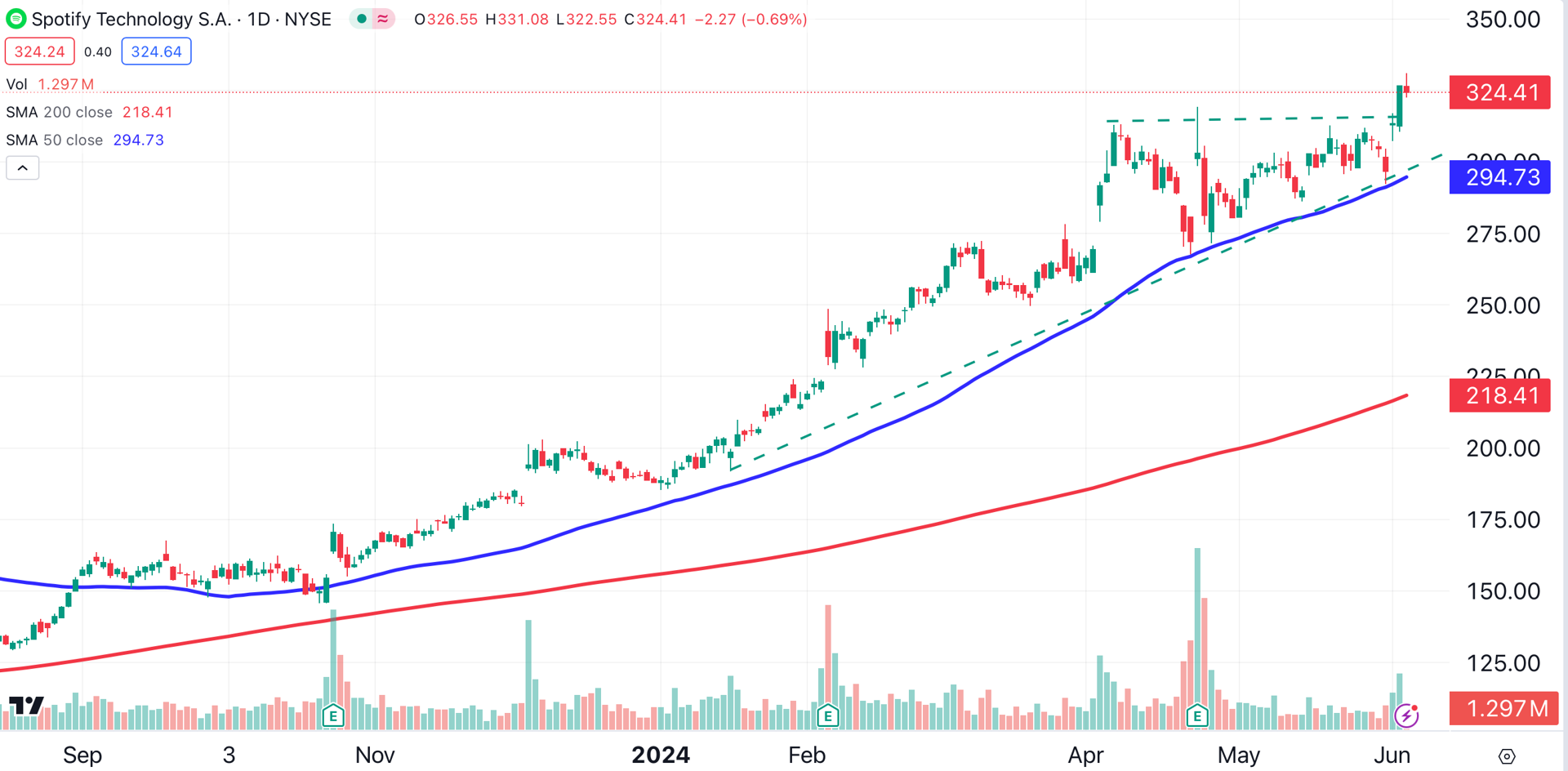
For risk management purposes, the area beneath the stock’s 50-day moving average can be used as an exit. Spotify hasn’t traded below that key indicator since late October, so a break below the 50-day MA would be significant.
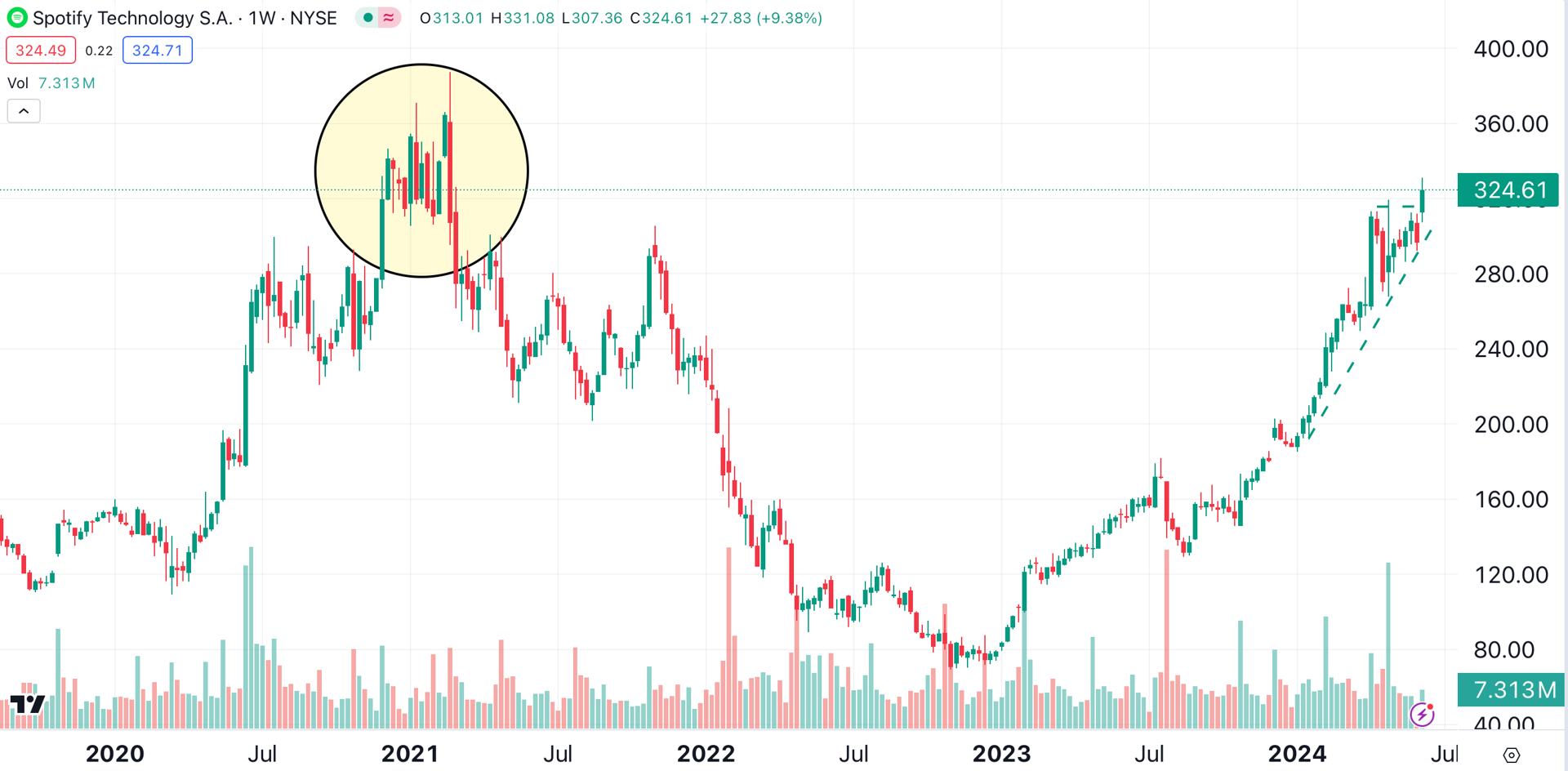
On the longer-term weekly chart, Spotify has one additional obstacle — a thicket of resistance from late 2020/early 2021 (shaded yellow). If Spotify can break above this tough area, which extends all the way into the $385/$390 range, the stock will reach a new all-time high.
Obviously, consumers don’t approve of Spotify’s price increases. The market, on the other hand, seems to like Spotify’s game plan. They’re charging more, but they’re also offering more.
Premium members receive unlimited, commercial-free music, as well as popular podcasts like The Daily, featuring journalists from The New York Times NYT, and the Joe Rogan Experience.
Thanks to a recent Spotify initiative, the company could be on its way to gaining market share from at least one competitor.
Audible, the popular audiobook division of Amazon AMZN, has over 27 million users. Premium members receive one credit each month. If the credit isn’t used within 12 months, it expires.
Six months ago, Spotify began offering 15 hours per month of audiobook listening, from a library of 350,000 titles. There is no additional charge to premium users.
As a result, Audible users can downgrade from their premium plan to a plus plan, and the savings will more than cover Spotify’s price increase. Unlike Audible, Spotify users can audition as many audiobooks as they please, while making no additional financial commitment.
That clever move demonstrates smart, aggressive leadership. Perhaps that’s why shares of Spotify have gained 71% since the start of this year.
At the time of publication, Ponsi was long SPOT.