Good Old Procter & Gamble Makes an Upside Breakout on the Charts
Here's the strategy I'd follow now.
You've reached your free article limit
You've read 0 of 1 free Pro articles.
On February 2. I wrote about the charts of consumer brands giant Procter & Gamble PG and commented that "PG has rallied sharply in recent weeks so a pullback may happen at any time. Aggressive traders should use a dip to $156 to buy risking to $152. A decline below $152 would turn a number of charts weak."
Prices dipped to around $156 but never approached $152 so I will assume that some Real Money Pro readers went long. Prices quickly recovered and rallied to a new high.
Let's check out the charts again.
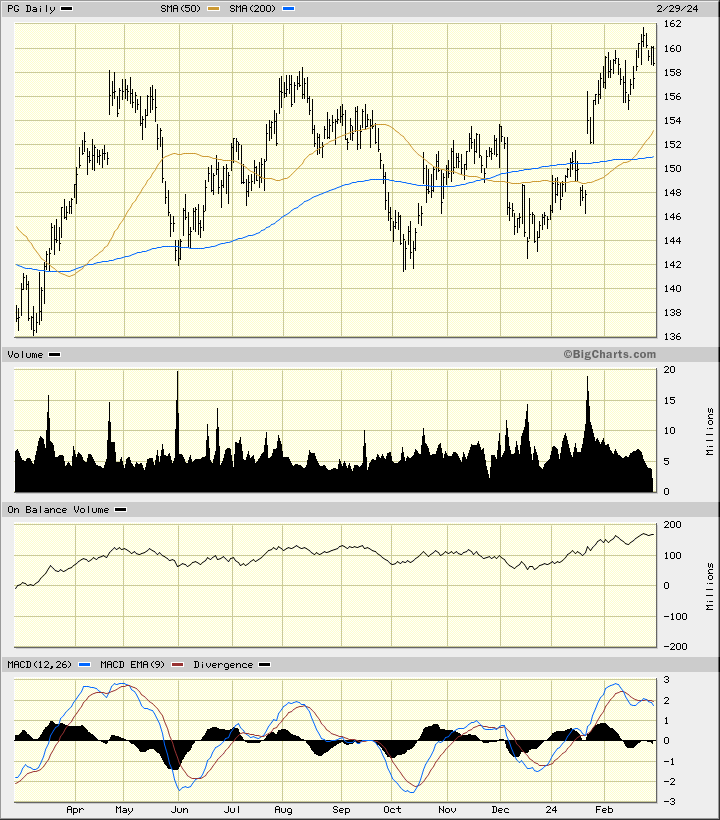
In this daily bar chart of PG, below, I can see that PG is trading above the rising 50-day moving average line and above the rising 200-day moving average line. The 50-day line recently crossed above the 200-day line for a bullish golden cross buy signal. The trading volume has been more active the past four months.
The On-Balance-Volume (OBV) line moved sideways for much of the last year but shows fresh strength from the middle of December. The Moving Average Convergence Divergence (MACD) oscillator is above the zero line but correcting this month.
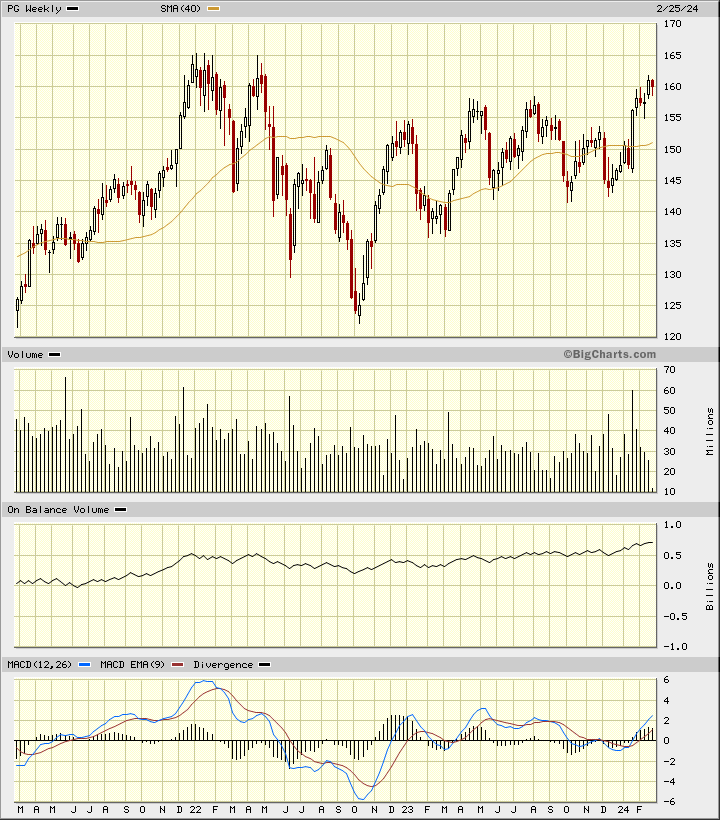
In this weekly Japanese candlestick chart of PG, below, I can see that prices have broken over the highs of 2023. PG trades above the rising 40-week moving average line.
The weekly OBV line has been moving upwards from October 2022. The MACD oscillator is in a bullish alignment above the zero line.
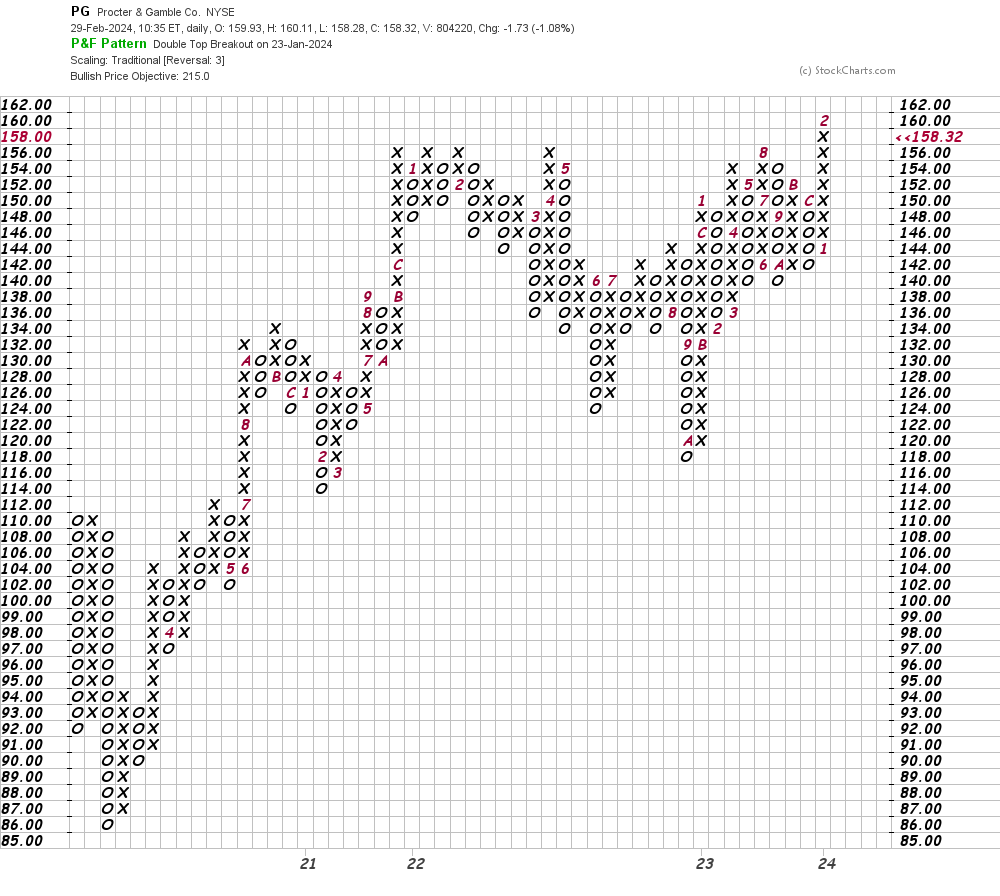
In this daily Point and Figure chart of PG, below, I can see the recent upside breakout and a price target in the $215 area.
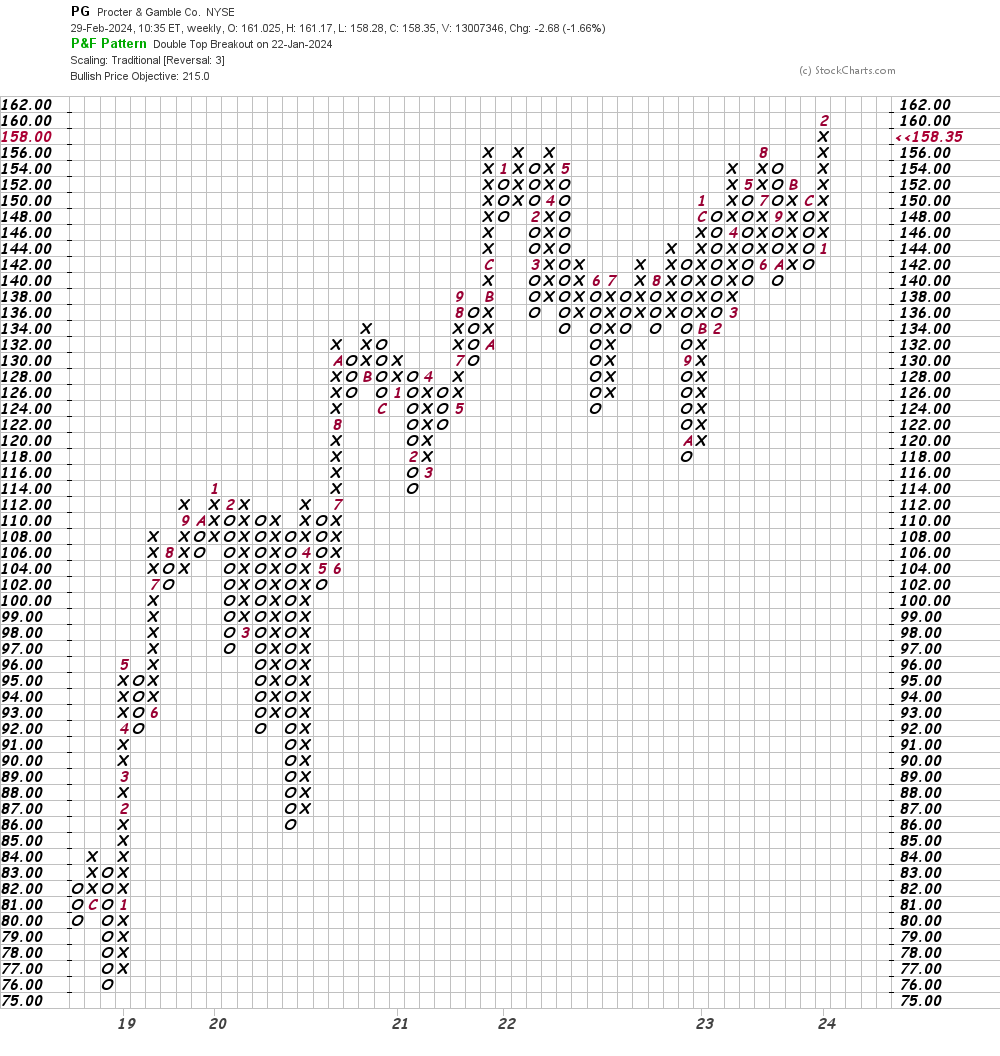
In this weekly Point and Figure chart of PG, below, I can see the same $215 price target as seen on the daily chart above.
Bottom line strategy: Traders who used the dip in PG earlier this month to buy should continue to hold those positions. Raise stops to your entry level. $170 and then the $200-$215 area are my price targets for now.
Employees of TheStreet are prohibited from trading individual securities.