Daily Diary

Doug KassDoug Kass
DATE:

The Market Grows Increasingly Overbought

The S&P Short Range Oscillator is now at 8.02% (vs. around 6.80% a day earlier). That is meaningfully overbought and at the highest level in a lengthy period of time.

Be forewarned.

BY Doug Kass · May 5, 2025, 4:55 PM EDT

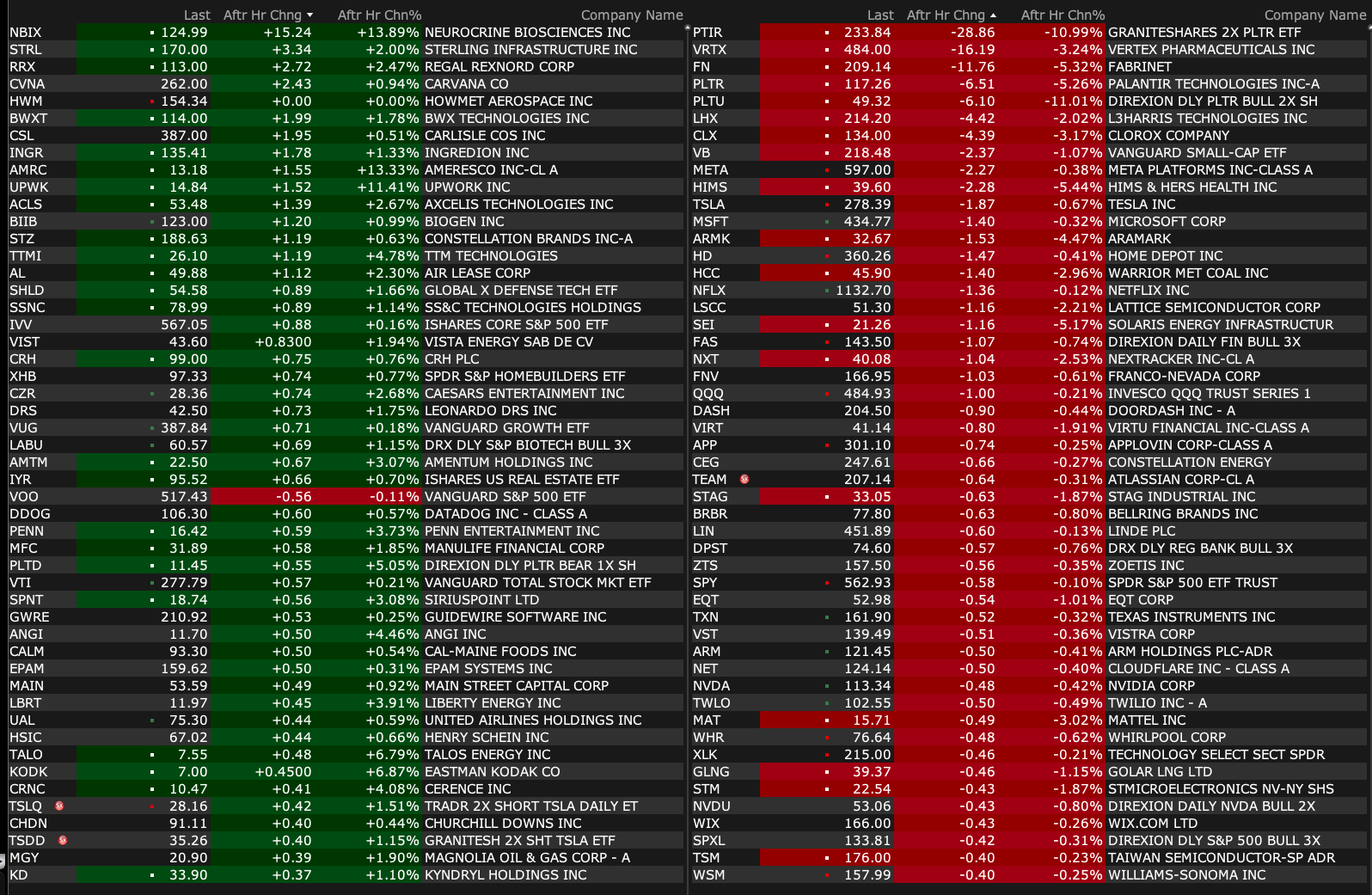
Monday's After-Market Movers

BY Doug Kass · May 5, 2025, 4:40 PM EDT

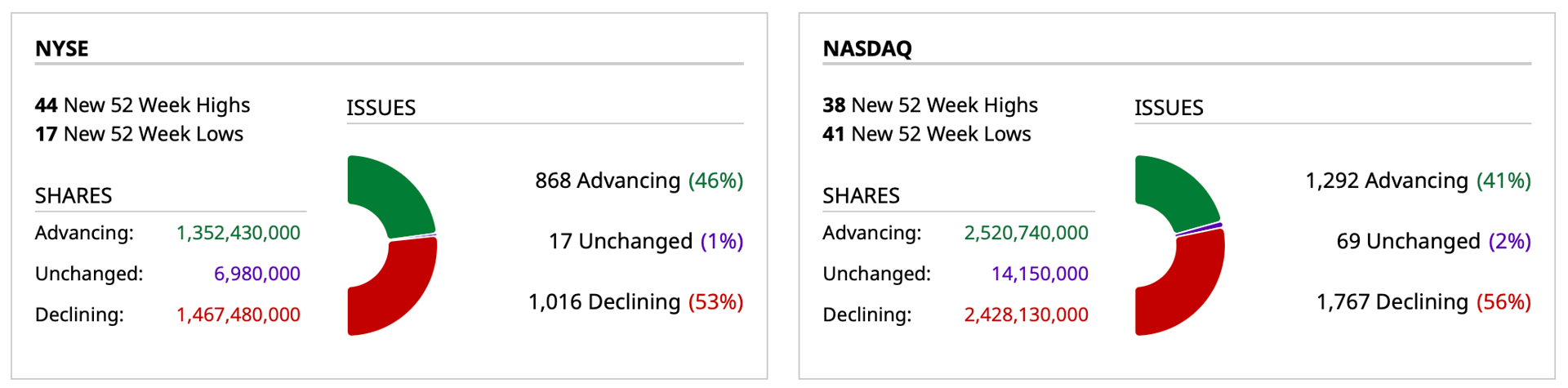
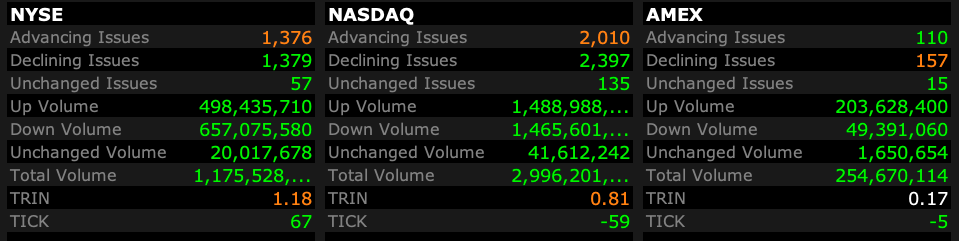
Monday's Closing Market Stats

Closing Breadth

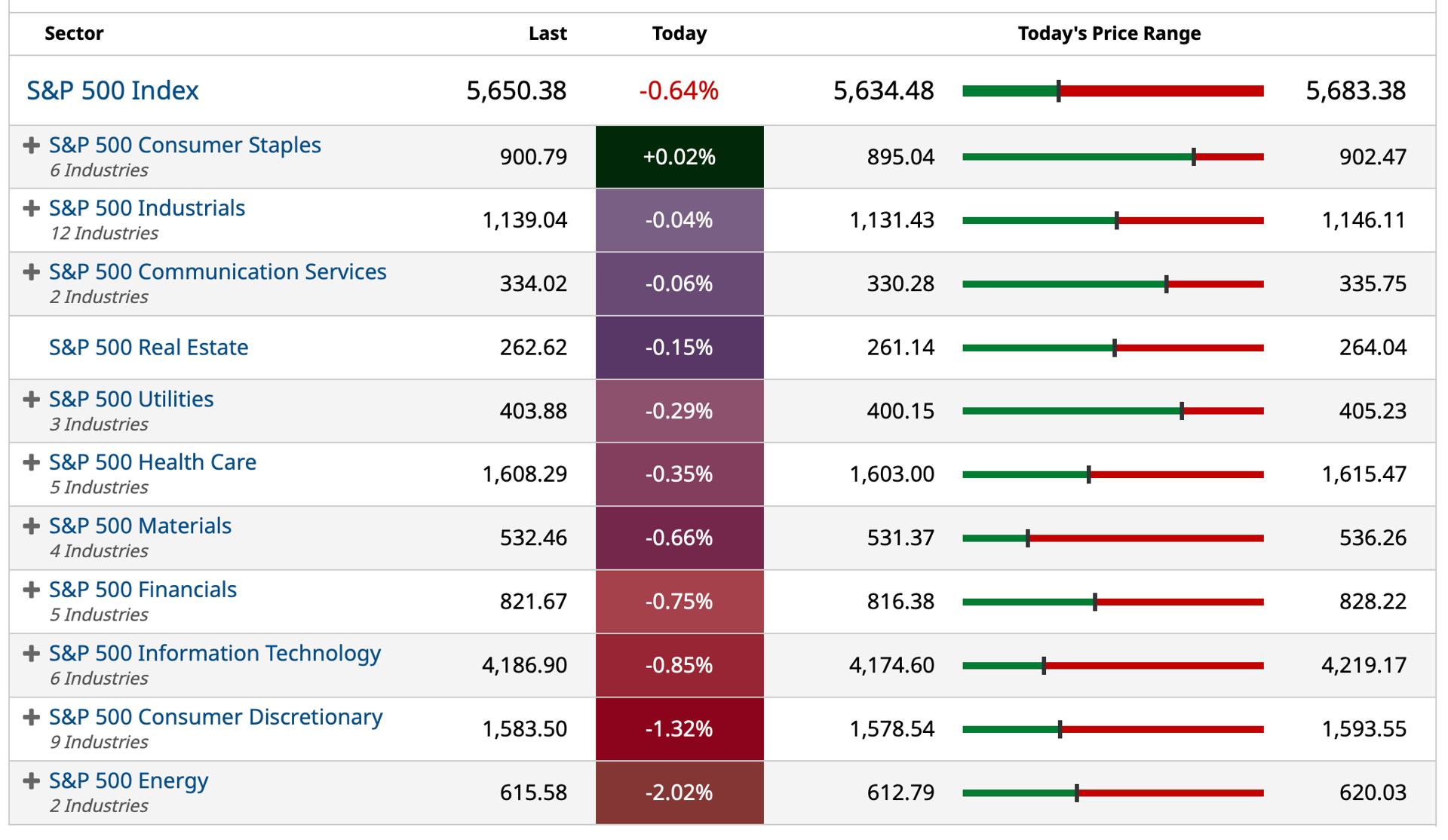
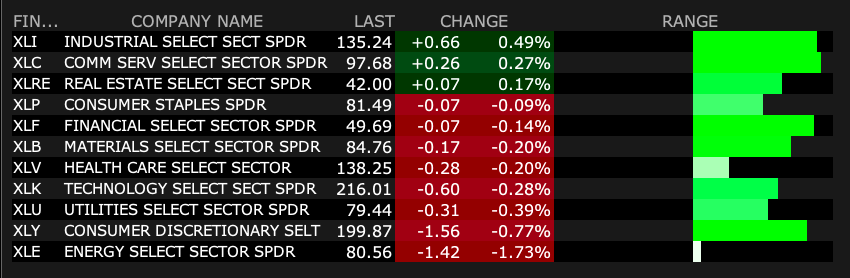
S&P 500 Sectors

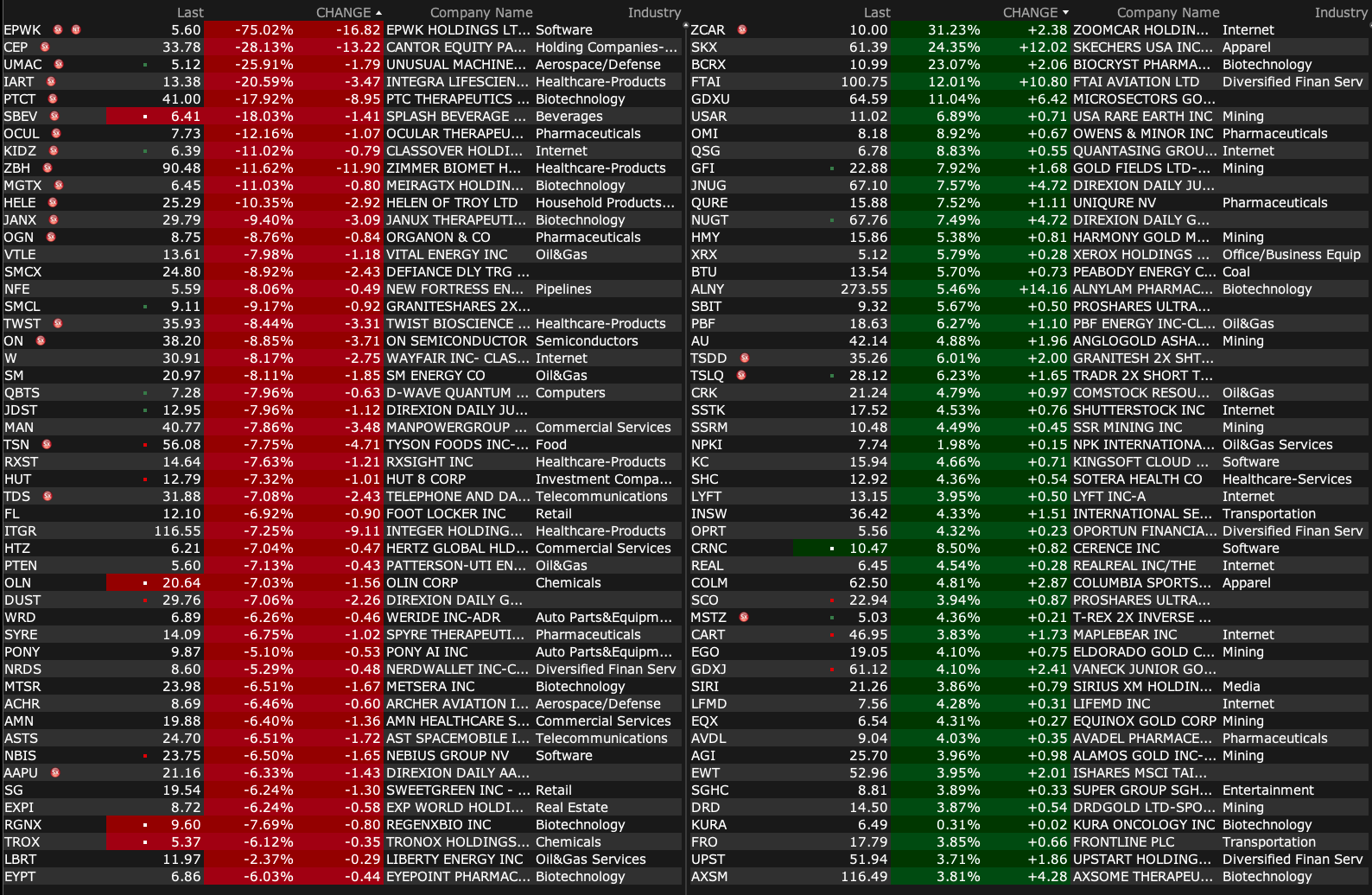
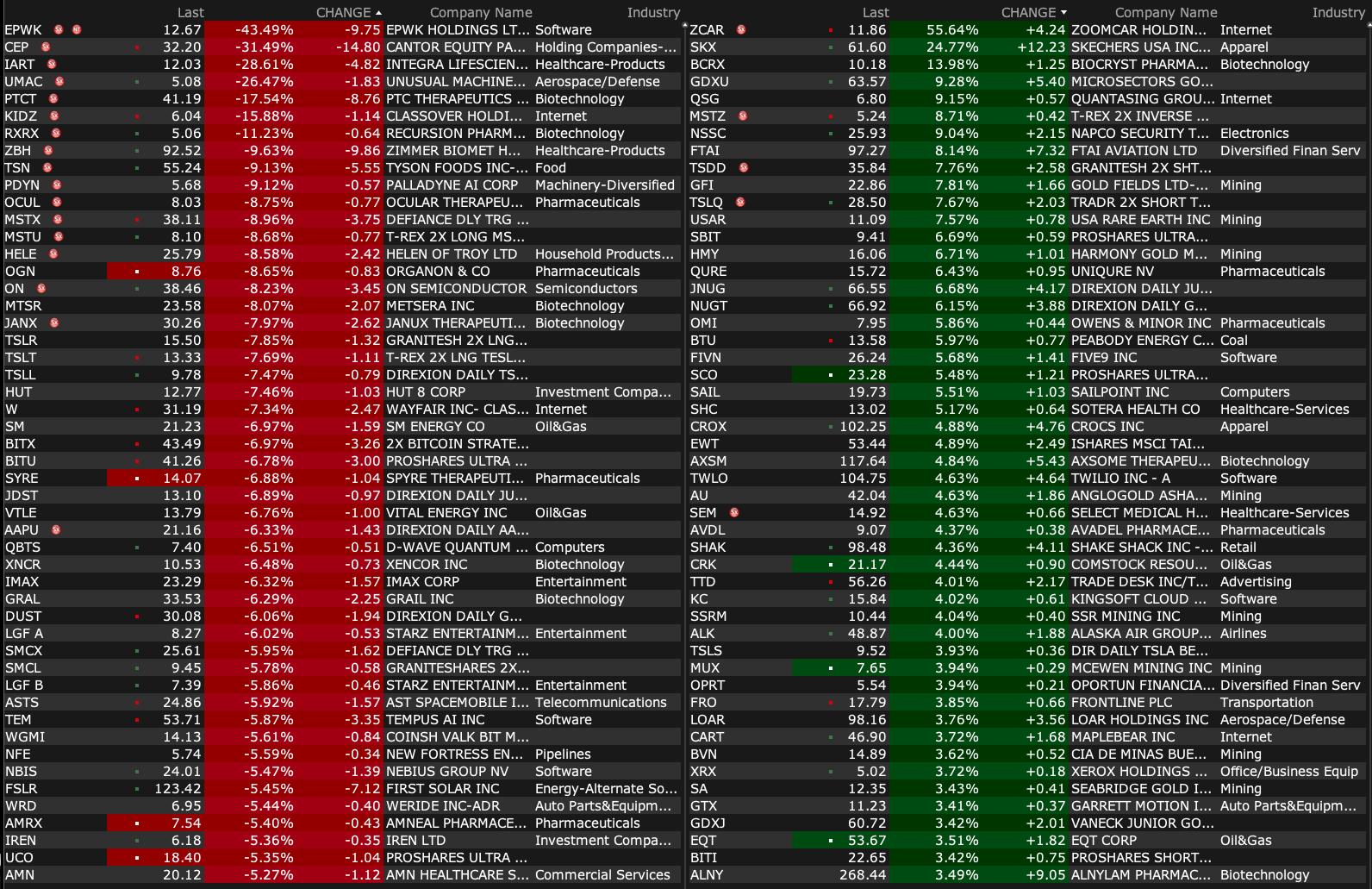
% Movers

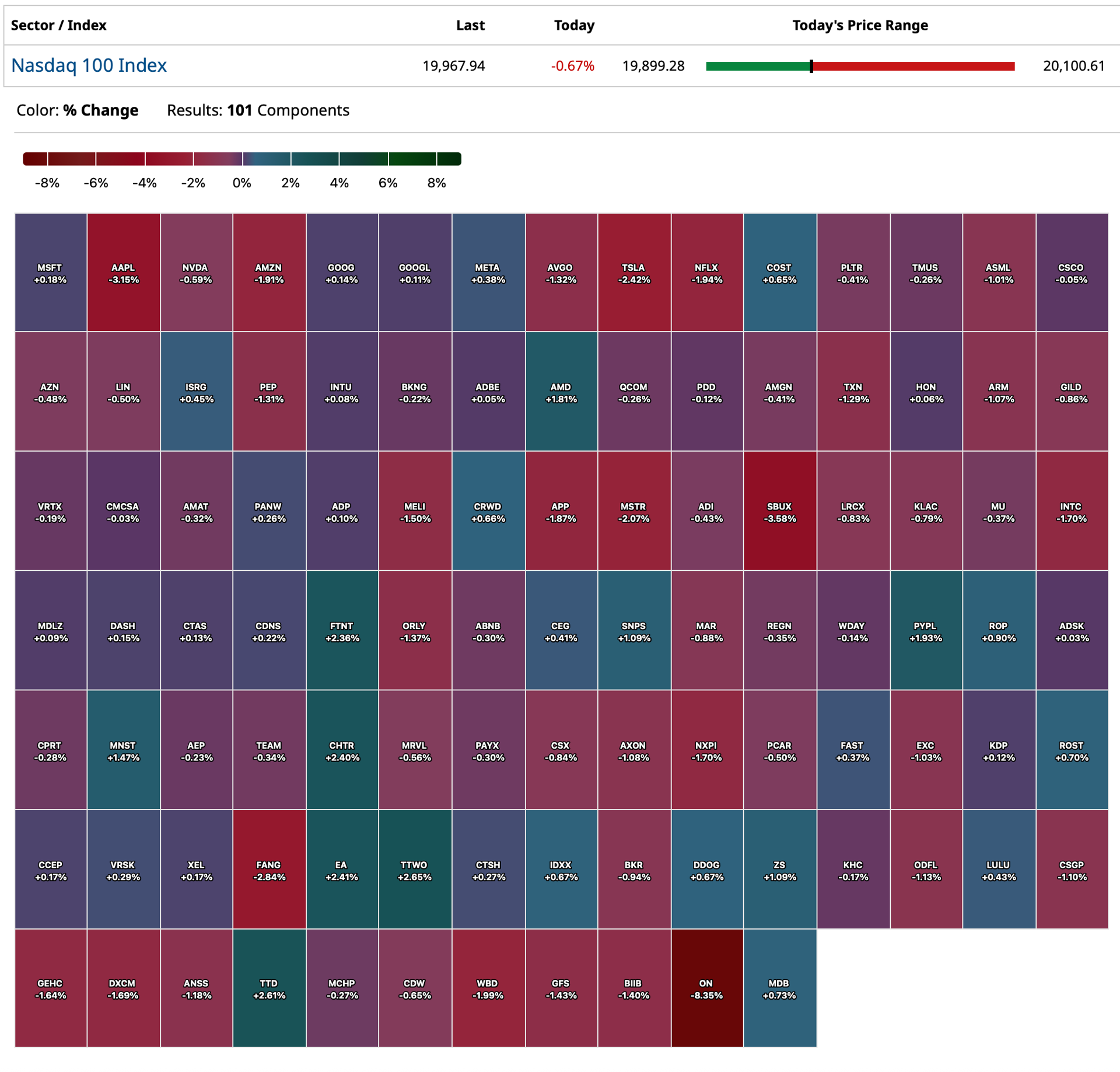
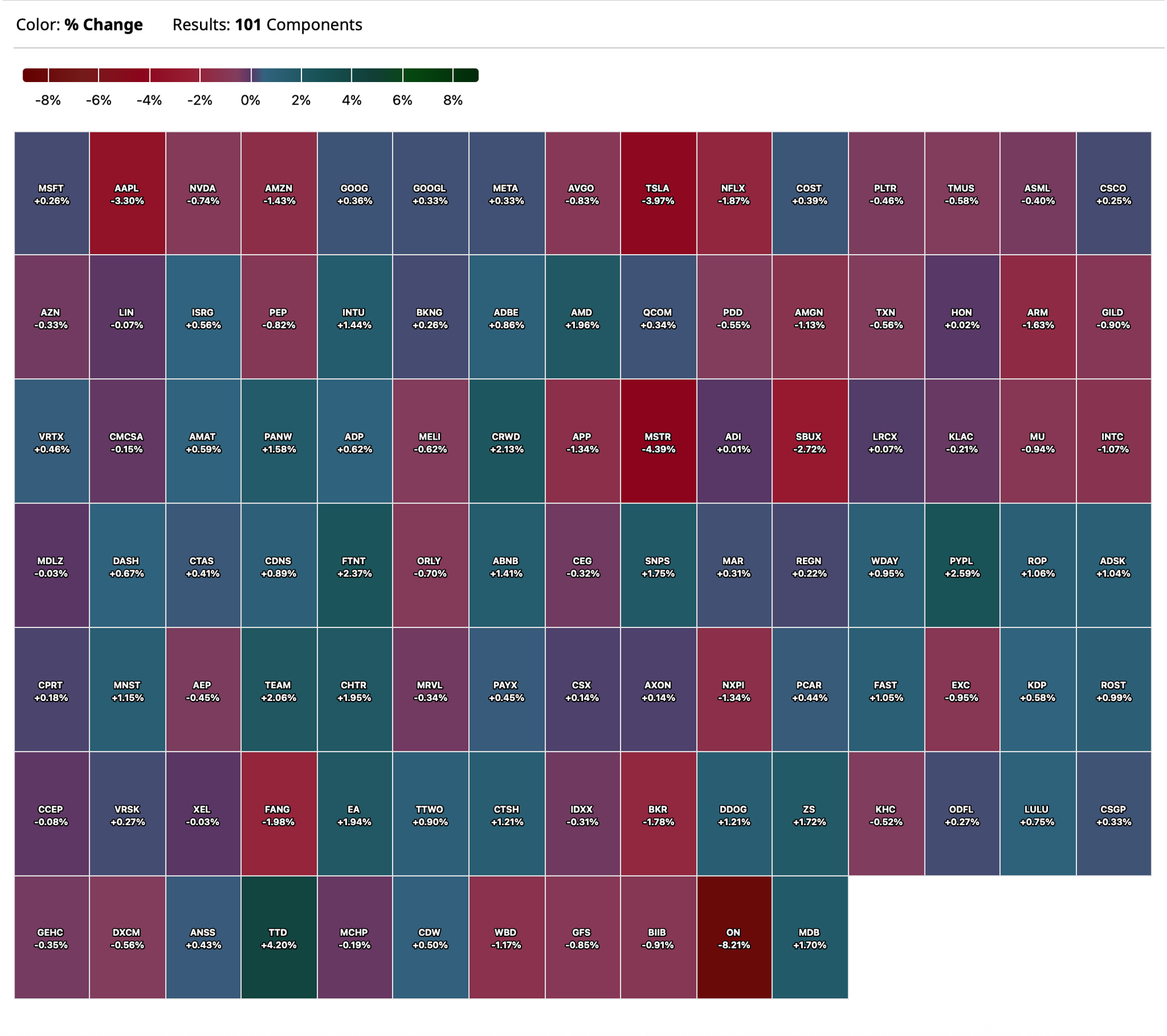
Nasdaq 100 Heat Map

BY Doug Kass · May 5, 2025, 4:29 PM EDT

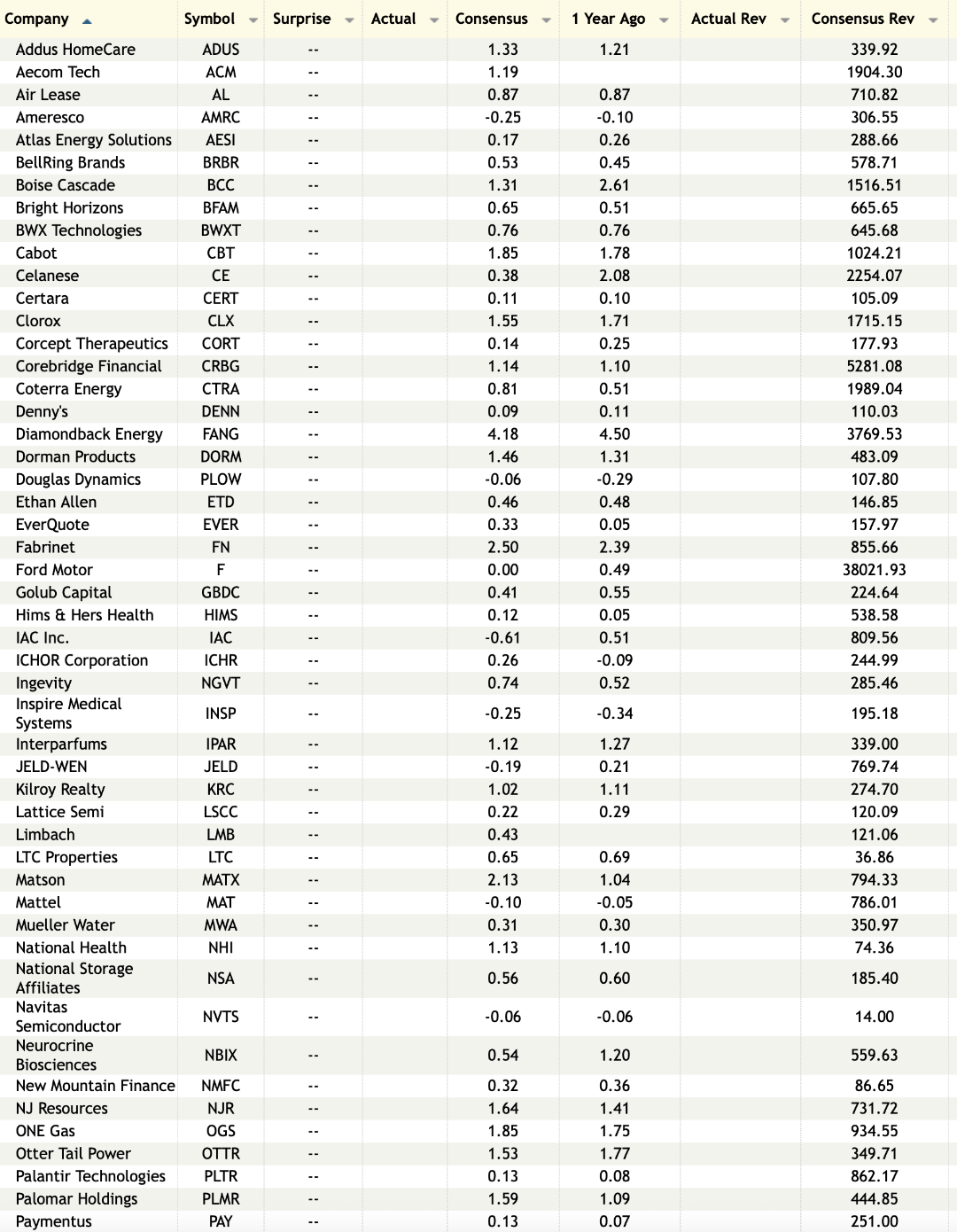
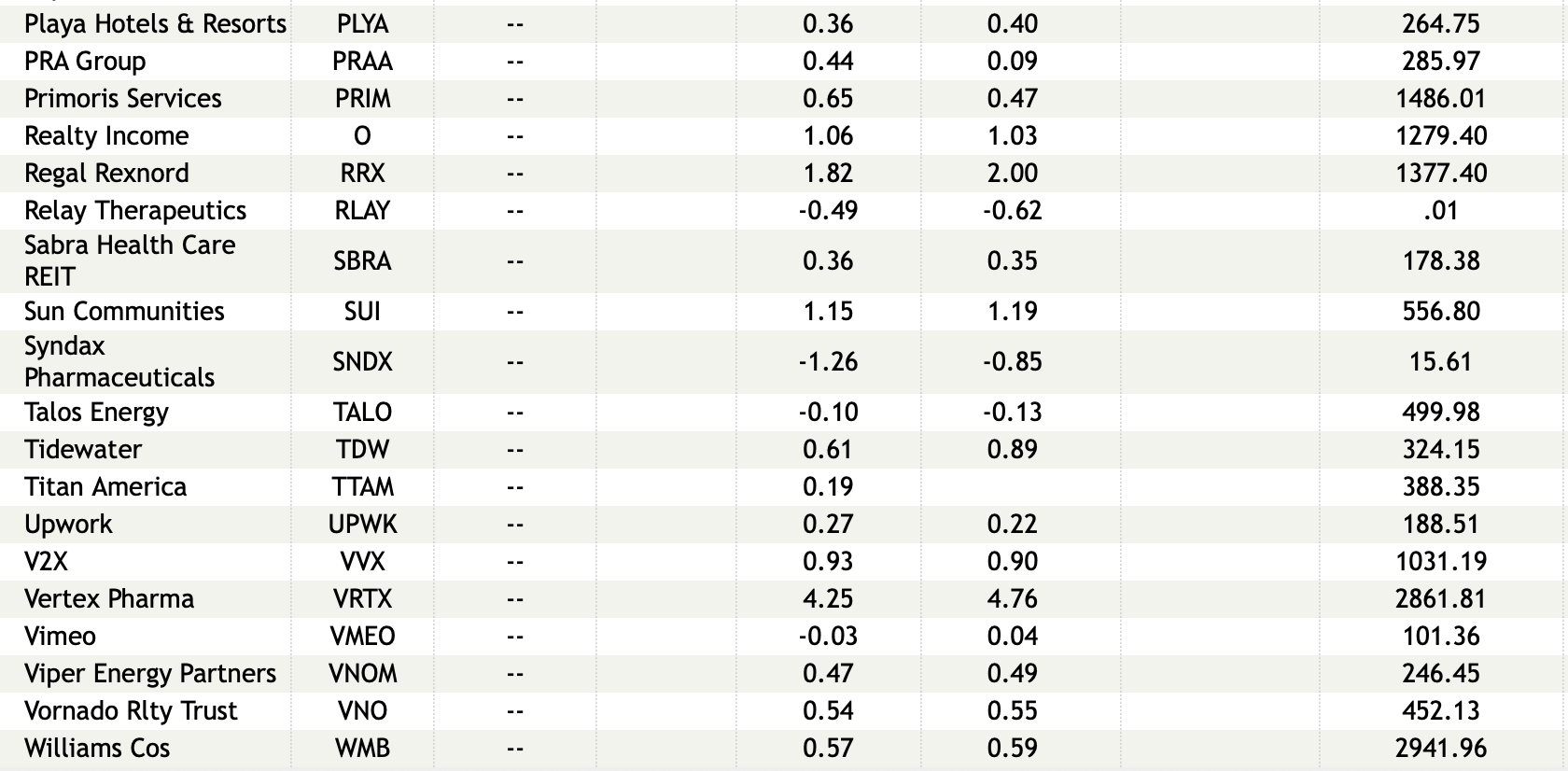
Earnings After the Close

BY Doug Kass · May 5, 2025, 3:59 PM EDT

Things I Did Today

Here are today's things:

* I purchased index common (against short calls):

With S&P futures -45 handles I have purchased SPY and QQQ common (against Friday's short call sale) to lock in a small profit:

SPY $562.56

QQQ $484.56

*With S&P futures -5 handles I shorted more index calls.

* I added to RSP $171.66 and IWM $200.11 shorts.

*I shorted more AAPL at $220.45 and GRNY $19.66.

* I initiated a new long in HHH about $70.

BY Doug Kass · May 5, 2025, 3:54 PM EDT

My Comments in Barron's

On Berkshire Hathaway/Warren Buffett:

BY Doug Kass · May 5, 2025, 3:26 PM EDT

Subscriber Question (And My Response)

spragro

any thoughts on the SPY range now - ie - support and resistance

Dougie Kass

my working assumption is that the s and p will have a range of 5800 to 4800 in the next 3-4 months

BY Doug Kass · May 5, 2025, 3:15 PM EDT

Subscriber Comment of the Day

From the other "Dougie":

douglas cassel

Ackman's comments have stirred some discussion about valuations of private companies. I have always been astounded by the audacity and lack of accountability by investment banks and general partners when it comes to realistic and honest appraisals of private companies. Carrying obsolete and fanciful values is commonplace. Of course, using such valuations to deceive banks is one motivation. However, sometimes it seems to me that it is just done for ego purposes, or to aid in the promotion of the next deal. The point is that it is widespread in boom times, in periods of depreciating valuation, it is universal.

Ackman's important observation is that the venture and private investment universe is massive, certainly trillions of dollars, much of which is leveraged, directly or indirectly to the banking system.

I have spent most of the day trying to figure out how this could cascade, in a pattern similar to 2008. If mark to market accounting of private assets is ever instituted, we are toast.

BY Doug Kass · May 5, 2025, 2:44 PM EDT

Moving Back to Being Short Indices

With S&P cash -5 handles I am back shorting index calls.

BY Doug Kass · May 5, 2025, 2:35 PM EDT

Boockvar: U.S. Services Sector Continues to Carry Load

From Peter Boockvar: 

The April ISM services index rose to 51.6 from 50.8 and better than the estimate of a dip to 50.2 and compares with 53.5 in February and 52.8 in January. For perspective, the 6 month average is now 52.5.

The Business Activity component though fell to 537 from 55.9 and that is weakest since June 2024. ISM said "We are seeing a more conservative approach both domestically and internationally as a result of the current US policies" and "People rushing to purchase vehicles in advance of the tariffs."

New orders fell 1.8 pts in March and rebounded by 1.9 pts in April. Backlogs rose a touch but remained below 50 at 48 vs 47.4 in the month before. Employment was under 50 for a 2nd month but less so at 49 vs 46.2 in March. Eight industries reported growth in employment and eight saw a reduction.

Supplier deliveries, something important to watch now again in light of the Covid like disruptions to supply chains, rose .7 pts to 51.3 but about in line with the 6 month average of 51.7. Inventories rose 3.1 pts to 53.4 likely reflecting the stock piling of certain things that are taking place.

Prices paid rose 4.2 pts to 65.1 and that is the highest since January 2023. Of the 18 industries asked, 17 paid higher prices.

Notable in last week's ISM manufacturing index was the sharp drop in export orders, not surprisingly, but some service businesses don't have exports. This component here was 48.6 vs 45.8 in March and 52.1 in February.

With regards to overall sector breadth, 11 saw growth vs 10 in March and 14 in February. Six saw their business contract.

Bottom line, stating the obvious, tariffs and cuts to government spending flow through the data and make it impossible to get a sort of organic figure for underlying growth. That said, it remains clear that the US service sector continues to carry the economic load.

The comments from a variety of companies in different industries were expectedly circumspect with the lack of visibility.

“Sales and traffic have improved on track with year-over-year seasonal trends. We seem to be outperforming some of the publicly traded restaurants reporting results.” [Accommodation & Food Services]

“Tariffs are negatively impacting small business customers. Many small business customers source their products from China. They cannot afford to compete in the marketplace sourcing from other countries. We could not move products fast enough to beat the tariff starting dates.” [Agriculture, Forestry, Fishing & Hunting]

“Business is steady.” [Construction]

“There is great concern at my institution (medical school with a research institute and hospital) that changes from the current administration will severely and adversely affect many of the populations we are trying to help live healthier lives.” [Educational Services]

“We are actively reviewing the impact of tariffs. We are seeing some vendors increasing their prices, and we are actively pushing back on those increases. We expect our vendors to honor our contracted pricing.” [Health Care & Social Assistance]

“Generally, pricing is lower, but there is some uncertainty of actual, final costs due to tariffs.” [Other Services]

“Our business is in a state of crises with uncertainty caused by both the ongoing trade war and the threats to federal funding of programs.” [Public Administration]

“Uncertainty remains the dominating theme as the U.S. government has been maddeningly inconsistent with tariff implementation.” [Real Estate, Rental & Leasing]

“Tariffs and concerns about government grants still impacting our procurement operations. Some projects are slowing or being held off to ensure we have funds to complete the current work.” [Transportation & Warehousing]

“The tariff uncertainty is causing a lot of consumption of human capital. We are starting to see some tariff charges, some are significant given the price of the highly specialized units that were ordered over two years ago. Based on our spend over the last couple of years, we will have to adjust our capital and operations and maintenance plans.” [Utilities]

BY Doug Kass · May 5, 2025, 2:30 PM EDT

Research, Research, Research

Today is a heavy research day.

I am on my third meeting!

BY Doug Kass · May 5, 2025, 2:06 PM EDT

Cannabis' Weak Foundation, Uncertain Future and Continuing Challenges

* In the next 12-18 months there will likely be numerous receiverships of leveraged cannabis companies facing a 2025-2027 "debt maturity cliff"                                      

Industry consolidation lies ahead  providing some opportunity for accretive acquisitions by the financially-stronger cannabis companies that remain relatively healthy                                    

* Depending on the context of (possible) future legislative advances, industry consolidation and heightened merger and acquisition activity might improve the current dismal product demand/supply condition and serve to ameliorate the intermediate-term industry sales and profit outlook                                    

* While MSOS unit economics and economies of scale remain uncertain, values exist in a core list of operationally and financially strong companies   

* Green Thumb GTBIF, Trulieve TCNNF, Glass House GLASF and TerrAscend TRSSF are attractive for patient long-term investors (but for different reasons) 

The gut wrenching multi-year decline in cannabis equities finally came to a halt last week as the promise of legislative advances once again came to the fore.

That said, the rally quickly petered out — from very low historical levels — as a tattered retail community of cannabis traders and retail investors did not have the firepower to sustain the sector's advance. (Custodial and banking issues continue to plague the cannabis sector, leading to very little institutional sponsorship).

By now most acknowledge that the pie in the sky intermediate-term promise and projections for the total addressable cannabis market were dramatically overstated and the subsequent optimism surrounding rapidly forecast individual company sales, cash flow and profits has been largely unfulfilled.  

Cannabis investors also faced near-term pressures as state markets opened in the last few years delivered somewhat less initial growth relative to expectations. Perhaps more important was that those markets began to experience evidence of maturity far sooner than even the most pessimistic observers expected. 

With the November 2024 failure of the key state of Florida to pass adult recreational use and a slower than expected roll in other states, the industry's demand/supply equilibrium, which was already under pressure, succumbed to the pressure of an over abundance of supply of cannabis and continued market share inroads from hemp and unchecked illicit cannabis sales. Speaking of state regulations in the embryonic stage of my investing in cannabis, I was hopeful that there would be the clear emergence of a select group of dominant industry brands. But it became clear to me very early on that state silos — with several states restricting the number of dispensaries — made the promise of brand dominance and economies of scale (e.g. Burger King and McDonald's MCD) unlikely.   

While  these fundamental problems weighed heavily on cannabis companies and the stocks — to make matters worse — the industry's access to capital was evaporating and its cost of capital was skyrocketing. 

How bad was the financing environment that cannabis companies have faced in the last several years? Limitations to and costs of accessing capital led a number of companies to finance their operations and growth by not paying federal taxes and accumulating large government IOUs on top of large existing (traditional corporate) liabilities. This all led to a worrisome increase in liabilities at a time that current cash flows disappointed relative to expectations and now challenge many companies' ability to service their total debt.  

Even if rescheduling and/or Safer Banking is made law, leveraged balance sheets remain.  

The cannabis industry now consists of only a handful or two of private and public companies that are healthy and who reside in the land of the living.

Unfortunately, most of the other public equities are among the walking dead, with their very existence dependent upon their ability to refinance large debtloads. 

However, even if they are able to refinance, the equity dilution will be considerable - leaving shareholders with little.  

And, remember, a company's enterprise value is the equity capitalization plus net debt. So, arguably, the cannabis companies that are the most indebted may still be the most overvalued. 

Which Cannabis Business Model Will Survive and Prosper in the Future? 

Let's briefly gaze at the future of cannabis — specifically, what industry business model will be the winner and which will be the loser? Clearly, the future is less than clear given the multiple possible legislative outcomes that lie ahead. What we do know is that, as a result of market conditions (demand/supply has weakened leading to product price compression) over the last five years, the dispensary unit economics have been very weak relative to previous optimistic expectations and it is (legislatively) unclear whether the "box" unit economics will improve in the future.         

A very key existential issue, going forward, is the delivery of the raw material product of cannabis into regional and state dispensaries.   

* Will legislated distribution remain on an intrastate basis only (and, therefore, being "protected" from national cultivators) or will cannabis be sold interstate (nationally) by companies like Glass House?  If the former, one would want to own the surviving MSOSs.

* If it is the latter and low cost producers go nationwide, are MSOSes simply Med Men stores in disguise  (i. e., high cost purveyors disrupted and competitively vulnerable to much more product price and profit margin compression)? If so, one would not want to own an MSOS and would choose to own a low cost national cultivator, like Glass House.

Investing In Cannabis                        

* Construct your own portfolio of financially and operationally strong cannabis companies                                 

* Avoid the MSOS ETF MSOS

When I began to invest in cannabis my chosen vehicle was MSOS — the industry's largest ETF (by far!). 

MSOS traded actively and the shares were readily and easily tradeable. It took me years to conclude that

 I would rather invest in individual cannabis stocks rather than MSOS. 

* To begin with, I would rather structure my own ETF by creating my package vis a vis the MSOS manager's selected holdings. I don't need to pay a fee if I can more efficiently construct my own cannabis portfolio. 

* I have too often seen the MSOS portfolio manager dispose of positions in the best companies (e.g. Green Thumb) and using those positions as an ATM to fund third and fourth tier cannabis holdings (and perhaps inadvertently providing an "out" for insiders in the process!).

* On that score, for years the MSOS ETF has had positions in certain cannabis holdings that are likely to fail or be so diluted out in financings that equity holders feel like the company has gone bankrupt!  

* A relatively liquid MSOS whose constituent holdings  are illiquid could lead to manipulation. I can't be certain but my guess is that there has been some unsavory actors contributing  along the way to MSOS shares falling from above $50/share to about $3/share. 

Frankly, given that the components of MSOS are illiquid, I do think (though it is hard to prove) that the industry would have been better off if MSOS never existed.  MSOS has clearly become the tail that wags the cannabis dog.   

Last week, as posted (and for the reasons mentioned above), I sold out my MSOS position for the above reasons and others.   

Picking the Winners

From my perch, Trulieve, TerrAscend, Green Thumb and Glass House are among the cannabis companies that currently merit my attention in the difficult operating and financial backdrop and uncertain legislative outlook. 

While there are other stocks that are investable, their market capitalizations are too small and their liquidity limited.While even the best of the cannabis lot will require patience — in such an uncertain operating and legislative backdrop — there remains consequential upside (and relatively limited downside) over the next several years.

BY Doug Kass · May 5, 2025, 12:05 PM EDT

Don't Bottom Fish Berkshire

* Stated simply, don't bottom fish in Berkshire Hathaway...

Back in February I accurately predicted that Warren Buffett would step down as CEO of Berkshire this year and appoint Greg Abel:

My Surprise Bets for Warren Buffett Tomorrow

* Buffett could step down as CEO

* He could announce that Berkshire Hathaway plans to pay a cash dividend

Tomorrow morning, Berkshire Hathaway' Chairman will release his Annual Letter to Shareholders. Warren Buffett to address shareholders in annual letter on February 22 - World News | The Financial Express

I expect two possible surprises on Saturday:

* Warren is turning 95 on Aug. 30. I expect him to step down from his role as CEO and to formally name Greg Abel as his replacement.

* With over $310 billion in cash (and going to a projected $335 billion cash hoard by year-end, up from $167 billion at December, 2023) Warren may announce his intention for Berkshire Hathaway to pay a cash dividend.


Be forewarned.

Position: None.

By Doug Kass Feb 21, 2025 10:25 AM EST


With Warren Buffett relinquishing the CEO position at Berkshire Hathaway on Saturday, the company will likely -- in the fullness of time -- lose its premium valuation.

Berkshire's common is -$32 today.

Nonetheless I would not be a buyer of Berkshire shares.

If I owned it I would sell it.

BY Doug Kass · May 5, 2025, 11:30 AM EDT

Late Morning Market Stats

Low Volume Again

- NYSE volume 27.4% below its one-month average

- NASDAQ volume 22.6% below its one-month average

- VIX index: up 1.23 to 22.96

Breadth

S&P 500 Sector ETFs

% Movers

Nasdaq 100 Heat Map

BY Doug Kass · May 5, 2025, 11:30 AM EDT

From The Street of Dreams

Freshpet lowers 2025 revenue view to $1.12B-$1.15B from $1.18B-$1.21B 

Consensus for 2025 revenue is $1.17B. Freshpet reports Q1 EPS (26c), consensus 9c Reports Q1 revenue $263.2M, consensus $258.27M. "Despite the recent macro-economic headwinds, we believe Freshpet remains a structurally advantaged business with a long runway for growth in a category with long-term tailwinds. However, our growth year-to-date has not been as robust as we had anticipated so we are adapting our growth plans to the current economic challenges that our consumers are facing while continuing to drive the operational improvements that are essential to our long-term success," commented CEO Billy Cyr. "Looking ahead, we believe it is prudent to adjust our 2025 outlook and plan as if the conditions we saw in the first quarter were to continue for the balance of the year. In doing so, we believe we are positioning Freshpet to weather the near-term economic headwinds and deliver long-term shareholder value while serving pets, people and the planet." 

Apollo Global price target lowered to $174 from $193 at Piper Sandler Piper Sandler lowered the firm's price target on Apollo Global to $174 from $193 and keeps an Overweight rating on the shares. The firm notes the company reported good results in a quarter where market volatility began to build. This pressures near-term estimates primarily in retirement services and principal investing, but Piper views the prospects to "grow logarithmically through that dislocation" as rather attractive.


BY Doug Kass · May 5, 2025, 10:45 AM EDT

Adding to Two Index Shorts

With S&P cash -30 handles I am adding to my IWM and RSP shorts.

BY Doug Kass · May 5, 2025, 10:30 AM EDT

El-Erian

https://www.twitter.com/elerianm/status/1919377793114046643

BY Doug Kass · May 5, 2025, 10:30 AM EDT

This Math Escapes Me!

https://www.twitter.com/RealJimChanos/status/1919039945898959270

BY Doug Kass · May 5, 2025, 10:15 AM EDT

Cannabis EPS This Week

https://www.twitter.com/V_arrell/status/1919367781004292102

I will have a more lengthy and realistic thought piece on the sector today.

BY Doug Kass · May 5, 2025, 10:00 AM EDT

Dan Niles

https://www.twitter.com/danieltniles/status/1919186444301508709

BY Doug Kass · May 5, 2025, 9:55 AM EDT

Added to Apple Short

I added to my AAPL short this morning.

BY Doug Kass · May 5, 2025, 9:50 AM EDT

Boockvar on the CEO Warning of Small Business Extinction

From Peter Boockvar:

"The CEO Who Says an Asteroid is Coming to Destroy America's Businesses"

The existential threat to so many small businesses, and I believe made perfectly clear to the powers that be, tell me that we're going to see a dramatic reduction in the tariff rates on China, along with plenty of deal announcements this month but will it come soon enough and will the tariff rate reductions be enough to manage and survive?

In the Weekend WSJ if you didn't see there was an article on Ryan Peterson, the CEO of Flexport, a logistics management company. The piece was titled "The CEO Who Says an Asteroid is Coming to Destroy America's Businesses." Ryan said "If they don't change the tariffs, it's going to be an extinction-level, asteroid-wiping-out-the dinosaurs kind of event. Only these aren't dinosaurs. These are dynamic, healthy businesses." The article then said, "He knows this because those businesses are his customers. They use Flexport to transport products from the factory to your front door. Peterson's company handles everything from booking space on planes, trucks and enormous ocean carriers to managing all the tedious paperwork along the way."

"If the tariffs on Chinese goods continue at this rate, he says, thousands of American companies will fail and millions of employees will lose their jobs." I'll add, luckily he's being proactive in spreading this message, seemingly obvious to us, but apparently not others. "This past week, he traveled from San Francisco to Washington, DC where he spent two days meeting with government officials to make the case that tariffs pose an existential threat to his customers.

The Asia Bloomberg Dollar spot index is rallying for the 5th day in the past 6 on hopes for trade deal announcements. The move particularly in the Taiwanese dollar is quite a sight as it's up almost 8% over the past week vs the US dollar and at one point overnight was up 4% alone, closing higher by about 2.5%.

The US DXY is broadly weaker too with it back below 100, lower .40%. Gold is rebounding after the recent correction.

The reason to keep a close eye on how the fiscal 2026 US budget negotiations go is to understand again how influential US government spending has been to economic growth. That $2 trillion budget deficits are hugely expansionary. Any attempt to slow the pace of spending from its current trajectory, while desperately needed for the sake of our fiscal credibility, is going to slow economic activity.

The earnings pace slowed on Friday, only to pick up again heavily this week, so I only have a few calls to review.

From Wendy's, and something we heard from McDonald's:

US comps fell 2.8%. "This was driven by adverse weather in January an February coupled with a weaker than expected consumer environment throughout the month of March."

With regards to March, "as the month progressed, consumer confidence deteriorated, leading to a reduction in demand...Due to the high degree of uncertainty in the market, our updated outlook assumes that the current consumer environment persists throughout the remainder of the year."

In terms of demographics, "From an income cohort perspective, we measure household income above $75,000 and household income below $75,000 and we saw broad based pressure in the quarter. I would say the pressure was more acute with those households under $75,000. And we did see industry traffic with those households pull back to high single digits, low double digits, especially in the month of March...Breakfast performed worse than rest of day as consumer behavior changed"

From Exxon, stating the obvious at this point, especially with the tariffs and OPEC:

"It is clear that this uncertainty is weighing on economic forecasts, causing significant volatility and raising the prospects of slower growth. Coupled with the threats of increased OPEC supply, we're seeing significant downward pressure on prices and margins."

With regards to throttling back drilling if price stay low, they talked about their flexibility to do so.

Chevron said the same on Friday:

"And almost two-thirds of our capital is either short cycle shale or project, that's project spend that's completing over the next year or so. And so we've got a lot of flexibility if we need to exercise that, we've shown I would call discipline coming into this year by tightening our belt a notch and bringing capital down a little bit. But if we needed to bring capital down further, we certainly could do so."

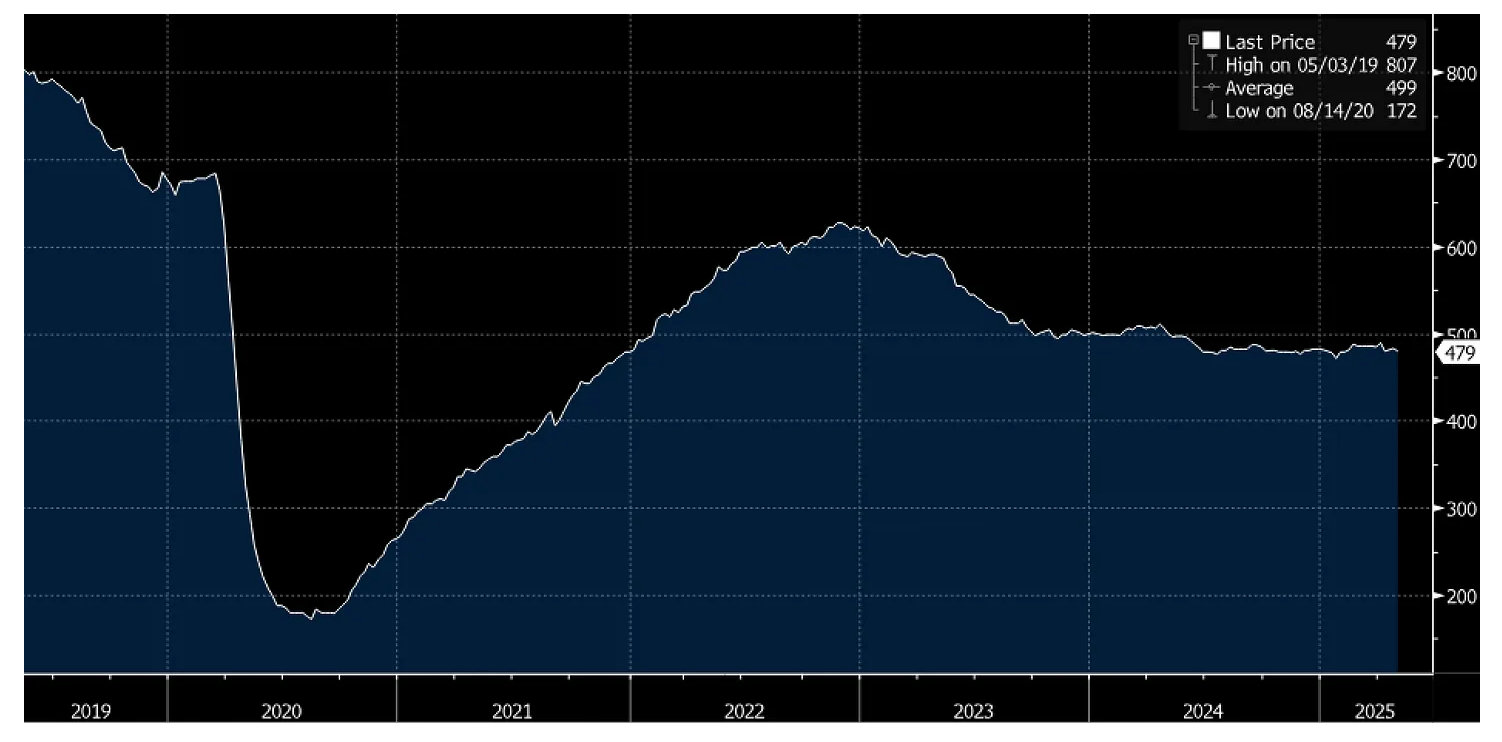
With respect to the oil rig count, pre the weekend OPEC news, it fell by 4 rigs to 479 which is the lowest since late January. We are 7 rigs away from matching the least amount since December 2021 and I have to believe we'll break those lows if oil stays below $60 which in turn could be in a floor around here.

Oil Rig Count

Vietnam's April manufacturing PMI fell to 45.6 from 50.5 on the obvious trade worries.

More optimism about the Eurozone economy was apparent in the Sentix Eurozone economic confidence index that rose to -8.1 from -19.5 and above the estimate of -11.5. It's actually back to the average over the past 6 years which captures pre Covid data. The Sentix said "The dust is settling...Investors are acknowledging the calm response to US tariffs so far" and they believe that "the main victims of Trump's tariff policy are the US economy and, to some extent, the economies of China and Switzerland. However, the period of uncertainty is probably not over yet."

I continue to believe that post the mixed results from the Big 7 stocks they have lost their luster in terms of stock market outperformance and as part of the likely multi year transition, international stocks, including Europe, will continue to outperform.

I'll give an example of a cheap stock I believe that trades just in NY but is domiciled in the UK, Manchester United. CNBC released today its team valuations of European football/soccer teams and Manchester United is the 2nd most valuable at $6 billion but the stock MANU trades at an enterprise value of just about $3 billion.

BY Doug Kass · May 5, 2025, 9:35 AM EDT

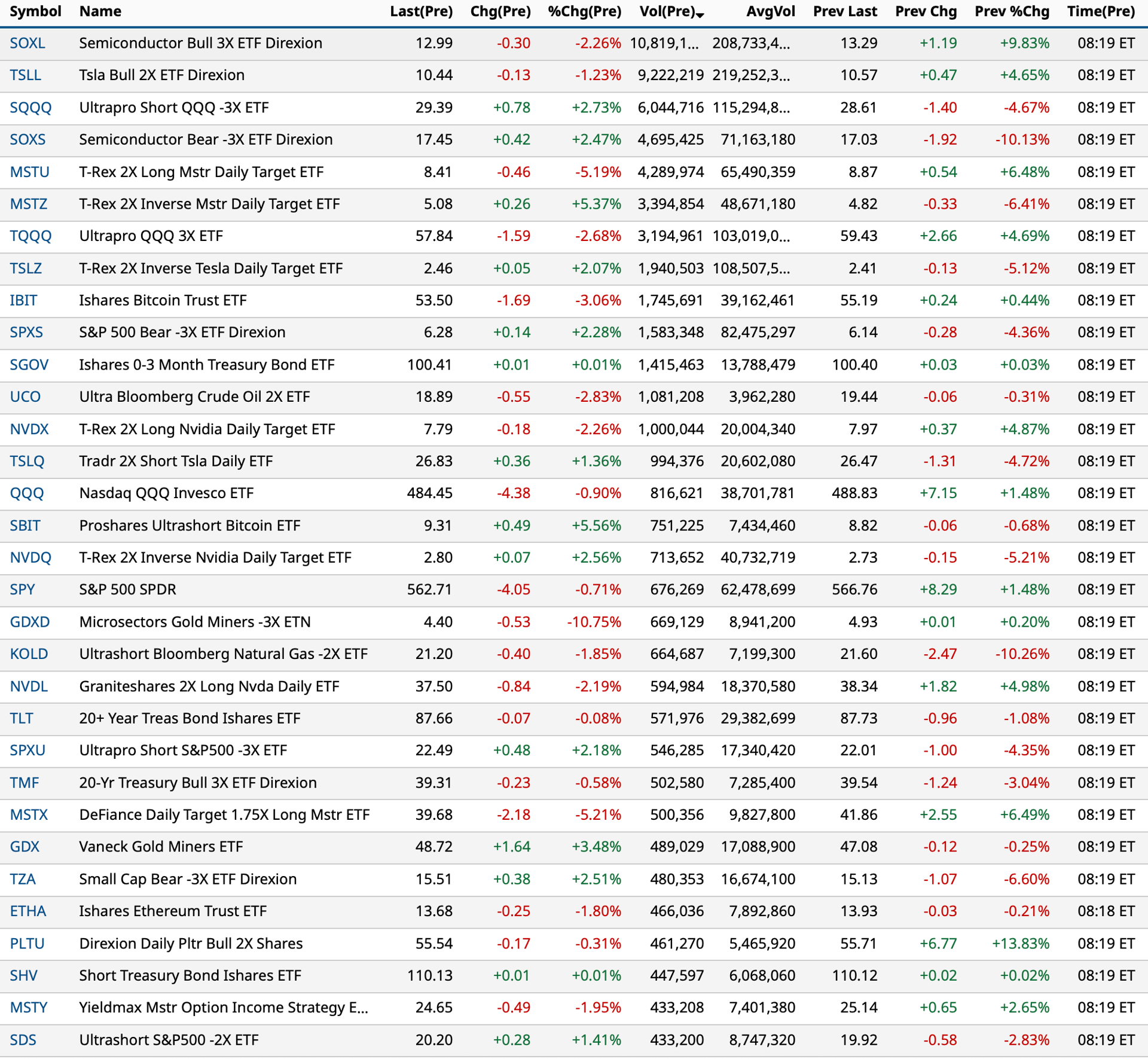
Charting the ETF Action in the A.M.

Most active pre-market ETFs as of 8:19 a.m. ET:

BY Doug Kass · May 5, 2025, 9:14 AM EDT

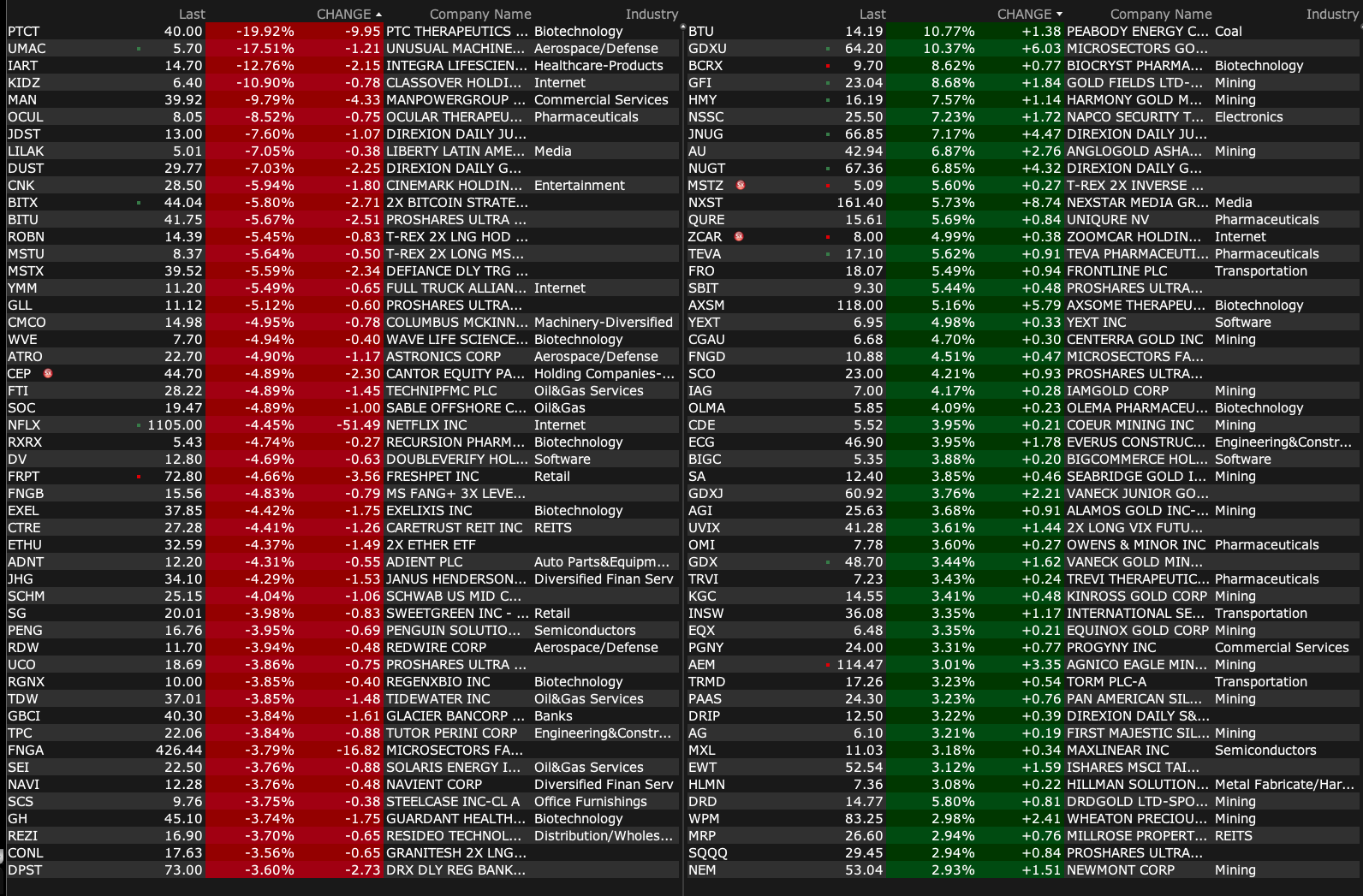
Charting the Morning Percentage Movers

Premarket percentage movers at 8:37 a.m. ET:

BY Doug Kass · May 5, 2025, 8:48 AM EDT

Charting the Technicals

* Note the higher stocks run, the more technicians like the market...

* "Watch for some more follow thru" was the prevailing technical view at Friday's close.

* I moved into a net short exposure late Friday.

https://www.twitter.com/jasongoepfert/status/1918290686824087859
https://www.twitter.com/Barchart/status/1918402366774362274
https://www.twitter.com/charliebilello/status/1918343667154116994
https://www.twitter.com/AdaptivCharts/status/1918387949470925158
https://www.twitter.com/MacroCharts/status/1918320766631768160
https://www.twitter.com/sam_gatlin/status/1918297769334198512
https://www.twitter.com/WalterDeemer/status/1918322385649909892
https://www.twitter.com/neilksethi/status/1918380037738234137

Bonus — Here's some great links:

Getting Back to Even

Scanning for Strength

Small-Caps Could Be Starting a Move HIgher (Note: I started to short IWM on Friday) 

Rubber Meets the Road

BY Doug Kass · May 5, 2025, 8:27 AM EDT

Weekend Thoughts

Here is a good set of data on the federal budgets and our interest payments.

When you need to borrow the amount of money it takes to make your interest payments, that seems problematic to me.

But I go back to my first question, maybe like the theory of relativity, this is just one more thing I do not understand and it is possible to do this forever, somehow? Must be the case right, because if it wasn’t the case, astute minds would come together, put aside their differences, and form an actionable solution and figure out a path out of the problem before we are hit by the meteor?

P.S.: Getting hit by the meteor also makes the problem even harder to solve for and costs more money, which we no longer have. A recession, although it lowers rates, is also more expensive, because of all the costs that come with recession (unemployment, etc). And in this case, given the state of our balance sheet and related geopolitical issues, in a recession the global markets may not be willing to pay as little for our debt as they have in the past.

BY Doug Kass · May 5, 2025, 8:11 AM EDT

From Comments Over the Weekend

Dougie Kass

berkshire should sell off ... end of an era

BY Doug Kass · May 5, 2025, 7:48 AM EDT

A Deeper Overbought

The S&P Short Range Oscillator hit 6.8% on Friday night vs. 6.15% on Thursday, getting further into overbought territory.

BY Doug Kass · May 5, 2025, 7:38 AM EDT

Monday Premarket Trades

With S&P futures -45 handles I have purchased SPY and QQQ common (against Friday's short call sale) to lock in a small profit:

* SPY $562.56

* QQQ $484.56

I am delta equivalent neutral in the indices.

I plan to reshort the indices on ANY strength. I still have a bunch of other shorts as noted on Friday.

BY Doug Kass · May 5, 2025, 7:28 AM EDT